AI Diagnoses Brain Tumors in Minutes Instead of Weeks
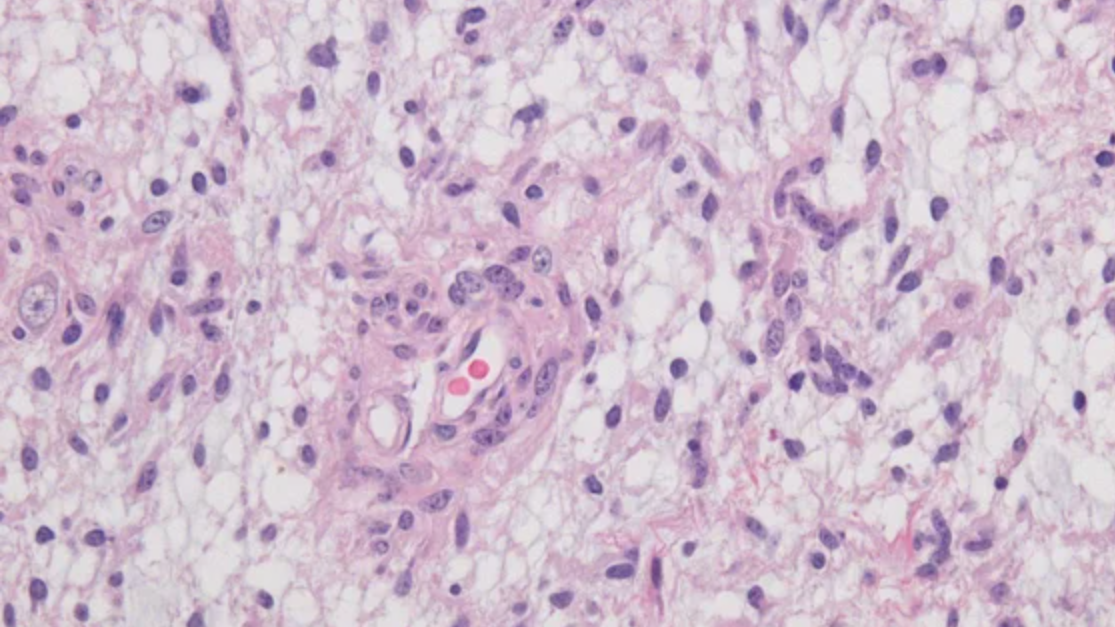
Experts in Heidelberg have developed an AI system that can classify brain tumors with unprecedented accuracy using standard microscopic tissue sections. Using digitized standard stains, the system identifies more than 100 molecular subtypes of central nervous system tumors, delivers results within minutes, and could accelerate the diagnosis of brain tumors worldwide.
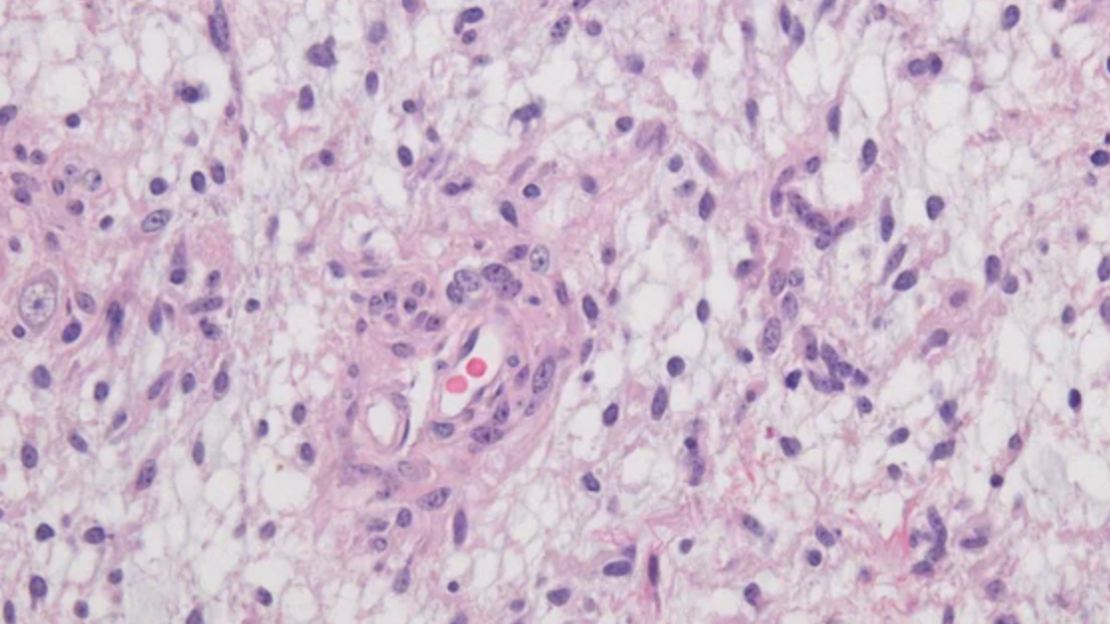
Tumors of the brain and spinal cord are extremely diverse. In recent years, it has become clear that many of these tumors can only be reliably diagnosed if their molecular properties are examined in addition to their microscopic appearance. Of particular importance here is so-called DNA methylation analysis, which is now considered the gold standard for the accurate classification of many brain tumors.
However, such tests are complex: they require specialized laboratories, expensive equipment, and sufficient tumor material. In addition, it often takes about two weeks for the results to become available. In many regions of the world, the necessary technologies are not even available.
AI learns from over 11,000 tissue sections
A new AI system called “Hetairos” is expected to bring about substantial improvements. It was developed by a team led by Moritz Gerstung (German Cancer Research Center, DKFZ) and Felix Sahm (Heidelberg Medical Faculty of Heidelberg University and Heidelberg University Hospital). The goal of the project was to predict which molecular subgroup a tumor belongs to based solely on routinely prepared and stained histological sections.
Hetairos was trained and validated using more than 11,000 digitized tissue sections from 9,606 patients. The diagnoses were primarily determined using DNA methylation diagnostics. The data came from eleven medical centers on four continents. In total, Hetairos distinguishes 102 different molecular tumor subtypes, covering nearly the entire spectrum of the current WHO classification of central nervous system tumors.
AI not only evaluates its diagnosis but also indicates how confident it is in it. In approximately 50 to 70 percent of all cases, Hetairos made predictions with a high degree of certainty. In these cases, accuracy was around 87 to 88 percent. Even when the AI was uncertain, it was usually able to significantly narrow down the number of possible diagnoses.
Instead of having to distinguish between more than a hundred tumor subtypes, Hetairos often provides neuropathologists with only a few likely candidates. This can significantly simplify the selection of further diagnostic tests. “The study shows that artificial intelligence is capable of deriving molecular information directly from routine tissue sections and thus fundamentally changing cancer diagnostics,” said Darui Jin, one of the lead authors of the study.
Hetairos outperforms experienced specialists
Particularly noteworthy was the direct comparison with human experts. Five experienced neuropathologists from various international centers were given 210 cases and asked to make a diagnosis based solely on the tissue sections. Hetairos achieved an accuracy rate of 68 percent, while the specialists averaged 30 percent. When considering the three most likely diagnoses in each case, the AI scored 84 percent, while the specialists scored about 50 percent.
“The results show that modern AI systems are now capable of recognizing extremely subtle morphological patterns that are difficult even for experienced specialists to distinguish,” says Felix Sahm. “Currently, the diagnosis of very rare tumor types still poses a major challenge for Hetairos; in this regard, experienced neuropathologists appear to be at least on par. However, we expect the system’s performance to improve even further with larger and more diverse datasets,” adds Moritz Gerstung.
Diagnosis in twelve minutes instead of twelve days
In a prospective study, Hetairos was used in parallel with routine clinical practice. The system analyzed 210 tumor samples without the AI result influencing the actual diagnosis or treatment decision. While complete molecular diagnostics took an average of about twelve days, Hetairos generated its findings in just twelve minutes on standard computer hardware after digitizing the stained tissue sections. Including preparation and digitization of the tissue sections, results could often be available within 24 hours to two days.
Assistance with difficult and unclear cases
Hetairos could be particularly valuable in situations where traditional molecular methods reach their limits, when there is insufficient tumor material for genetic testing, or when molecular tests do not yield clear results. In addition, the system highlights the areas in the tissue section that were particularly important for its decision. This allows doctors to understand the basis of the AI’s diagnosis and identify which regions may be suitable for further investigation.
“We developed Hetairos primarily as a tool to support diagnostics,” explains neuropathologist Felix Sahm. “It is not intended to replace molecular analyses, but rather to specifically complement and accelerate them. The technology could make an important contribution, particularly in countries or regions with limited resources, as it is based on standard tissue sections used worldwide.”
The method could also offer economic advantages. While a DNA methylation analysis typically costs several hundred euros, Hetairos uses existing tissue sections for its analysis.
Moritz Gerstung confirms: “Hetairos demonstrates the enormous potential of AI-supported digital pathology to provide rapid and widely available diagnostic methods that were previously only possible with considerable technical effort.”
Publication
Jin D., Shmatko A., Patel A. et al. Hetairos is a histology-based artificial intelligence model for predicting central nervous system tumor methylation subtypes. Nature Cancer (2026). DOI: 10.1038/s43018-026-01186-3