June 11, 2026

CELASC 2026 presentation: Impact of topical lidocaine-prilocaine analgesia on pain-induced grooming after ear notching of mice

CELASC 2026 presentation: Impact of topical lidocaine-prilocaine analgesia on pain-induced grooming after ear notching of mice

Finnish animal welfare legislation (Government Decree 1165/2023) effective as of January 1, 2024, requires establishments to apply “appropriate pain relief” in association with ear notching identification method of laboratory rodents(1). However, there is a lack of scientific evidence whether the benefits of applying analgesia outweigh the additional stress related to handling and drug administration. Our study aimed to determine if acute pain potentially linked to ear notching increases self-grooming behavior of the affected body area and if topical application of lidocaine-prilocaine ointment has the potential to mitigate such pain.
Materials and methods

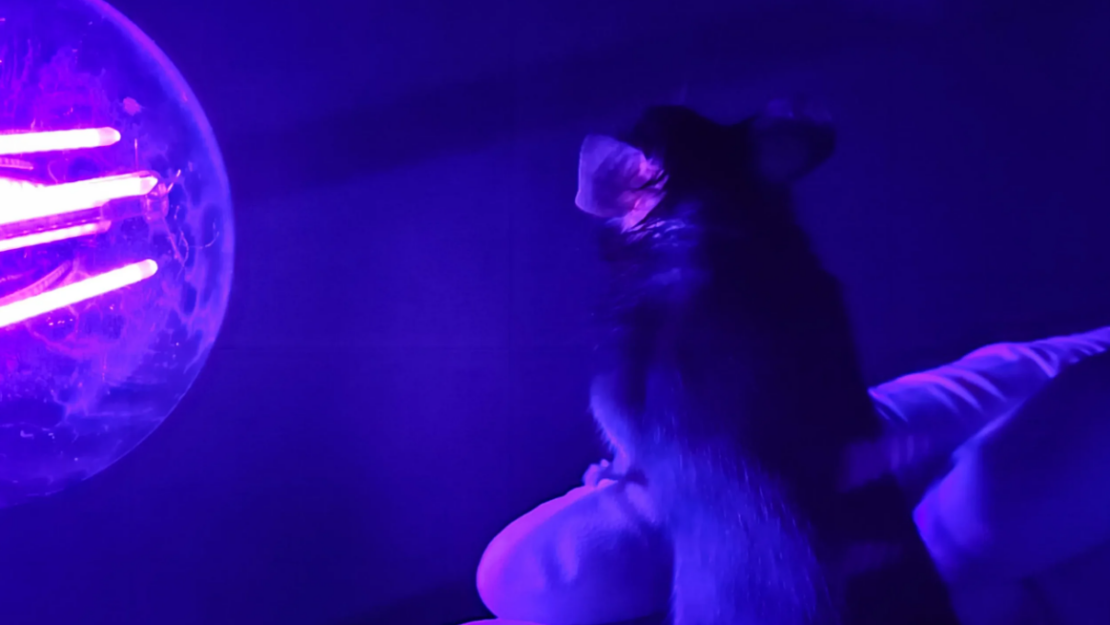
A total of 103 group-housed, 12 – 19 weeks old male and female C57BL/6JRj mice were randomized to the following 4 groups (n = 25 – 26): 1, topical analgesic ointment + ear notch, 2, topical analgesic ointment + handling, 3, vehicle ointment + ear notch, 4, vehicle ointment + handling. Treatments were applied 30-60 minutes prior notching or handling only, then at specific timepoints (30, 60, 120, 240, 360 minutes and 24, 48, 72 hours) we utilized the Grooming Transfer Test(2) under ultraviolet-A light conditions with fluorescent oil applied to the ear during notching and associated handling or handling only, to score the grooming behavior of the animals by a blinded observer. 

Results

According to preliminary data, mice treated with analgesic ointment showed significantly higher Grooming Transfer Test scores at 240- and 360-minute timepoints (Fisher’s exact test: P=0.0214, and P=0.0017, respectively, n=25 – 26 animals/group) compared to groups receiving vehicle ointment (n=26 animals/group). 

Conclusions

The increase in self-grooming behavior in analgesic-treated groups suggests a pharmacological effect of the treatment, possibly the offset of the topical analgesic, given that all animals received analgesic or vehicle topical treatment. The data provides valuable insight into potentially refining rodent care in the scope of new legislation. 

References

  1. Valtioneuvoston asetus eläimille tehtävistä toimenpiteistä ja keinollisen lisäämisen menetelmistä (1165/2023), Section 3(13) [Government Decree on procedures performed on animals and methods of artificial reproduction]. Available from: www.finlex.fi 
  2. Oliver, V. L., Thurston, S. E., & Lofgren, J. L. Using Cageside Measures to Evaluate Analgesic Efficacy in Mice (Mus musculus) after Surgery. J Am Assoc Lab Anim Sci. 2018;57(2):186-201. PMCID: PMC5868385

Authors

Hajnalka Nádai, Anni Tenhunen, Sanna Tikka, Anna Mari Koponen, Päivi Partanen, Hanna-Marja Voipio

Our latest News

discover more
CELASC 2026 presentation: Impact of topical lidocaine-prilocaine analgesia on pain-induced grooming after ear notching of mice

CELASC 2026 presentation: Impact of topical lidocaine-prilocaine analgesia on pain-induced grooming after ear notching of mice

Finnish animal welfare legislation (Government Decree 1165/2023) effective as of January 1, 2024, requires establishments to apply “appropriate pain relief” in association with ear notching identification method of laboratory rodents(1). However, there is a lack of scientific evidence whether the benefits of applying analgesia outweigh the additional stress related to handling and drug administration. Our […]

Fat hack protects against cell death

Fat hack protects against cell death

In response to stress or damage, cells undergo senescence and stop dividing. However, if senescent cells accumulate in tissues over the long term, chronic inflammation occurs and the risk of cancer increases. Researchers at the German Cancer Research Center (DKFZ) have now discovered a previously unknown mechanism by which senescent cells protect themselves from oxidative […]

Potential Biomarker for Personalized Leukemia Therapy Identified

Potential Biomarker for Personalized Leukemia Therapy Identified

Researchers at Heidelberg Faculty of Medicine at Heidelberg University, in collaboration with partners from 29 German study centers, have found evidence of a potential biomarker for personalized therapy of acute myeloid leukemia (AML) in a Phase II study. Analyses showed that certain patients could benefit from additional treatment with the drug Motixafortide in addition to […]

GET IN TOUCH

Stay Updated with bioRN’s Newsletter

Sign up for our newsletter to discover more!
* required

BioRN (BioRN Network e.V. and BioRN Cluster Management GmbH) will use the information you provide on this form to be in touch with you and to provide updates and marketing. Please let us know all the ways you would like to hear from us:

You can update your subscription preferences or unsubscribe at any time. Just follow the unsubscribe or update link in the footer of automated emails you receive from us, or by contacting us at info@biorn.org. We will treat your information with respect. For more information about our privacy practices please visit our website: www.biorn.org. By clicking below, you agree that we may process your information in accordance with these terms.

We use Mailchimp as our marketing platform. By clicking below to subscribe, you acknowledge that your information will be transferred to Mailchimp for processing. Learn more about Mailchimp's privacy practices.

Intuit Mailchimp