March 13, 2026

Drug development: New NMI framework reduces risk of costly failure
Drug development: New NMI framework reduces risk of costly failure

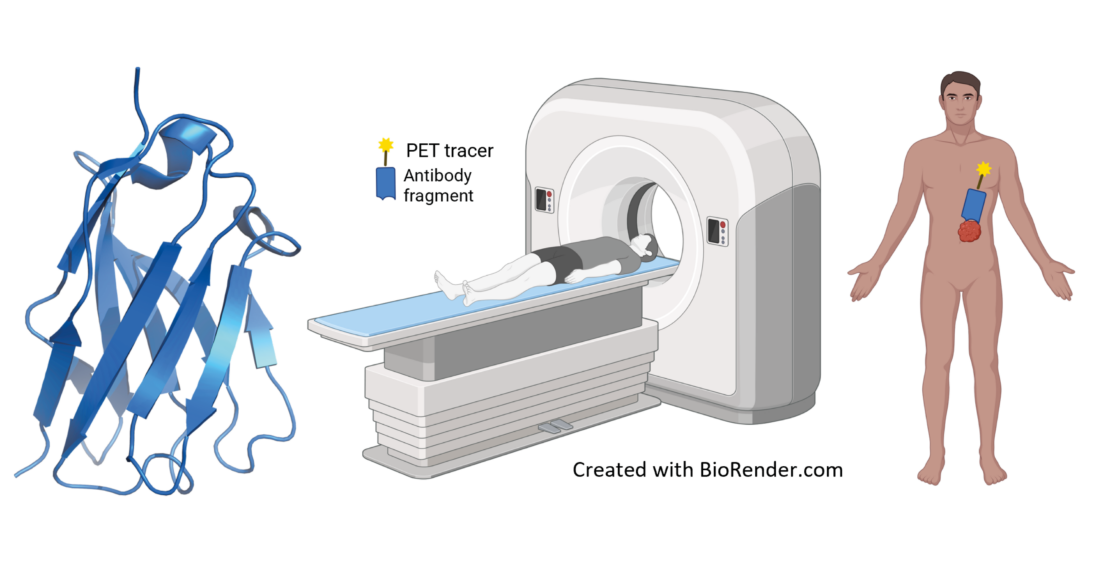
How can the risk of failure in the development of drug compounds be reduced? In a recent paper, researchers at the NMI present a newly developed framework that makes the development of drug compounds from so-called single-domain antibodies (sdAb) safer and more reliable.

Until now, drug development has generally proceeded as follows: one starts with a large number of potential drug candidates and reduces them step by step using an exclusion process—a time-consuming process that nevertheless carries the risk of late and costly failure.

An important step here is the transition from the laboratory to the clinic. The crucial question here is: Are the molecules (i.e., the sdAbs) stable enough to withstand practical application? With their newly developed framework, NMI researchers led by Anne Zeck and Philipp Kaiser can systematically identify potential weak points.

The NMI experts use various methods for their analysis. These include mass spectrometry, biophysical characterization, accelerated stability studies under defined stress conditions, and functional analysis.

The targeted application of these methods gives drug developers the opportunity to optimize their molecules at an early stage, thereby reducing the risk of late and costly failure.

To the paper: doi.org/10.3390/antib15020022
Our latest News

discover more
PRECISEU launches Open Call to accelerate interregional innovation in personalised medicine

PRECISEU launches Open Call to accelerate interregional innovation in personalised medicine

Across Europe, the conversation around personalised medicine is no longer about potential—it is about implementation. The challenge is not only scientific progress, but how to move innovation across regions, systems and stakeholders in a coordinated way. In this context, the PRECISEU project has launched its Open Call for Joint Interregional Projects (JIPs), opening on 13 […]

Digital recording of health status

Digital recording of health status

Successful pilot project at Heidelberg University Hospital Regularly surveying patients about their health-related quality of life is a key aspect of patient-centred medicine. At Heidelberg University Hospital, a new digital system is being used for this purpose in a pilot project: patients complete online questionnaires on their own mobile devices, after which the data is […]

A mouse model for Dry Eye Disease

A mouse model for Dry Eye Disease

Experimentica utilizes a validated mouse model of dry eye disease. Dry eye disease-like pathology is induced using transdermal scopolamine patches in combination with desiccating environmental stress. The induced pathology is characterized using corneal fluorescein staining, tear volume measurements, and histology for lacrimal gland infiltration, goblet cell loss, and corneal abnormalities. Dry eye disease, also referred […]

GET IN TOUCH

Stay Updated with bioRN’s Newsletter

Sign up for our newsletter to discover more!
* required

BioRN (BioRN Network e.V. and BioRN Cluster Management GmbH) will use the information you provide on this form to be in touch with you and to provide updates and marketing. Please let us know all the ways you would like to hear from us:

You can update your subscription preferences or unsubscribe at any time. Just follow the unsubscribe or update link in the footer of automated emails you receive from us, or by contacting us at info@biorn.org. We will treat your information with respect. For more information about our privacy practices please visit our website: www.biorn.org. By clicking below, you agree that we may process your information in accordance with these terms.

We use Mailchimp as our marketing platform. By clicking below to subscribe, you acknowledge that your information will be transferred to Mailchimp for processing. Learn more about Mailchimp's privacy practices.

Intuit Mailchimp