From microscopy to AI: Andreas von Deimling shaped modern brain tumor diagnostics in Heidelberg
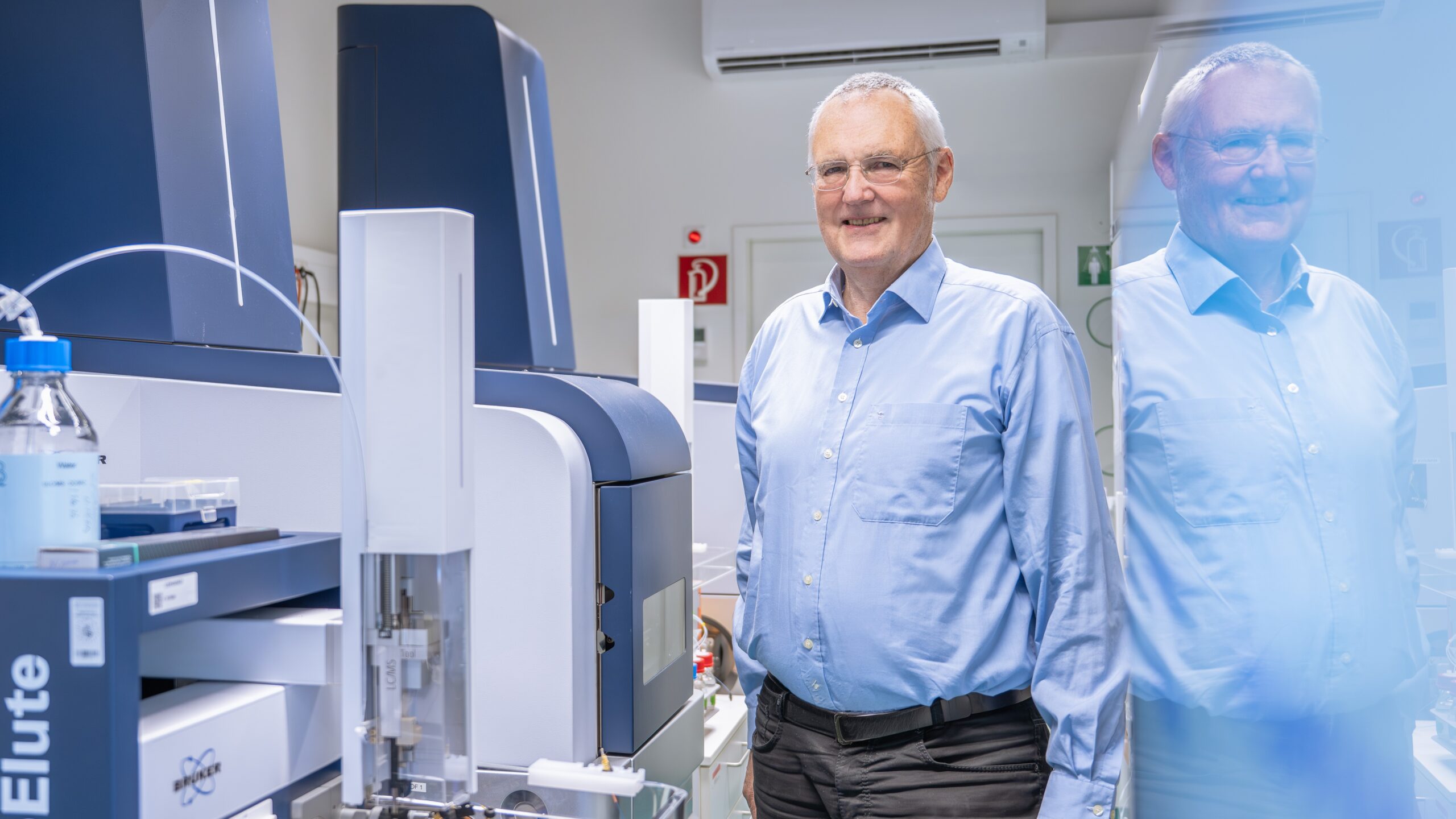
After almost 20 years, Professor Dr. Andreas von Deimling has handed over leadership of Neuropathology at Heidelberg University Hospital to Professor Dr. Dr. Felix Sahm.
When Andreas von Deimling was appointed W3 Professor of Neuropathology in 2007, Heidelberg Faculty of Medicine at Heidelberg University, together with the German Cancer Research Center (DKFZ), pursued a strategic goal: to establish Heidelberg as a leading international center for molecular brain tumor diagnostics. As Medical Director of Neuropathology at Heidelberg University Hospital (UKHD) and Head of the Clinical Cooperation Unit Neuropathology at UKHD and DKFZ, von Deimling and his team developed new molecular diagnostic procedures and classification methods that fundamentally transformed brain tumor diagnostics. Today, these approaches are used worldwide and have been incorporated into the World Health Organization (WHO) classification of brain tumors. Von Deimling has now handed over leadership of the department, which ranks among the world’s leading reference centers in its field, to Professor Dr. Dr. Felix Sahm.
“Professor von Deimling has advanced neuropathology in Heidelberg with exceptional innovative strength. For more than two decades, he has continually rethought his field, driving progress in molecular methods as well as AI-supported approaches to diagnostics. His work demonstrates how close collaboration between research, clinical medicine and other partners enables developments originating in Heidelberg to find their way into clinical practice and benefit patients around the world,” says Professor Hanns-Peter Knaebel, Chairman of the Board and Chief Medical Officer of UKHD, in recognition of von Deimling’s achievements.
“Excellent science and translation require an environment in which disciplines collaborate closely. Professor von Deimling has played a decisive role in shaping this scientific environment in the joint department with the DKFZ over many years and has spearheaded paradigm shifts in the precise diagnosis of neuro-oncological diseases. In doing so, he has made a significant contribution to establishing Heidelberg’s neuro-oncology research as one of the world’s most prominent centers,” says Professor Dr. Michael Boutros, Dean of Heidelberg Faculty of Medicine at Heidelberg University.
Technological transformation in neuropathology
When Andreas von Deimling took over Neuropathology in Heidelberg in 2007, the team consisted of twelve staff members working in administration, medicine, research and technical services. Tissue samples were evaluated primarily under the microscope. “The most sophisticated piece of equipment we had at the time was the coffee machine,” von Deimling recalls. Today, high-throughput sequencing, bioinformatics and artificial intelligence are central to daily practice. The department now even employs more computer scientists than physicians. Over the past two decades, the field has been “turned upside down” twice, as von Deimling puts it. Heidelberg was among the scientific pioneers of both developments.
The first paradigm shift was initiated by von Deimling and his research group through the development of a mutation-specific IDH1 antibody. Until then, neuropathologists had primarily classified certain particularly aggressive brain tumors, known as gliomas, according to the appearance of their cells under the microscope using various staining methods. The IDH1 antibody made it possible, for the first time, to determine whether a tumor carried a specific genetic alteration, the IDH1 mutation. Molecular information about a tumor could thus be incorporated directly into diagnostics – a decisive step toward more precise classification of brain tumors and the starting point for a reorganization of all gliomas in the WHO classification.
Classification system developed in Heidelberg adopted by the WHO
The second paradigm shift was based on an entirely new methodological approach. DNA methylation was recognized as particularly well suited to tumor classification, initially for brain tumors and later also for tumors outside the central nervous system. This concept forms the basis of the Heidelberg Classifier. The method analyzes chemical modifications of DNA that create characteristic patterns associated with different tumor types. “Every tumor has its own distinct epigenetic fingerprint, known as its methylation profile,” von Deimling explains.
The Heidelberg Classifier compares this profile against thousands of previously characterized tumors, enabling substantially more accurate classification of brain tumors. “This allows us to distinguish tumors that appear almost identical under the microscope but are biologically very different,” says the pathologist. As a result, numerous tumor types could for the first time be reliably distinguished from one another or newly defined. This form of tumor characterization was subsequently incorporated into the WHO classification of brain tumors. A spin-off company made the method available worldwide for routine diagnostic use.
With the introduction of artificial intelligence, the next technological leap is already well underway. AI helps analyze ever-growing datasets and further refine molecular diagnoses. For von Deimling, it comes as no surprise that neuropathology has become one of the most technologically advanced specialties in medicine. “I am really as much an engineer as I am a physician,” he says. Throughout his career, he has been driven by the aim of developing new tools for increasingly precise diagnostics.
According to von Deimling, major scientific advances are never achieved in isolation. The initial impetus for methylation-based classification came from colleagues in pediatric neuro-oncology and was further developed together with experts in neuropathology, pediatric neurology, neurosurgery and neuro-oncology at Heidelberg Faculty of Medicine at Heidelberg University and the DKFZ. Von Deimling attributes the success of the Heidelberg site above all to this close and collaborative interaction. Research and clinical application, he says, have been closely interconnected from the outset.
Extending methylation-based classification to sarcomas and skin tumors
For von Deimling, this has always included the targeted promotion of early-career researchers. Numerous former members of his research staff later went on to professorships or leadership positions, including in Hanover, Leipzig and Berlin. His successor, Professor Dr. Felix Sahm, also began his scientific career in Heidelberg. Following the handover of departmental leadership, von Deimling now sees his primary role as that of a mentor. In the future, he intends to devote even more time to research. His group is currently working, among other things, on AI-supported diagnostic methods and on extending methylation-based classification to additional tumor types such as sarcomas and skin tumors.
About Andreas von Deimling
Professor Dr. Andreas von Deimling was born in Freiburg in 1959 and studied medicine at the University of Freiburg. After positions in Zurich, Bonn, Boston and Berlin, he accepted the appointment to Heidelberg in 2007. There, he took over leadership of Neuropathology and the Clinical Cooperation Unit Neuropathology at the DKFZ. Von Deimling is one of the internationally leading neuropathologists and among the most highly cited researchers in his field. His scientific achievements have earned him numerous national and international honors, including the German Cancer Award, the International Prize for Translational Neuroscience, and election to the German National Academy of Sciences Leopoldina and the European Academy of Cancer Sciences.