Gyros Protein Technologies introduces Gyrolab HEK293 HCP Type SN and Type CL Kit Reagents to support biotherapeutic development
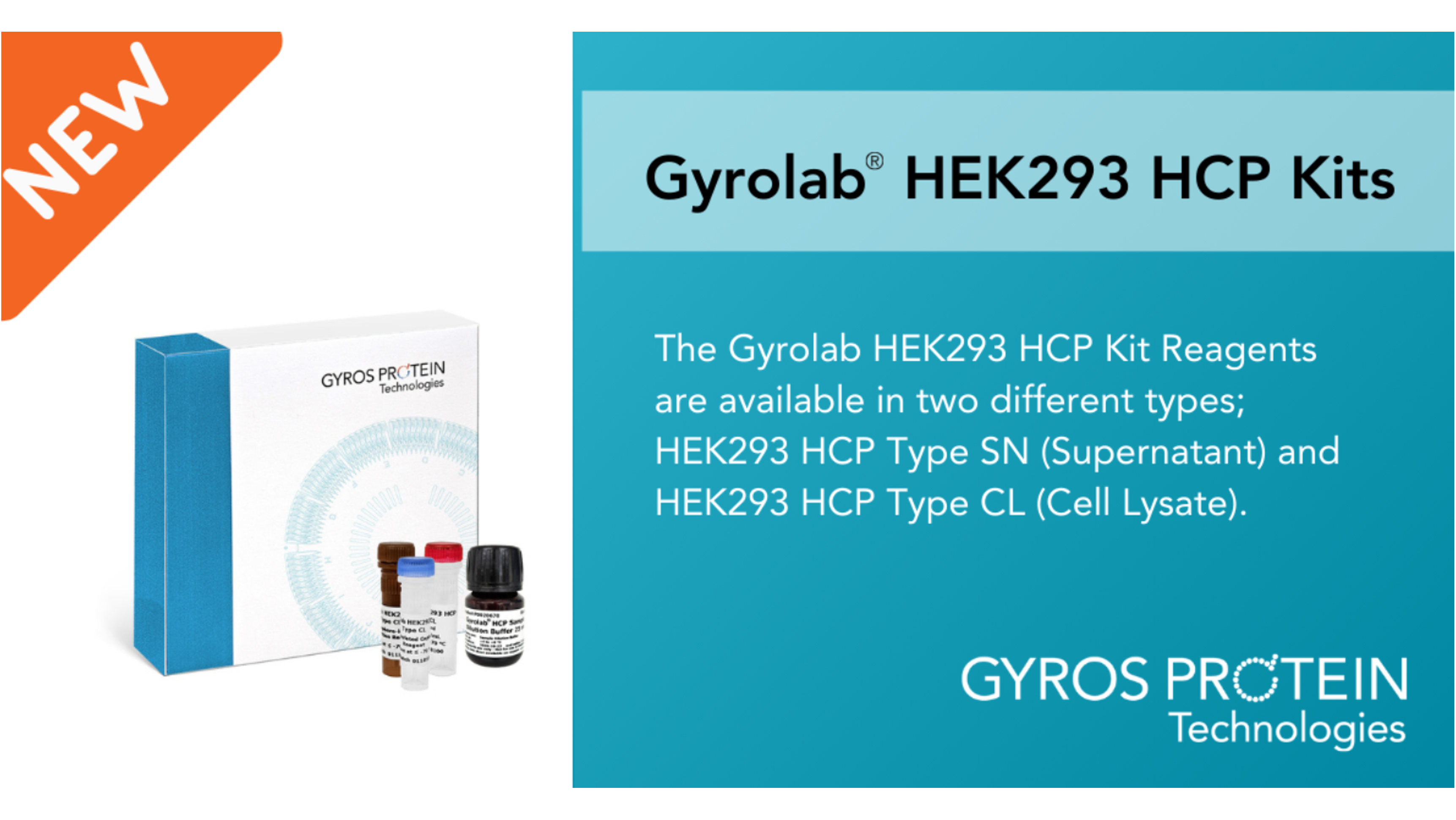
- Ready-to-use kits expand portfolio of host cell protein impurity kits, for quantification of host cell proteins from HEK293 cell lines
- Kits developed through a collaboration with BioGenes GmbH
Uppsala, Sweden, 05 February 2025: Gyros Protein Technologies AB, a pioneer in automated nanoliter-scale immunoassays and leading provider of peptide synthesizers, today announced the introduction of its Gyrolab® HEK293 HCP Type SN Kit Reagents and Gyrolab HEK293 HCP Type CL Kit Reagents. Developed with antibodies from BioGenes GmbH, a global leader in host cell protein (HCP) assay development, the new kits enable rapid detection of HCPs from HEK293 cell lines, adding to Gyros Protein Technologies’ growing portfolio of ready-to-use host cell protein impurity kits.
Removal of HCP is a critical step in biotherapeutic development to ensure quality, consistency and stability. Importantly, HCP can trigger immune responses in patients, potentially causing adverse effects ranging from mild allergic reactions to severe immunological complications and must therefore be removed for patient safety.
The introduction of these two new kits provides a fully validated solution for detection of critical host cell proteins in biotherapeutics expressed in HEK293 cells, offering greater sensitivity and excellent coverage. Although the Gyrolab platform was already compatible with BioGenes’ antibodies for detection of HEK293 host cell proteins, the introduction of off-the-shelf, plug and play kits enables reliable and reproducible detection on the automated Gyrolab immunoassay platform, with reduced sample volume and reagent consumption, improving analytical output and workflow productivity.
BioGenes’ 360-HCP antibodies are developed using an innovative approach that ensures they provide the broadest possible antigen coverage. These antibodies are produced by immunizing multiple species, leveraging a refined process for antigen and antibody preparation, and utilizing an optimized purification strategy. This results in multiple high-quality antibody preparations.
Mark Vossenaar, General Manager, Biopharmaceutical Development Division, Gyros Protein Technologies, commented: “Gyrolab HEK293 HCP Type SN Kit Reagents and Gyrolab HEK293 HCP Type CL Kit Reagents are valuable additions to our portfolio of HCP impurity kits. Our ready-to-use kits provide a rapid, reliable and sensitive solution for customers working to develop vital new biotherapeutics. The introduction of these new kits highlights our continued investment in expanded applications for the industry-leading Gyrolab systems.”
Dr. Alexander Knoll, CEO, BioGenes GmbH, commented: “We are excited that the HEK293/360 ELISA kits are now optimized for use with Gyrolab® technology. This collaboration provides a valuable tool for process optimization, and we believe that great results can be achieved through this combined strategy. Together, we are enabling orthogonal methods for drug development, increasing chances for successful market authorization whilst also improving drug efficacy, and thus patient safety.”
For more information on the Gyrolab HEK293 HCP Type SN Kit Reagents and Gyrolab HEK293 HCP Type CL Kit Reagents, please visit: gyrosproteintechnologies.com/immunoassays/products/gyrolab-hek293-hcp-kits