High Honor for Heidelberg Medical Ethicist: Professor Eva Winkler Elected to the Leopoldina
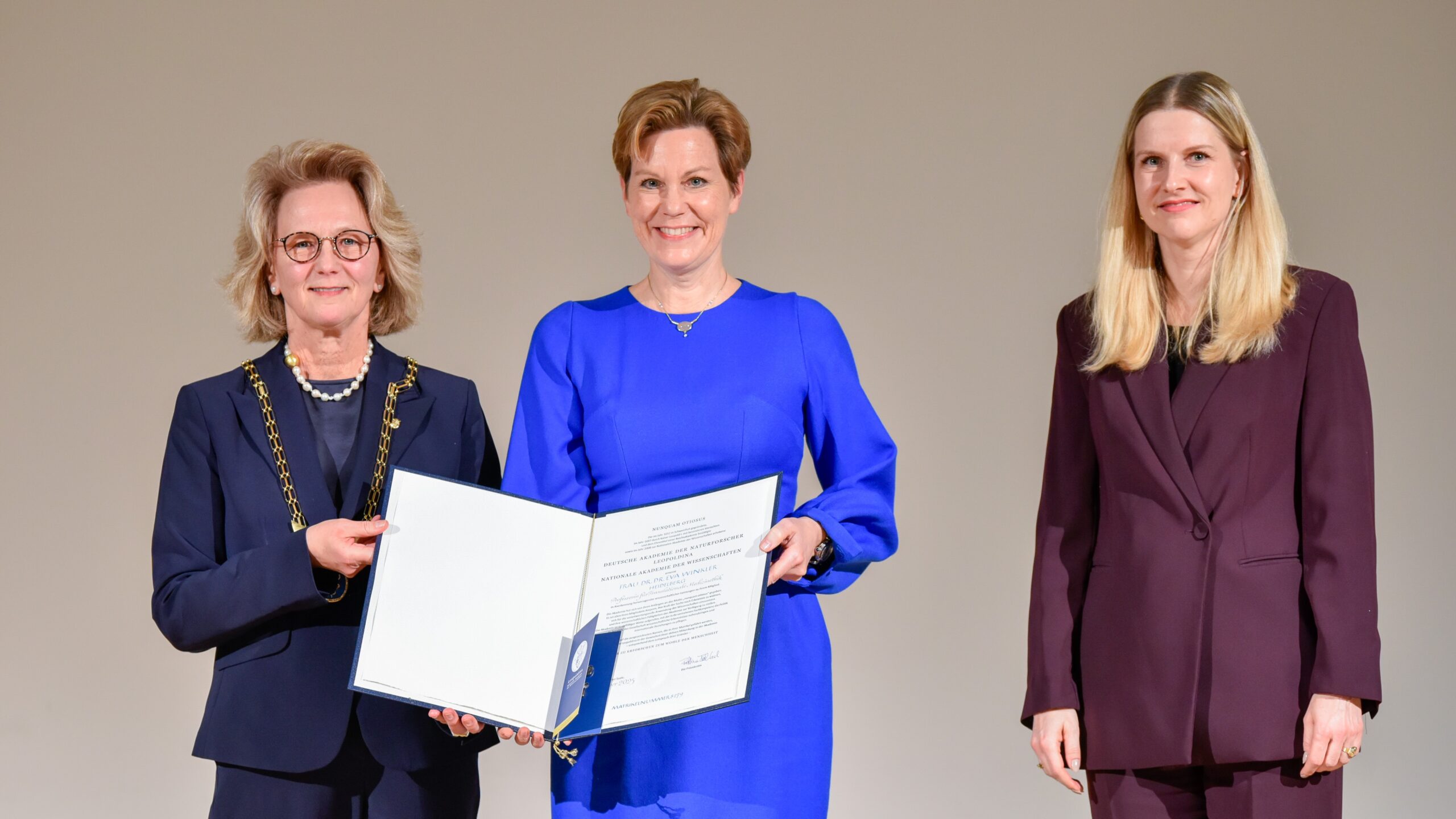
The German National Academy of Sciences Leopoldina has elected Professor Eva Winkler to its Class IV: Humanities, Social and Behavioural Sciences. As a member of the Leopoldina, the Professor of Translational Medical Ethics at the Heidelberg Faculty of Medicine at Heidelberg University will contribute to the Academy’s scientific position statements and policy recommendations. Her ongoing work focuses on ethical issues and challenges in medical research, clinical care, and public health.
Professor Eva Winkler formally received her membership certificate on Wednesday, 18 November 2026, during the Leopoldina Symposium “Climate Crisis and Society” in Halle (Saale), Germany. As an expert in medical ethics, she has been elected to the Academy’s Section for Philosophy of Science within the Class IV: Humanities, Social and Behavioural Sciences. An election to the German National Academy of Sciences is among the highest distinctions in academic research. The Leopoldina brings together researchers who have made outstanding contributions in their respective fields and who contribute their expertise to evidence-based advice for policymakers and society.
“New developments in medicine, from genome sequencing and personalized gene therapies to the use of artificial intelligence and the digitalization of health data, offer tremendous opportunities for patients. At the same time, however, they also raise complex ethical questions,” says Professor Winkler. Within the Leopoldina’s committees and working groups, she will engage in scientific exchange with members from a wide range of disciplines on these and other important issues shaping the future. In addition to contributing to statements and discussion papers, she will represent the Academy at national and international events. Beginning in 2027, Professor Winkler will also serve on the Leopoldina’s Standing Committee for Life Sciences, where the social relevance of research questions concerning life sciences are discussed from an interdisciplinary perspective. “I am delighted to contribute to ensuring that ethical considerations are consistently integrated into societal and political debates, particularly when it comes to modern biomedical research, patient care, and public health,” Professor Winkler says.
The photograph may be used only in connection with journalistic coverage of the subject matter of this press release and only if the photo credit is provided. The photograph may not be altered or used in a misleading manner, may not be used in an unrelated context or environment, and may not be passed on to third parties or archived.
About Eva Winkler
Eva Winkler is Professor of Translational Medical Ethics and Director of the Institute for Medical and Data Ethics at the Heidelberg Faculty of Medicine at Heidelberg University. She also serves as Vice Dean for Digitalization at the Faculty and is a member of the Executive Board of the National Center for Tumor Diseases (NCT) Heidelberg. She practices as a senior physician at the Department of Medical Oncology at Heidelberg University Hospital. Since 2024, she has been a member and Deputy Chair of the German Ethics Council (Deutscher Ethikrat). Since 2025, she has also served as Founding Director of Heidelberg University’s Camilla and Georg Jellinek Center for Ethics.
The German National Academy of Sciences Leopoldina
The German National Academy of Sciences Leopoldina provides independent, science-based advice to policymakers and society on both national and international levels. To this end, its members develop interdisciplinary statements grounded on scientific evidence. The Leopoldina has approximately 1,700 members from more than 30 countries and brings together expertise from nearly all fields of research. To date, it has published more than 350 statements and discussion papers. New members are elected exclusively on the nomination of existing members. Selection takes place through a multi-stage review process in which the scientific excellence of each nominee is thoroughly assessed.