Kevin Jahnke and Roman Sarott receive funding for interdisciplinary research projects
Researchers are conducting collaborative projects at the intersection of biomedicine and technology.
- Research group leaders Dr. Kevin Jahnke and Dr. Roman Sarott from the Max Planck Institute (MPI) for Medical Research in Heidelberg are collaborating with research groups at Heidelberg University to develop new approaches to drug transport in cells and the degradation of disease-causing proteins.
- The collaborative projects are funded through Field of Focus 1 of the Heidelberg University of Excellence; the “Explorer Projects” funding line is part of the initiatives the university is implementing as a University of Excellence.
- Research collaborations between university research groups and partners are supported for two years with up to 50,000 euros per year.
How can disease-causing proteins be not only blocked but also completely removed from the cell? Dr. Roman Sarott of the MPI for Medical Research and Prof. Dr. Claudio Joazeiro of the Center for Molecular Biology at Heidelberg University (ZMBH) are investigating this question in a joint project funded through Field of Focus 1. Their goal is to jointly develop so-called protein degraders that can not only inhibit disease-causing proteins within a cell but also break them down.
In addition, the partners plan to use so-called proximity-inducing molecules to investigate the pathological stress associated with protein translation, which may play an important role in neurological disorders. The project combines the chemical tools developed by the MPI for Medical Research group “Chemically Induced Proximity” with the expertise of the Joazeiro research group in the quality control of protein synthesis. The tools developed are expected to provide new insights into the molecular mechanisms underlying neurological disorders such as Charcot-Marie-Tooth (CMT) syndrome.
Roman Sarott studied chemistry at ETH Zurich and wrote his master’s thesis at the University of California, Berkeley. After a research fellowship in Basel, he returned to ETH Zurich, where he earned his Ph.D. in organic chemistry with a thesis titled “Fluorescent and Photoswitchable Probes for Cannabinoid Receptors.” In 2021, he moved to Stanford University in California as a postdoctoral researcher. Since January 2025, he has headed the “Chemically Induced Proximity” research group at the Max Planck Institute for Medical Research in Heidelberg.
New approaches to drug delivery in cells
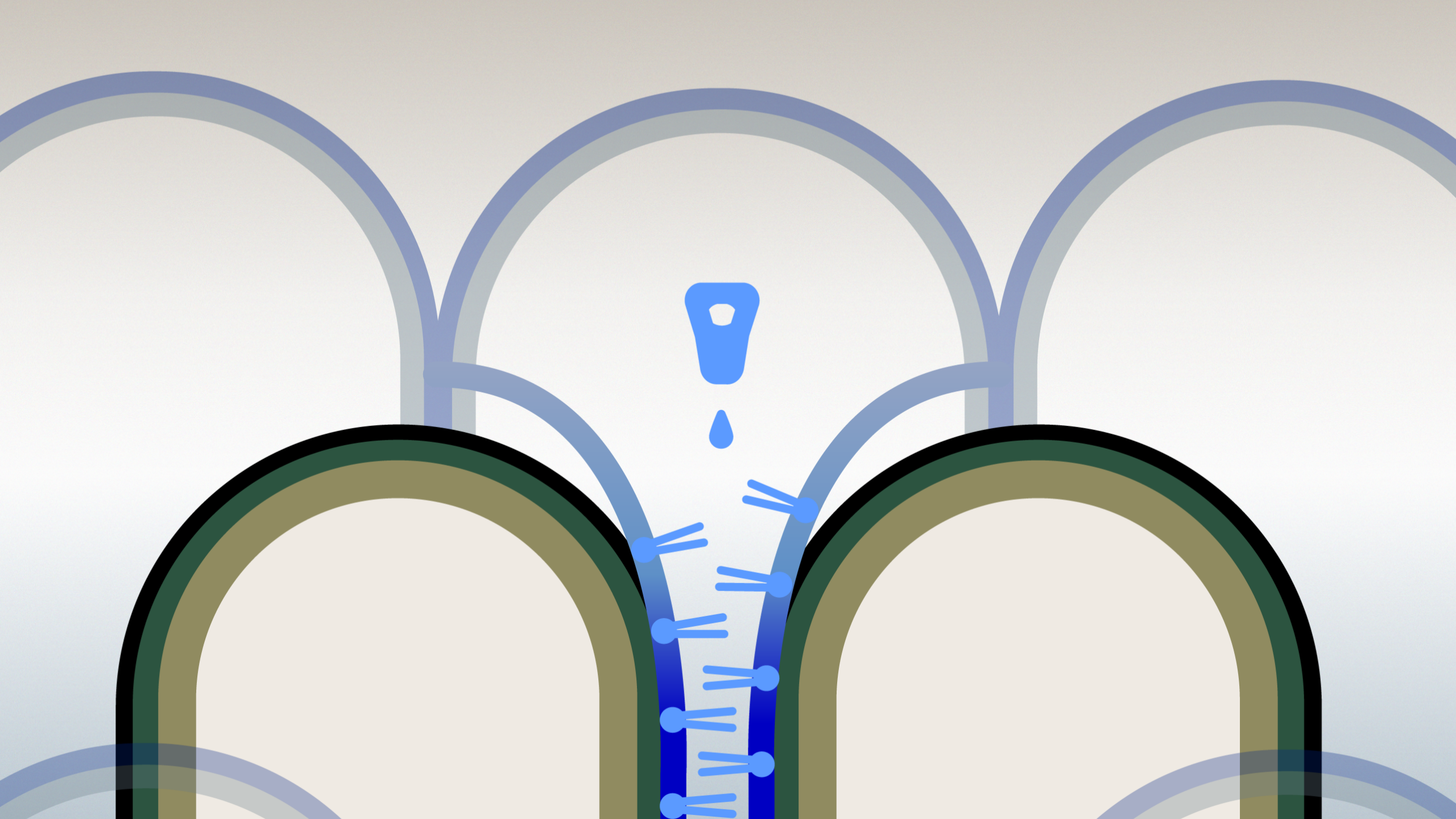
A new approach to the transport of active substances within cells is the focus of the second collaborative project that Dr. Kevin Jahnke is pursuing together with Dr. Michael Gerlt from the Institute for Molecular Systems Engineering and Advanced Materials (IMSEAM) at Heidelberg University. The partners are developing a platform capable of precisely controlling tiny amounts of liquid: Using sound waves, they aim to specifically load small fat droplets – known as lipid vesicles – with active ingredients. These vesicles, which measure only about 100 to 200 nanometers in size, can serve as transport vehicles for therapeutic substances. Until now, efficiently loading them with relevant active ingredients has posed a major technical challenge.
In this project, Kevin Jahnke is contributing his experience in the biophysics of lipid membranes, while Michael Gerlt’s research group is bringing its expertise in acustofluidics. Together, they aim to investigate how the properties of the vesicles and the acoustic forces applied influence the loading process and how its efficiency can be optimized.
Kevin Jahnke studied physics at Heidelberg University and conducted research at the University of Cambridge during his master’s thesis. After completing his Ph.D. at the Max Planck Institute for Medical Research, he worked as a postdoctoral researcher at Harvard University (USA) starting in 2022. As an experimental biophysicist, he conducts research on lipid membranes, cellular biophysics, and drug delivery. Since March 2026, he has headed a project funded by the Emmy Noether Program of the German Research Foundation (DFG).
Interdisciplinary research projects in the life sciences
Through Field of Focus 1 (FoF1), Heidelberg University promotes innovative, interdisciplinary collaboration with other institutions at the intersections of the life sciences, medicine, and engineering. The “Explorer Projects” funding program is part of the initiatives that Heidelberg University is implementing as a University of Excellence. The goal is to strengthen interdisciplinary collaboration. The projects are coordinated by early-career researchers and funded over a two-year period.