mRNA rejuvenates aging immune system – the liver as a fountain of youth
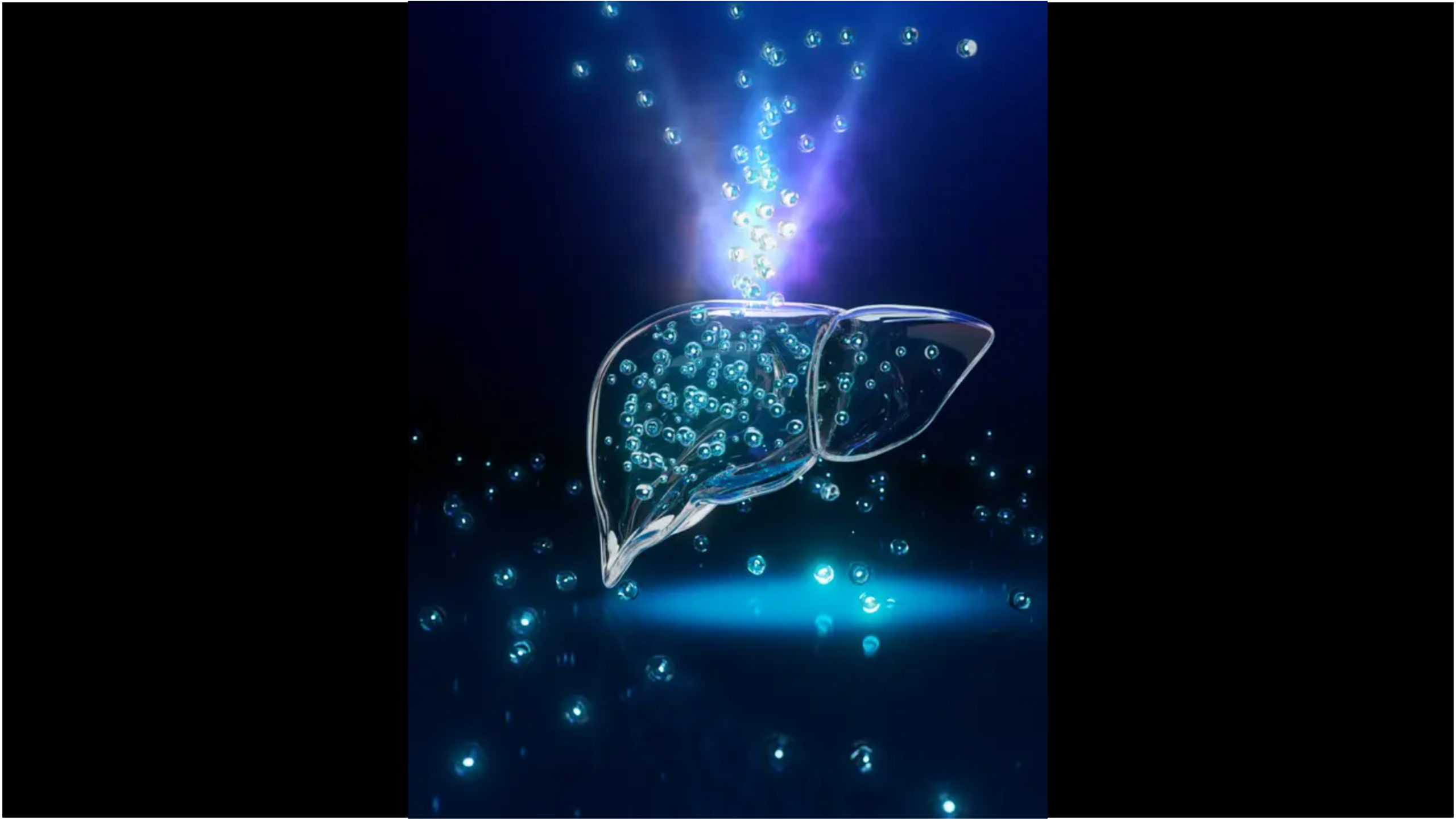
Can the weakened immune systems of older individuals be rejuvenated? Researchers from the German Cancer Research Center (DKFZ), HI-STEM*, and the Broad Institute have demonstrated that this is possible with an innovative approach. In a study now published in Nature, the team showed that mRNA technology can be used to transform the liver in mice into a temporary source of important immune regulatory factors that are naturally lost during aging. This restores the formation of new immune cells, allowing older animals to develop robust immune responses again and fight tumors effectively.

With age, the immune system loses its power: the body’s defense against infection weakens, tumor cells run rampant, and vaccinations become less effective. The underlying cause is the involution of the thymus gland. This small organ, located above the heart, is responsible for the maturation of T cells in young people. With the age-related decline of the thymus, the number of T cells decreases, the repertoire of antigens they recognize shrinks, and immune responses become weaker overall.
“Much has already been attempted to halt or reverse the age-related involution of the thymus,” explains Mirco Friedrich (DKFZ, HI-STEM, Broad Institute). “Unfortunately, without much success so far.” Together with his colleagues in Feng Zhang’s department at the Broad Institute in Cambridge, Massachusetts, Friedrich pursued a completely novel approach to rejuvenating the aging immune system.
The idea: outsourcing of immune functions to the liver
The researchers first investigated which maturation signals are lacking in the immune system in old age. Using complex single-cell analyses, they discovered that three important signaling pathways in particular decline with age: Notch signaling, FLT3 ligand, and interleukin-7. All three are crucial for the maturation of young T cells in the thymus and for the function of central immune cells.
What if these signals could be substituted? The team developed a combination of three mRNA molecules that code for these three signaling factors. Packaged in tiny fat droplets (“lipid nanoparticles”), the mRNA molecules enter the liver cells of the mice. There, they briefly produce precisely those proteins that are lacking in the aging immune system.
This therapy has dramatic effects: Older mice once again produce more young, naive T cells and are thus much better able to ward off new pathogens. At the same time, the functions of two other important players in the immune system, dendritic cells and B cells, which often lose activity with age, improve. The immunological improvements are directly reflected in the ability to respond to vaccinations – an effect that corresponded to a “rejuvenation” of the vaccine response by several months in the study – which represents a significant improvement given the short lifespan of mice.
Rejuvenated immune system can fight off tumor cells
The effect on tumors is also remarkable. After mRNA treatment, more tumor-fighting CD8 T cells invaded the tissue again, and the animals responded significantly better to immunotherapies such as checkpoint inhibitors. This form of therapy is known to be less effective in older patients than in younger adults. In particularly aggressive melanoma models, it was even possible to completely suppress tumors – a result that was not observed in untreated old mice.
The researchers deliberately designed the effect of mRNA therapy to be temporary. The mRNA is only converted into proteins in the liver for a short time, and the signaling factors produced disappear again after a while. This allows the effect to be finely dosed and minimizes the risk of unintended long-term changes. There was no evidence of autoimmunity or liver toxicity.
Great potential of mRNA therapies
The results open up a new perspective: instead of directly repairing the age-related shrinkage and functional impairment of the thymus, the important maturation signals for the immune system can simply be generated at another accessible location in the body. The liver is particularly well suited for this purpose, as it naturally releases large amounts of proteins into the bloodstream and its synthesis capacity remains largely intact even in older age.
The authors see great potential in this versatile approach, which can be flexibly expanded. For example, it is conceivable that in the future, other factors that are lost during aging and contribute to a decline in immune function could be replaced.
“The immune system ages, but it does not irreversibly lose its abilities. If we provide it with the missing signals again, it can once more perform amazing feats,” explains first author Mirco Friedrich, who, in addition to his research activities, works as a hematologist-oncologist at Heidelberg University Hospital. The study highlights the potential of mRNA technologies far beyond their known applications in vaccines—as tools that can be used to restore biological functions in a time-limited and extremely precise manner.
Mirco J. Friedrich, Julie Pham, Jiakun Tian, Hongyu Chen, Jiahao Huang, Niklas Kehl, Sophia Liu, Blake Lash, Fei Chen, Xiao Wang, Rhiannon K. Macrae, and Feng Zhang: Transient hepatic reconstitution of trophic factors enhances aged immunity
Nature 2025, DOI https://www.nature.com/articles/s41586-025-09873-4
Junior Research Group Hematology and Immune Engineering
*The Heidelberg Institute for Stem Cell Technology and Experimental Medicine (HI-STEM) gGmbH was founded in 2008 as a public-private partnership between the DKFZ and the Dietmar Hopp Foundation.