New Findings on the First Steps in Protein Synthesis
International research team under Heidelberg supervision examines role of NAC complex in essential process of protein folding
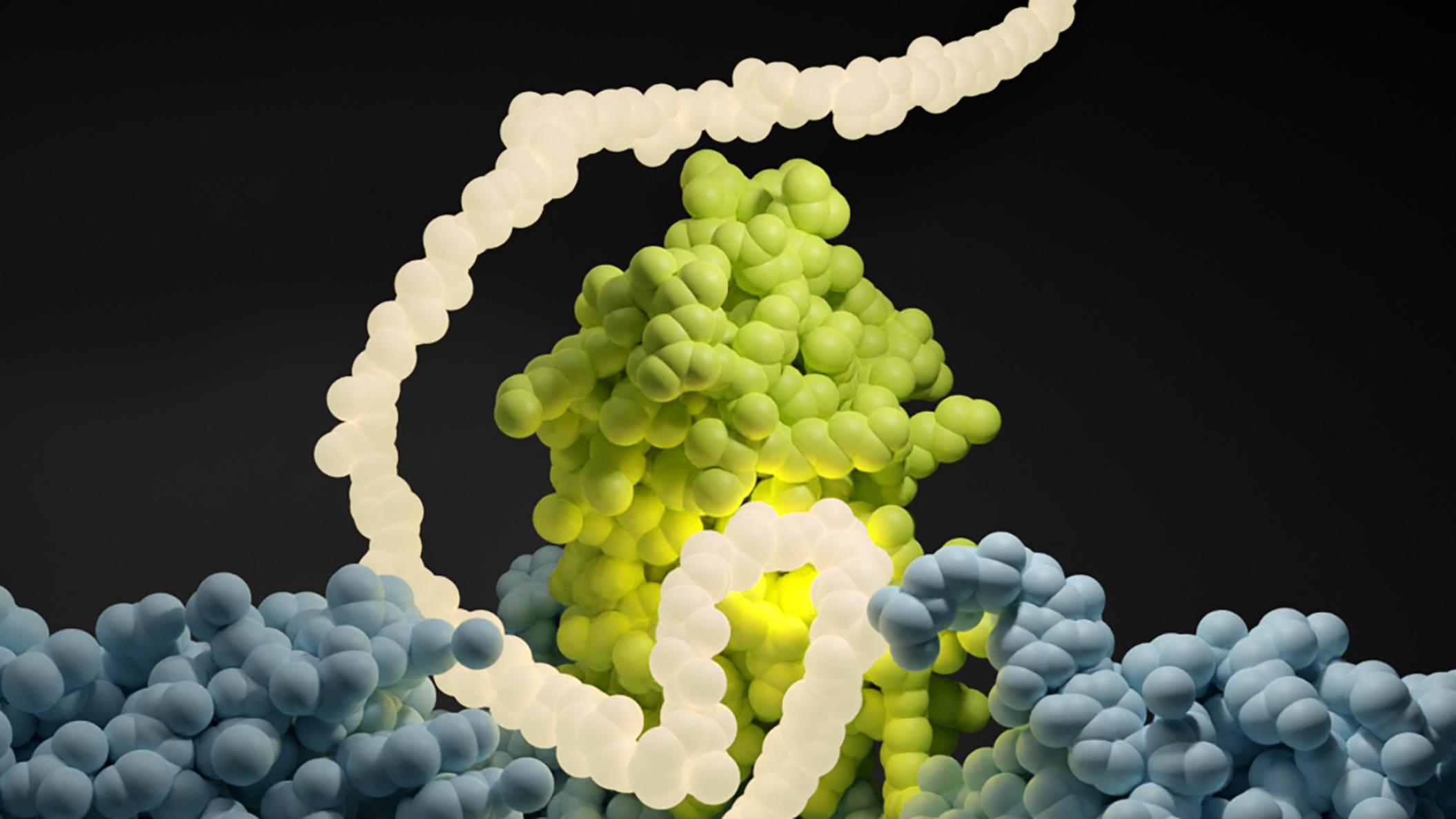
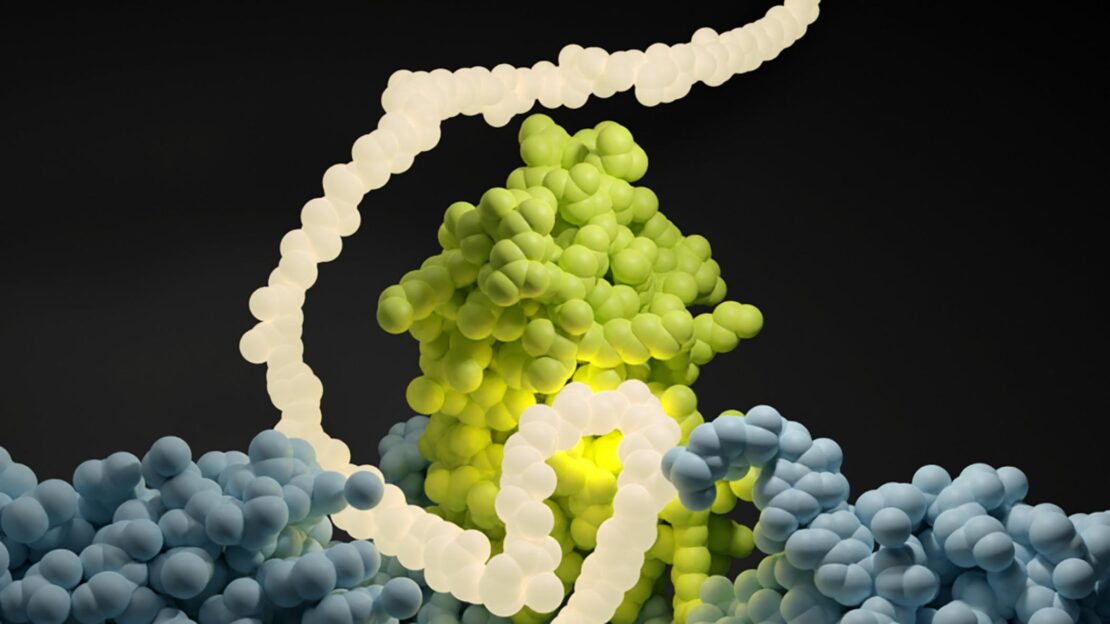
In the earliest phase of creating human proteins, the protein complex NAC performs an essential task by starting the first steps towards folding proteins into their correct three-dimensional structures. This discovery was made by an international research team led by scientists from the Center for Molecular Biology of Heidelberg University. They found that the NAC complex binds to the nascent protein building-blocks formed by the ribosome, i.e., the amino acid chains, and initiates the folding that is essential for functional proteins. According to the scientists, the research results provide not only new findings on protein synthesis but also insights into cellular strategies to avoid incorrect folding, which can lead to serious illnesses.
The protein complex NAC – short for nascent polypeptide-associated complex – occurs in all eukaryotes and, also in human cells, performs vital tasks in connection with protein synthesis. To do so, NAC binds to the ribosome, i.e., the cells’ protein factory, where, with the aid of enzymes and other molecular factors, it coordinates the different steps to make proteins. According to Heidelberg molecular biologist Prof. Dr Bernd Bukau, the extent to which the NAC complex also plays a direct role in protein folding was as yet unknown. During this folding process, the originally linear amino acid chains take on their protein-specific three-dimensional structures. Only then are the proteins functional. Folding defects are associated with many illnesses, including neurodegenerative diseases like Alzheimer’s, Parkinson’s or Huntington’s disease.
The international research team has now discovered that the protein complex NAC already intervenes in the very early stages of protein folding, that is, as soon as the amino acid chains produced in the ribosome leave the ribosomal tunnel. In their studies the scientists found that NAC binds to a large fraction of all nascent proteins produced in a human cell, in other words, during their still ongoing synthesis through the ribosome. In biophysical analyses with single molecules, they were able to show that the NAC complex induces the correct folding of proteins through this interaction. “At the same time, NAC prevents incomplete intermediate products from leading to incorrect folding,” explains Prof. Bukau, who heads the “Biogenesis and Quality Control of Proteins” research group at the Center for Molecular Biology of Heidelberg University (ZMBH).
Using cryo-electron microscopy, the international research team also revealed how the NAC complex binds to the newly formed amino acid chains. NAC has a binding site facing the ribosomal tunnel, which is designed for specific areas in the nascent proteins. An artificial variant of the protein complex without this binding site created as part of the experiments was no longer able to fulfil NAC’s folding function. The team also discovered that NAC reacts dynamically to the respective composition of the nascent proteins and changes its position at the ribosomal tunnel exit. That way the NAC complex can adapt its role in promoting folding to the needs of the folding process. “Researchers have long known that the NAC complex intervenes in different ways in the various processes of protein synthesis and plays an important role as a molecular control center. With our results we can add a further piece of the puzzle to the still incomplete picture,” says Dr Günter Kramer, head of the ZMBH group “Cotranslational Protein Maturation” which collaborated in this project.
The research studies were conducted in the context of the ERC Synergy consortium “Mechanisms of co-translational assembly of multi-protein complexes”. This joint project, receiving funds from the European Research Council (ERC), is coordinated by Prof. Bukau at Heidelberg University. Likewise participating are the teams of Prof. Dr Sander Tans from AMOLF, a research institute for the physics of functional complex matter in Amsterdam (Netherlands), and Prof. Dr Nenad Ban, a researcher at ETH Zurich (Switzerland). In addition, Prof. Dr Shu-ou Shan’s research group at the California Institute of Technology in Pasadena, California (US), contributed to the present studies. Alongside the ERC, the research was also supported by the German Research Foundation, the National Institutes of Health and the National Science Foundation (US), as well as the Swiss National Science Foundation. The research results appeared in “Molecular Cell”.
Original publication
J. Santos, M. Günnigmann, R. J. Gora, M. Iljina, M. Predin, I. E. Kotan, P. De, D. Choudhary, J. Jang, F. Tippmann, C. Hins, N. Ban, S. J. Tans, S. Shan, G. Kramer, and B. Bukau: NAC promotes co-translational protein folding at the ribosomal tunnel exit. Molecular Cell (23 March 2026)