January 16, 2025

New Publication: Circulating tumor cell plasticity determines breast cancer therapy resistance via neuregulin 1-HER3 signaling

New Publication: Circulating tumor cell plasticity determines breast cancer therapy resistance via neuregulin 1-HER3 signaling

Würth, R., Donato, E., Michel, L.L. et al. Circulating tumor cell plasticity determines breast cancer therapy resistance via neuregulin 1–HER3 signaling. Nat Cancer (2025). https://doi.org/10.1038/s43018-024-00882-2

Abstract

Circulating tumor cells (CTCs) drive metastasis, the leading cause of death in individuals with breast cancer. Due to their low abundance in the circulation, robust CTC expansion protocols are urgently needed to effectively study disease progression and therapy responses. Here we present the establishment of long-term CTC-derived organoids from female individuals with metastatic breast cancer. Multiomics analysis of CTC-derived organoids along with preclinical modeling with xenografts identified neuregulin 1 (NRG1)–ERBB2 receptor tyrosine kinase 3 (ERBB3/HER3) signaling as a key pathway required for CTC survival, growth and dissemination. Genome-wide CRISPR activation screens revealed that fibroblast growth factor receptor 1 (FGFR1) signaling serves a compensatory function to the NRG1–HER3 axis and rescues NRG1 deficiency in CTCs. Conversely, NRG1–HER3 activation induced resistance to FGFR1 inhibition, whereas combinatorial blockade impaired CTC growth. The dynamic interplay between NRG1–HER3 and FGFR1 signaling reveals the molecular basis of cancer cell plasticity and clinically relevant strategies to target it. Our CTC organoid platform enables the identification and validation of patient-specific vulnerabilities and represents an innovative tool for precision medicine.
Our latest News

discover more
Study shows how lymph node architecture affects cancer growth

Study shows how lymph node architecture affects cancer growth

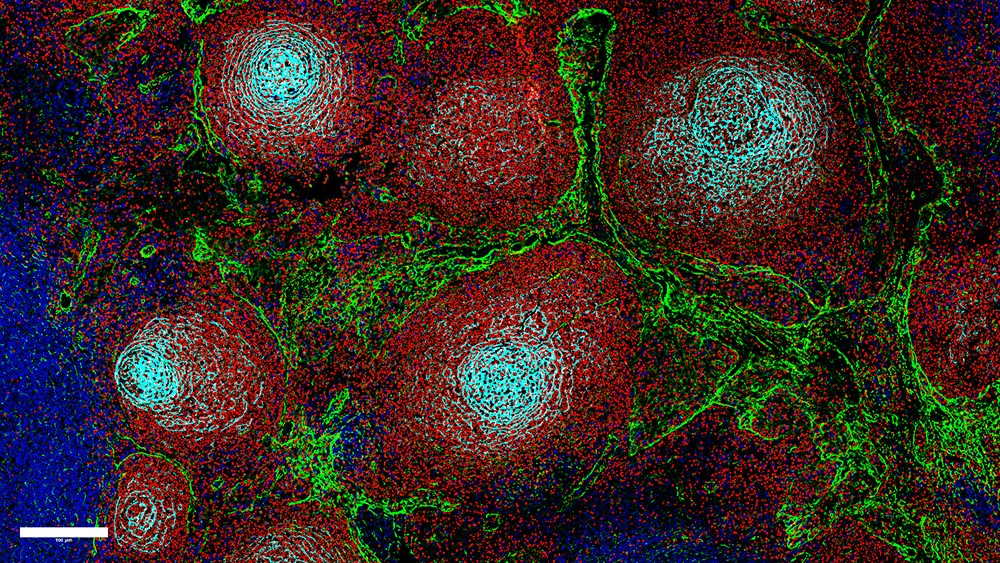
A new study maps the organisation of immune and stromal cells in lymph nodes and shows how loss of this organisation affects prognosis in certain lymphomas Summary Researchers from EMBL Heidelberg, Heinrich Heine University Düsseldorf (HHU), and Düsseldorf University Hospital (UKD) have succeeded for the first time in mapping the organisation of immune and stromal […]

High-throughput testing of drugs on mini-tumors reveals vulnerabilities in meningiomas

High-throughput testing of drugs on mini-tumors reveals vulnerabilities in meningiomas

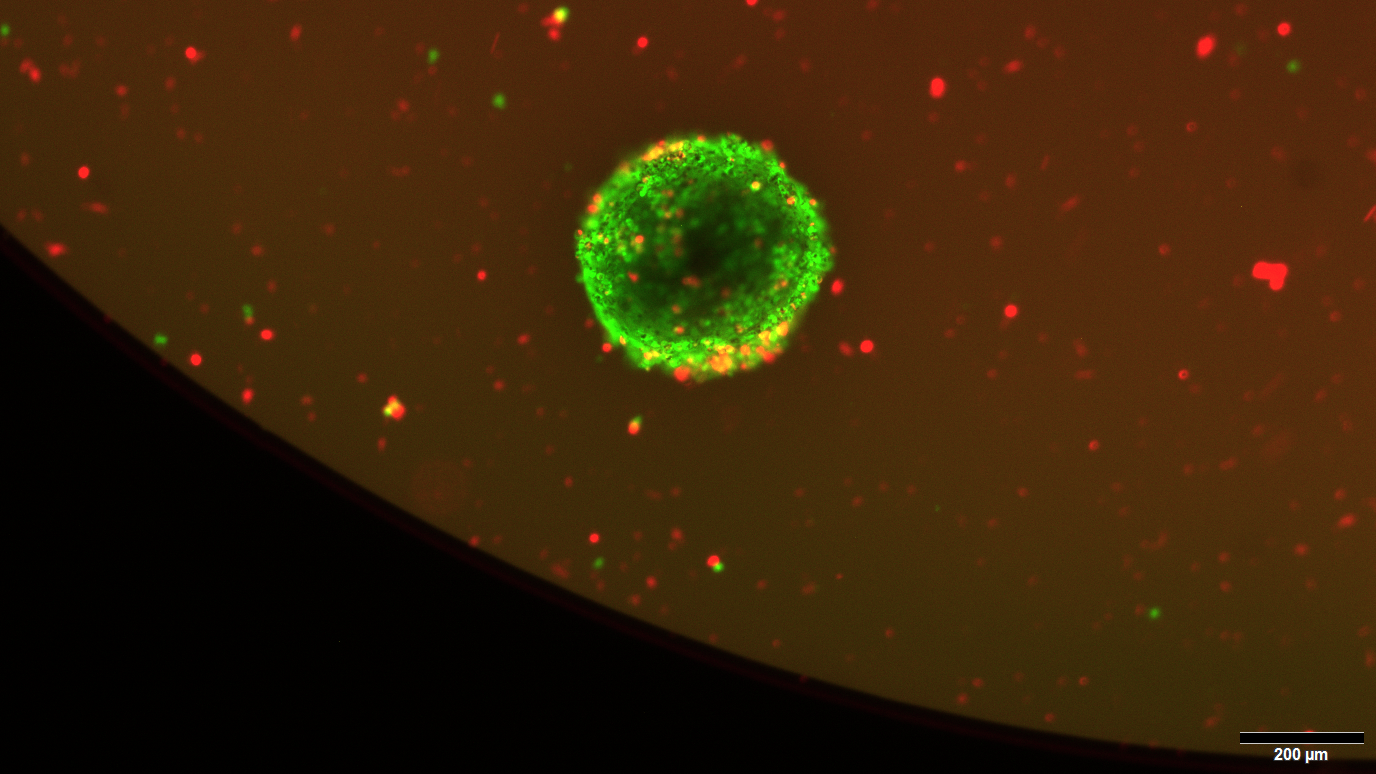
Meningiomas are the most common brain tumors. Until now, only two methods have generally been considered for treating them: surgery and radiation therapy. A research team in Heidelberg has now developed a potential new approach for effective systemic therapy. Its members from Heidelberg University’s Faculty of Medicine and Heidelberg University Hospital (UKHD) tested the effectiveness […]

Development of a method for improved monitoring of the early stages of bone marrow cancer

Development of a method for improved monitoring of the early stages of bone marrow cancer

An international team, including researchers from Heidelberg University’s Faculty of Medicine and Heidelberg University Hospital, has developed the PANGEA-SMM prognostic tool. This tool makes it possible to determine with greater accuracy than before whether a precancerous condition—known as “smoldering multiple myeloma”—is progressing and thus requires treatment. The free online tool for treatment teams is available […]

GET IN TOUCH

Stay Updated with bioRN’s Newsletter

Sign up for our newsletter to discover more!
* required

BioRN (BioRN Network e.V. and BioRN Cluster Management GmbH) will use the information you provide on this form to be in touch with you and to provide updates and marketing. Please let us know all the ways you would like to hear from us:

You can update your subscription preferences or unsubscribe at any time. Just follow the unsubscribe or update link in the footer of automated emails you receive from us, or by contacting us at info@biorn.org. We will treat your information with respect. For more information about our privacy practices please visit our website: www.biorn.org. By clicking below, you agree that we may process your information in accordance with these terms.

We use Mailchimp as our marketing platform. By clicking below to subscribe, you acknowledge that your information will be transferred to Mailchimp for processing. Learn more about Mailchimp's privacy practices.

Intuit Mailchimp