January 11, 2026

New Publication: From Sample to Mixed Reality: A Translational 3D MALDI Imaging Platform for Advanced 3D Spatial Omics Analysis of 3D Cell Culture Disease Models

New Publication: From Sample to Mixed Reality: A Translational 3D MALDI Imaging Platform for Advanced 3D Spatial Omics Analysis of 3D Cell Culture Disease Models

S. A. Iakab, J. Cordes, T. Enzlein, et al. “ From Sample to Mixed Reality: A Translational 3D MALDI Imaging Platform for Advanced 3D Spatial Omics Analysis of 3D Cell Culture Disease Models.” Adv. Sci. (2025): e16098. https://doi.org/10.1002/advs.202516098

Abstract

Human 3D cell cultures, including spheroids and organoids, are essential biological models for translational pharmaceutical and biomedical research. However, their 3D analysis using 2D- matrix-assisted laser desorption/ionization (MALDI) imaging-based spatial metabolomics remains challenging, since end-to-end solutions for 3D-enabling sample preparation, 3D-data processing, 3D-rendering, and 3D-user interaction are lacking. Here, a 3D-MALDI imaging platform and resource that advances each of three pillars is presented: i) the sample preparation introduces custom-designed molds for precise and reproducible embedding and cryosectioning of multiple spheroids and organoids, a substantial improvement over ad hoc or single-sample sectioning workflows; ii) the integrated computational framework that facilitates the generation of high-fidelity volumetric datasets that enable voxel-based analysis for feature discovery, surpassing traditional slice-based 2D analysis; iii) the mixed reality tool enables immersive spatial exploration of molecular distributions in 3D, extending user engagement beyond static 3D renderings. The versatility of the platform is illustrated by its translation to a clinical framework for the molecular profiling of patient-derived colon cancer organoids. Collectively, this integrated approach enables spatial metabolomic analysis in 3D, offers increased throughput, and paves the way for next-generation molecular diagnostics and personalized medicine applications.
Our latest News

discover more
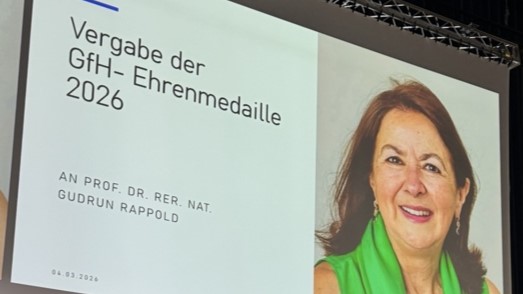
Prof. Gudrun Rappold receives medal of honor from the German Society for Human Genetics

Prof. Gudrun Rappold receives medal of honor from the German Society for Human Genetics

Prof. Dr. Gudrun Rappold, senior professor at Heidelberg University’s Medical Faculty, has been awarded the Medal of Honor by the German Society for Human Genetics. The Medal of Honor is the highest award given by the professional association and recognizes outstanding scientific achievements in human genetics as well as special contributions to the advancement of […]

How cancer immunotherapies affect the heart

How cancer immunotherapies affect the heart

The Hector Foundation is providing €1.3 million in funding for an interdisciplinary research project investigating the cardiological side effects of checkpoint inhibitors. The consortium, with partners at Heidelberg University’s Medical Faculty, the German Cancer Research Center, the Max Delbrück Center in Berlin, and the University Medical Center Schleswig-Holstein in Kiel, is investigating why these cancer […]

Early detection contributes to declining breast cancer mortality rates in Europe

Early detection contributes to declining breast cancer mortality rates in Europe

The introduction of mammography screening programs in Europe has significantly changed breast cancer diagnoses, accompanied by a decline in breast cancer mortality rates. This is shown by one of the most comprehensive analyses of population-based data on breast cancer in 21 European countries to date, led by the German Cancer Research Center (DKFZ). The most […]

GET IN TOUCH

Stay Updated with bioRN’s Newsletter

Sign up for our newsletter to discover more!
* required

BioRN (BioRN Network e.V. and BioRN Cluster Management GmbH) will use the information you provide on this form to be in touch with you and to provide updates and marketing. Please let us know all the ways you would like to hear from us:

You can update your subscription preferences or unsubscribe at any time. Just follow the unsubscribe or update link in the footer of automated emails you receive from us, or by contacting us at info@biorn.org. We will treat your information with respect. For more information about our privacy practices please visit our website: www.biorn.org. By clicking below, you agree that we may process your information in accordance with these terms.

We use Mailchimp as our marketing platform. By clicking below to subscribe, you acknowledge that your information will be transferred to Mailchimp for processing. Learn more about Mailchimp's privacy practices.

Intuit Mailchimp