Newly Discovered Marker for Metastatic Colorectal Cancer Is the Achilles’ Heel of Highly Aggressive Tumor Cells
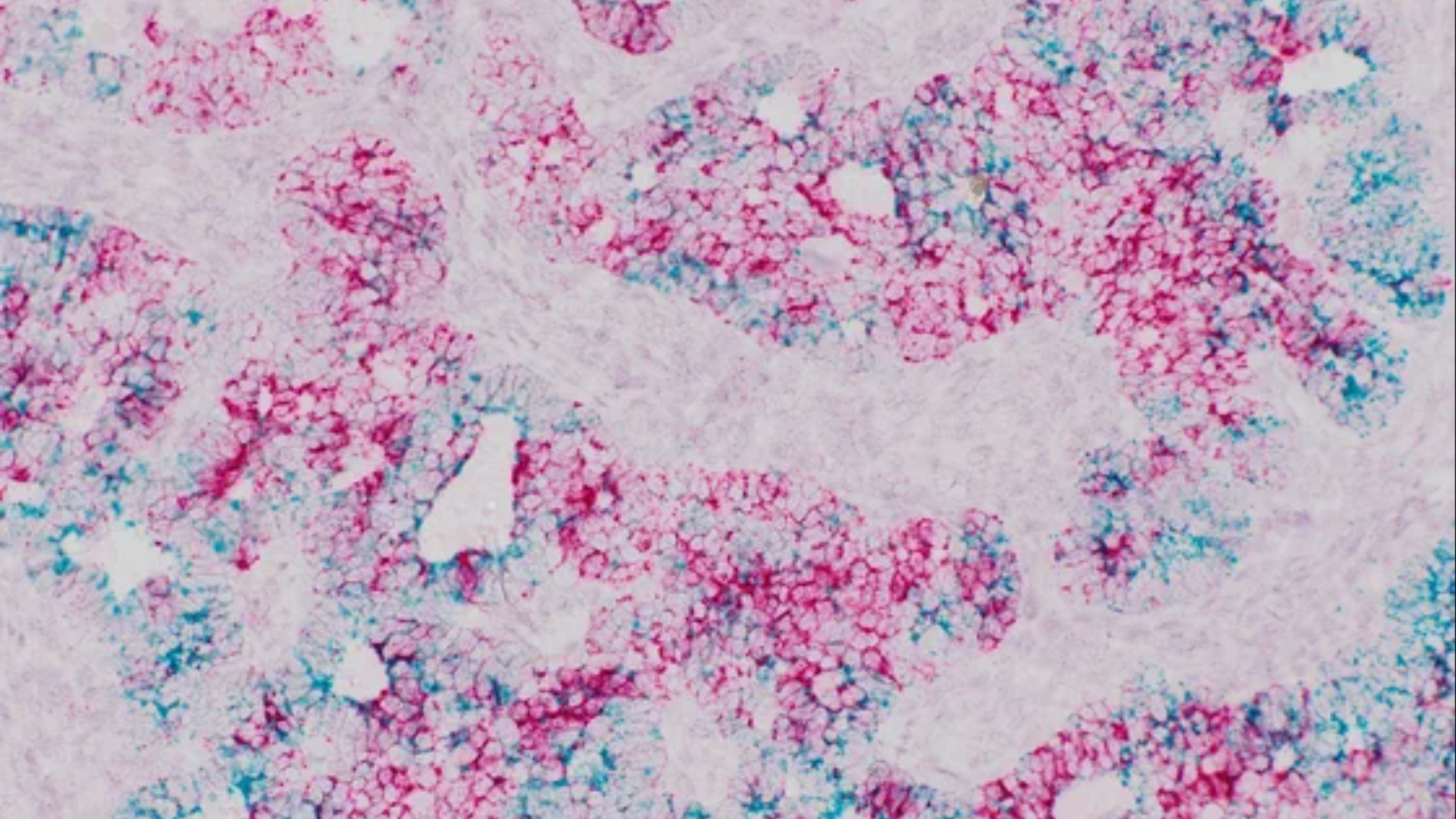
A team led by researchers from the German Cancer Research Center (DKFZ) and the HI-STEM* Stem Cell Institute has discovered a promising new approach to treating advanced colorectal cancer. The study, published in Nature, identifies a key marker of particularly aggressive and treatment-resistant colorectal cancer cells. At the same time, the researchers demonstrate using mini-tumors and mouse models that already approved drugs targeting this marker can specifically attack the metastasis-initiating cells and, when combined with standard therapies, significantly improve their effectiveness.
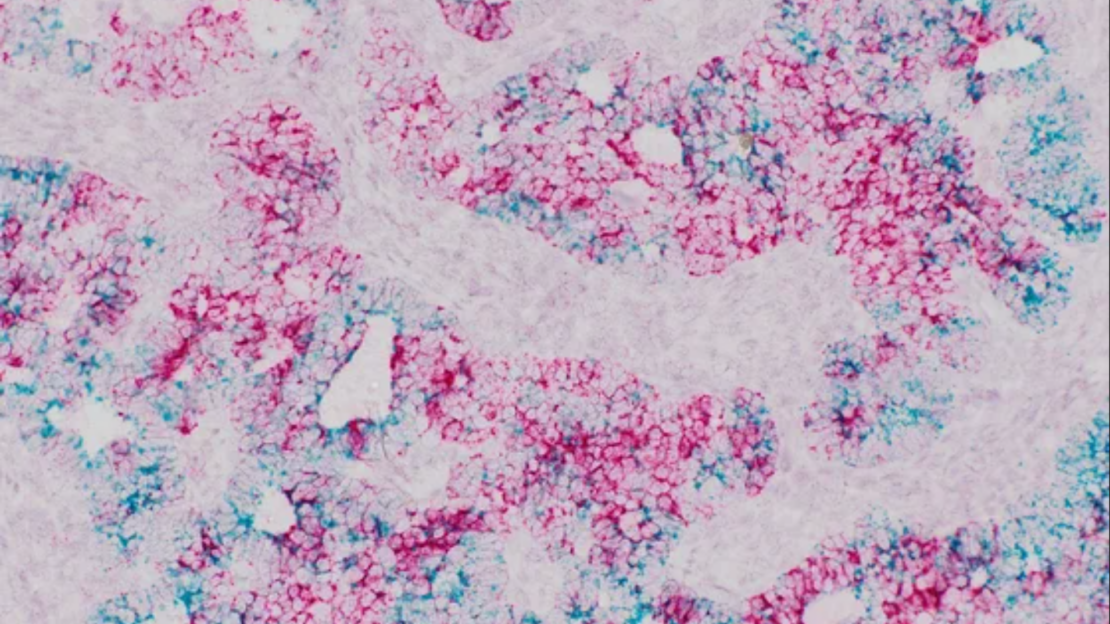
Colorectal cancer is one of the leading causes of cancer-related deaths worldwide. The situation is particularly critical in the case of metastatic tumors: as soon as cancer cells have spread to other organs, the chances of recovery drop significantly. One reason for the poor prognosis is the enormous adaptive capacity of tumor cells, which often alter their biological state during therapy and thereby develop resistance. This so-called cellular plasticity is considered one of the greatest challenges in cancer medicine.
TROP2 Marks Dangerous Metastasis-Initiating Colorectal Cancer Cells
The team led by study director René Jackstadt, HI-STEM and DKFZ, has now demonstrated that the cell membrane protein TROP2 (Trophoblast Cell Surface Antigen 2) is primarily found in those tumor cells associated with a particularly poor prognosis. To this end, the researchers analyzed sequencing data from large patient cohorts.
Tumors with high TROP2 expression were more likely to develop metastases, and the affected patients had a significantly increased risk of recurrence. In laboratory experiments, it was found that TROP2-positive cells exhibit characteristics reminiscent of early stages of intestinal development. Such so-called “fetal” cell states have been regarded for several years as a key mechanism for metastasis and treatment resistance. “TROP2 specifically marks the colorectal cancer cells that contribute most strongly to metastasis, disease recurrence, and poor prognosis,” Jackstadt summarizes.
The researchers were surprised when they investigated the function of TROP2 in colorectal cancer cells. TROP2-positive cells can perform the role of cancer stem cells. In certain tumors, they form an alternative stem cell population capable of initiating new tumors and establishing metastases.
Clinically Approved TROP2 Therapies is Effective
For other types of cancer, particularly breast cancer, TROP2-targeted therapeutics have already been approved for clinical use. These are antibody-drug conjugates that deliver the active ingredient specifically to TROP2-expressing tumor cells.
Jackstadt’s team tested these drugs in mini-tumors that had been grown in culture dishes from colorectal cancer cells obtained from individual patients. The result was clear: tumors with high TROP2 expression responded particularly well to the treatment in the laboratory experiment. In an animal model as well, the therapy specifically reduced the dangerous TROP2-positive cell populations and significantly prolonged the survival of tumor-bearing mice.
Combination Therapy Particularly Effective in Laboratory Trials
Using the mini-tumors in culture dishes, the DKFZ researchers demonstrated that standard chemotherapies used for colorectal cancer promote the development of TROP2-expressing tumor cells.
However, Jackstadt and colleagues saw this effect as a therapeutic opportunity: The idea was that combining chemotherapy with TROP2-targeted therapies would initially create more target cells for the TROP2 therapy, which could then be specifically eliminated by the antibody-drug conjugate.
The team was able to confirm this hypothesis experimentally: In both tumor organoids and mouse models, the combination of standard chemotherapy and TROP2-targeted therapy proved to be particularly effective. The combined treatment reduced tumor growth and metastasis significantly more than the respective single therapies.
TROP2: Biomarker and Achilles’ Heel
The researchers regard TROP2 both as a biomarker for identifying particularly aggressive tumors and as a promising therapeutic target. “We have demonstrated here for the first time in colorectal cancer that the plasticity of tumor cells can be exploited therapeutically. By combining chemotherapy with TROP2 blockade, we can specifically target the cells that are primarily responsible for relapses and metastases,” says study leader Jackstadt, adding: “Since the drugs targeting TROP2 are already approved, we were able to translate our laboratory results into clinical trials relatively quickly.” Together with physicians from Heidelberg University Hospital and the NCT Heidelberg, the DKFZ researchers are already testing the antibody-drug conjugate against TROP2 in a Phase 2/3 trial involving patients with advanced colorectal cancer.
*The Heidelberg Institute for Stem Cell Technology and Experimental Medicine (HI-STEM) gGmbH was founded in 2008 as a public-private partnership between the DKFZ and the Dietmar Hopp Foundation.
Nuria Vaquero-Siguero, Nikolaos Georgakopoulos, Maria C Puschhof, Ioannis Chiotakakos, Jasmin Meier, Sigrid K Fey, Gabriele Diamante, Manuel Mastel, Aitana Guiseris Martinez, Guillaume Belthier, Nikolai Schleußner, Julia Volk, Carolin Artmann, Bryce Lim, Ronald Koschny, Cyrill Wehling, Kyanna S. Ouyang, Michael Günther, Solveig Kuss, Paula Hoffmeister, Moritz Mall, Jens Neumann, Steffen Ormanns, Martin Schneider, Thomas Schmidt, Jens Puschhof, Andreas Trumpp, Jacco van Rheenen, Julio Saez-Rodriguez, Bruno C. Köhler, and Rene Jackstadt: TROP2 targeting reveals therapy-driven cell state dynamics in colorectal cancer.
Nature 2026, DOI: 10.1038/s41586-026-10705-2; https://www.nature.com/articles/s41586-026-10705-2