Novel laboratory models pave the way for targeted therapies for childhood sarcomas

Sarcomas in soft tissue usually occur in young people and are particularly difficult to treat. Due to a lack of laboratory models, the causes of their development are still poorly understood. A team of researchers from the Hopp Children’s Cancer Centre Heidelberg (KiTZ), the German Cancer Research Centre (DKFZ) and Heidelberg University Hospital (UKHD) has now succeeded in creating mouse models with a functioning immune system that replicate a variety of sarcoma types that remain unstudied. The method opens up new avenues for the targeted development of immunotherapies for children and adolescents with sarcomas.
The Hopp Children’s Cancer Center Heidelberg (KiTZ) is a joint institution of the German Cancer Research Center (DKFZ), Heidelberg University Hospital (UKHD) and the University of Heidelberg (Uni HD).
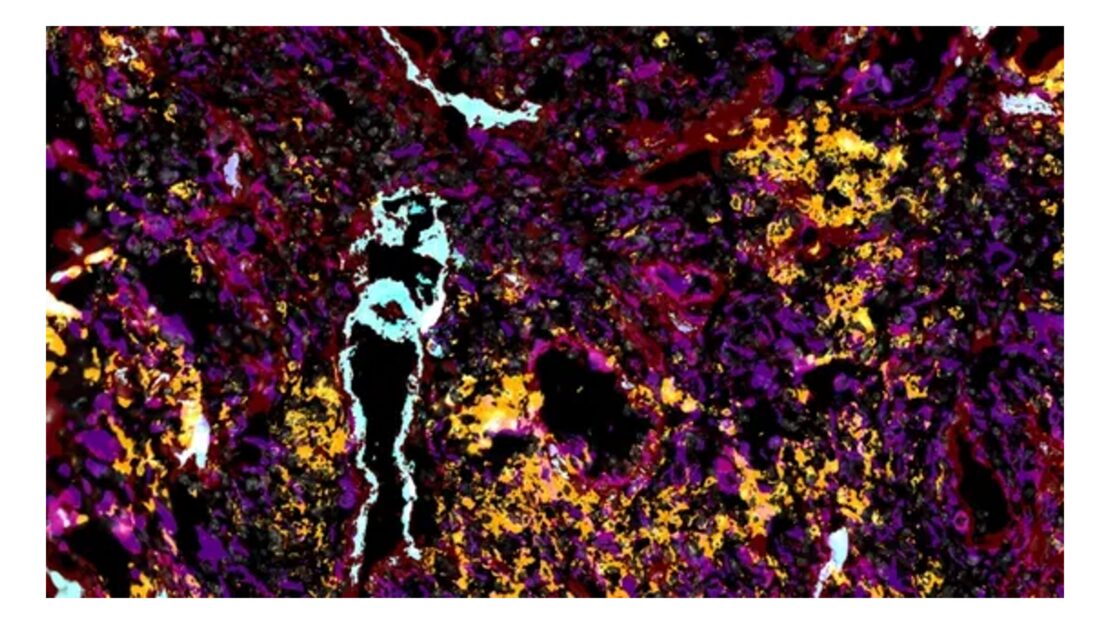
Sarcomas are rare but aggressive cancers that are the third most common type of cancer in children and adolescents after blood cancer and brain tumors. Soft tissue sarcomas, which arise from connective, muscle or fatty tissue, pose particular challenges for research: their enormous biological diversity and the lack of suitable preclinical models have significantly hampered the development of effective treatment approaches for decades. Compared to many other types of cancer, therapeutic advances in sarcomas have lagged significantly behind those in other cancers.
A team of researchers from the Hopp Children’s Cancer Centre Heidelberg (KiTZ), the German Cancer Research Centre (DKFZ) and Heidelberg University Hospital (UKHD) has now developed novel mouse models for investigating therapeutic approaches against sarcomas.
‘Unlike the laboratory mouse models commonly used in cancer research, these mice have a functioning immune system, enabling the systematic investigation of immunotherapies for the treatment of sarcomas under realistic conditions. In addition, the method is more efficient and requires significantly fewer animals than conventional methods, in which mice are crossbred over several years in order to study a particular type of sarcoma,’ explains the study’s first author Roland Imle from KiTZ and UKHD.
According to the study, the sarcomas induced in the mice show remarkable similarities to human sarcomas, both microscopically and at the molecular level. The new model system also has other advantages, according to the authors: the tumor cells obtained from the mice can be stored frozen, reused as tumor models and therefore easily exchanged between research institutions to investigate tumor-specific target structures that represent promising targets for new immunotherapies, for example.
‘Our approach allows us to study a wide range of genetically diverse soft tissue sarcomas. With these new tools we aim to investigate how these cancers develop and test new immunotherapies for children and adolescents with the goal of improving current treatment options,’ emphasizes research group leader Ana Banito, who led the study at KiTZ and DKFZ. ‘Thanks to its flexibility, the same method can be readily used to investigate newly discovered mutations in patients.
The new model system is currently being used in several international research collaborations to develop new targeted therapies for the treatment of sarcomas.
Original Publication:
Imle et al. Somatic gene delivery faithfully recapitulates a molecular spectrum of high-risk sarcomas. In: Nature Communications (Online publication XX, DOI:)
Image:
Copyright Imle/KiTZ
“Microscopic image of sarcoma tissue (blue and purple) in a mouse, into which immune cells (yellow) are migrating.”