Optimized Formula: New Bio-Ink Can Depict the Cell Environment Even More Accurately
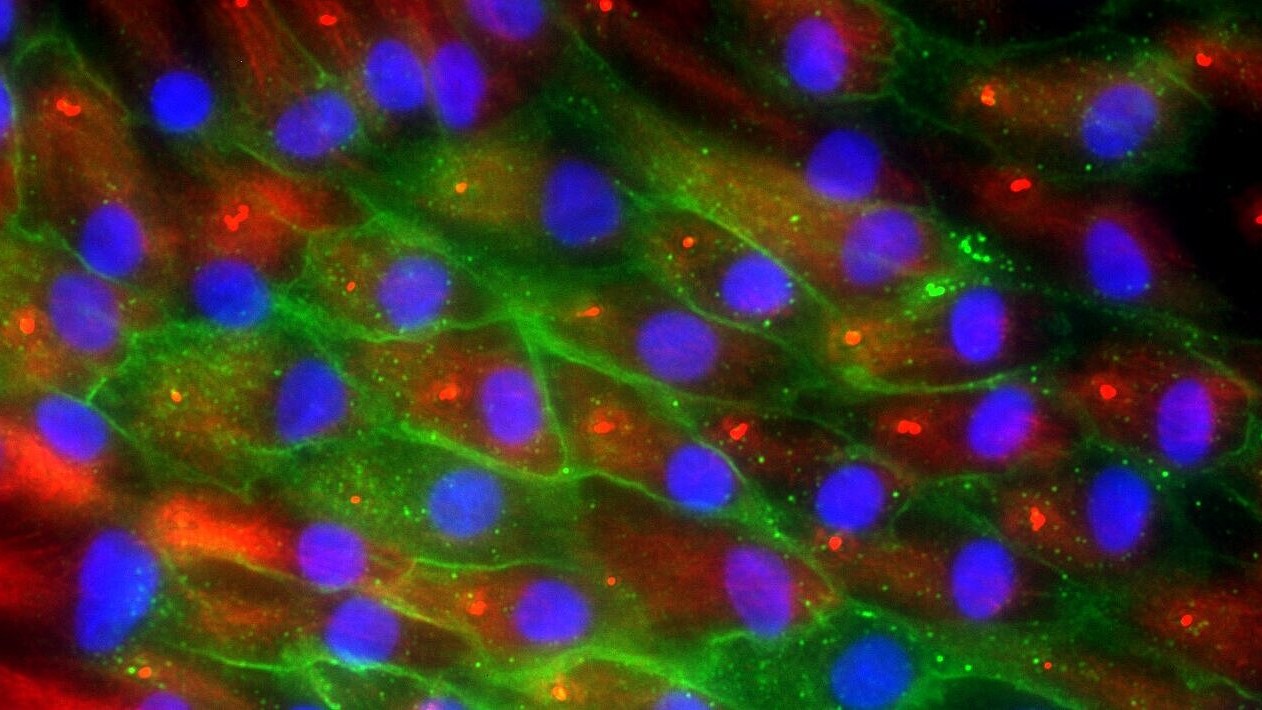
It should be biofunctional – that is, it should replicate the natural cellular environment as closely as possible – and it should be printable: bioink. Achieving both of these properties at the same time is an enormous challenge that conventional biomaterials often fail to meet. Together with two partner companies, researchers at the NMI have now taken an important step forward in 3D bioprinting.
Cells Have Specific Needs
For cells to survive – even outside the body – and thrive, they require very specific conditions. This is achieved through the right extracellular matrix, with which cells can interact effectively – a crucial factor in forming functional, tissue-like structures. The addition of cellulose nanofibrils mechanically stabilizes the bioink and makes it easy to print.
The researchers at NMI, Isabelle Schmidt and Hanna Hartmann, along with their colleagues at ibidi GmbH (experts in cell-based assays and cell microscopy) and the Swedish company Cellink (a leader in the development and manufacture of 3D bioprinters and bioinks), have jointly sought ways to optimize bioink so that the cells it contains are provided with the most suitable environment possible.
After numerous experiments and their evaluations, the project partners have now succeeded in identifying the right ingredients and their appropriate proportions – in other words, the recipe or formulation of the bioink.
Long-Term Goal: Active Ingredient Testing
What will these findings be used for? This bioink was developed as part of the BMFTR-funded Eurostars project PTube Chip. It represents an important step toward the long-term goal of using 3D bioprinting of human cells to create an in vitro model on which, for example, new drug candidates can be tested. However, there are still several more steps to take before this becomes a reality.
Paper: Schmidt et al., Controlling renal epithelial cell behavior by tuning the mechanical and biological characteristics of bioinks. Elsevier, 2026.
DOI: 10.1016/j.bioadv.2026.215036
Partner companies: