Combating the pandemic: Diagnostic chips ten times more sensitive
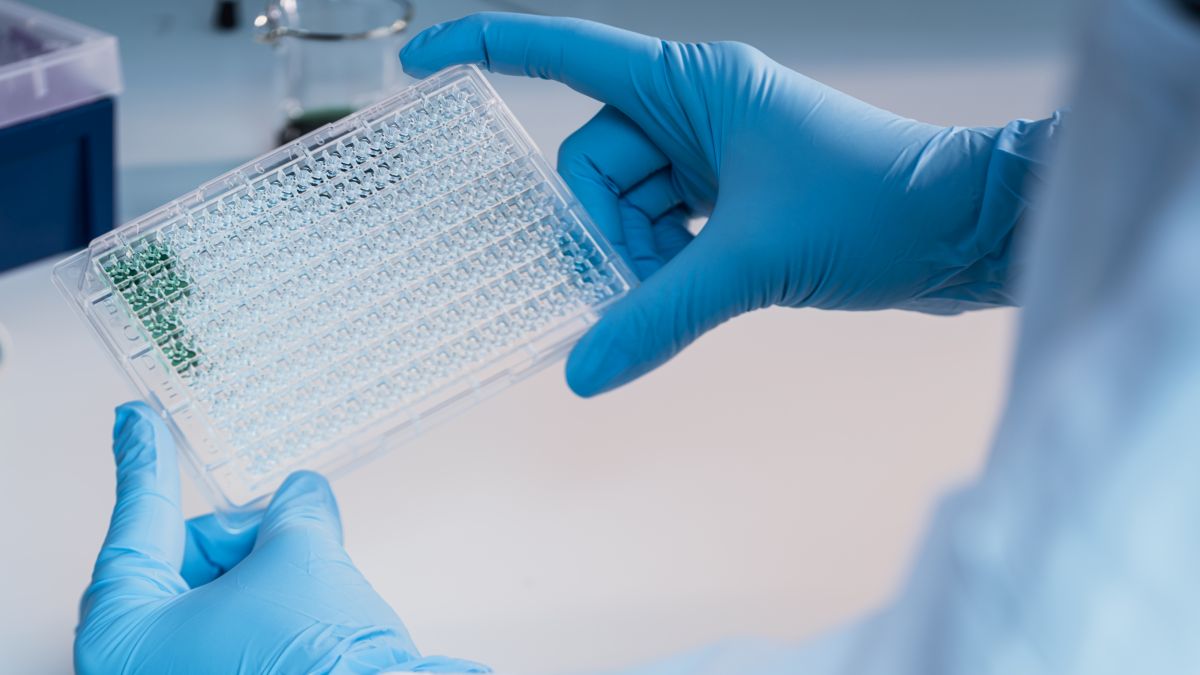
A team at KIT has developed a solution that significantly improves novel biosensors for medical use and enables faster diagnosis of infectious diseases

Rapid, straightforward and, at the same time, accurate diagnosis of highly contagious pathogens such as the SARS-CoV-2 virus, which caused the coronavirus pandemic, is crucial to curbing the spread of disease. This helps to minimise not only deaths but also economic damage. Researchers at the Karlsruhe Institute of Technology (KIT) have now developed a solution that makes medical diagnostic plates, known as assays, significantly more sensitive.
Nanoparticles improve electron transfer
The team led by Professor Pavel Levkin from the Institute for Biological and Chemical Systems (IBCS) at KIT is using innovative assays based on electrochemiluminescence. In this process, the transfer of electrons excites electrochemical elements on a surface, causing them to glow. In medical samples, the light indicates the presence of a pathogen. The brighter the light, the more pathogens are present in the sample.
The researchers increased the sensitivity of the assays tenfold by coating gold electrodes with silicon dioxide nanoparticles. This improved electron transfer and, consequently, the intensity of the light signal. The scientists were thus able to detect the SARS-CoV-2 virus in samples much more quickly and accurately.
Furthermore, the team optimised the surface of the assays for multiple applications, enabling several measurements to be carried out on a single sample. According to the researchers, it should even be possible in future to detect several pathogens simultaneously in the same sample. “Our platform can advance multiplex diagnostics for the rapid detection of pathogens and find broader applications in public health,” explain Yuliang Shao and Tatiana Starikova from the IBCS, who played a leading role in the development.