Possible new way to protect the heart during certain chemotherapy treatments

Researchers at the Heidelberg Faculty of Medicine at Heidelberg University have deciphered the molecular mechanism by which the widely used chemotherapy drug doxorubicin can damage the heart. In preclinical studies, another approved cancer drug provided protection. The findings have been published in Nature Communications.
The chemotherapy agent doxorubicin is used successfully to treat a range of cancers but can, as a side effect, damage the heart muscle. Researchers at the Heidelberg Faculty of Medicine at Heidelberg University have now identified the molecular signaling pathway through which doxorubicin causes cardiac injury. They also discovered that SAHA (suberoylanilide hydroxamic acid), a drug already approved for the treatment of certain cancers, attenuated the harmful mechanisms in heart muscle cells in cell-based and animal studies and could therefore help protect the heart.
Doxorubicin is among the most commonly used chemotherapy agents and is employed in the treatment of breast cancer, lung cancer, certain sarcomas, as well as leukemias and lymphomas. However, its use is limited by the risk of cardiotoxicity, damage to the heart muscle that can ultimately lead to heart failure.
“Severe heart failure occurs only rarely. However, measurable changes in cardiac function are detected in around one-quarter of patients, increasing their long-term risk of developing heart failure,” says Professor Norbert Frey, Heidelberg Faculty of Medicine at Heidelberg University, Medical Director of the Department of Cardiology, Angiology and Pneumology at Heidelberg University Hospital, and co-author of the study. “Individuals with pre-existing cardiovascular disease are particularly at risk, and effective strategies to prevent this type of cardiac damage are still lacking.”
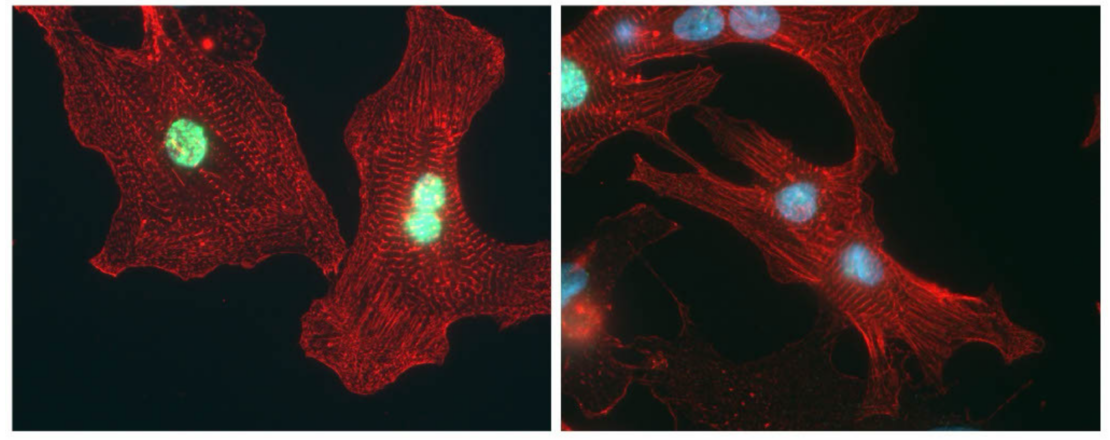
The team led by Professor Lorenz Lehmann, Heidelberg Faculty of Medicine at Heidelberg University and Head of the Cardio-Oncology Section at Heidelberg University Hospital, showed in cell and animal studies that doxorubicin alters the activity of specific genes in heart muscle cells. Two proteins, topoisomerase IIβ and MEF2 (myocyte enhancer factor 2), play a central role in this process. The researchers identified a chain of molecular events: doxorubicin causes the enzyme topoisomerase IIβ to increasingly bind to specific regions of DNA in heart muscle cells, sites that are also occupied by MEF2. This combination leads to excessive activation of numerous MEF2-regulated genes, triggering pathological remodeling processes in the heart. In the studies, SAHA, which is used to treat certain forms of lymphoma, suppressed this dysregulation. The researchers demonstrated that, through several intermediate steps, SAHA inhibits the harmful activation of MEF2. In mice, SAHA reduced the cardiac damage caused by doxorubicin.
“Our work is the first to show that the development of doxorubicin-induced cardiac injury involves a multi-step mechanism that can be targeted pharmacologically,” says Professor Lehmann. “This opens up new perspectives for the development of targeted strategies to protect the heart during chemotherapy. SAHA clearly shows potential in this regard.” Whether SAHA can also provide cardioprotective effects in humans and be used safely in cancer patients despite its own side effects will need to be determined in future clinical studies. However, the fact that SAHA is already an approved drug could accelerate its further development for this indication.
Publication
Eksi B, Finke F et al. HDAC inhibition via suberoylanilide hydroxamic acid ameliorates doxorubicin-induced cardiotoxicity. Nat Commun 17, 9505 (2026). https://doi.org/10.1038/s41467-026-77428-w
Further Information Online
Cardio-Oncology Section at Heidelberg University Hospital
Contact
Professor Lorenz Lehmann
Heidelberg Faculty of Medicine at Heidelberg University
Head of the Cardio-Oncology Section at Heidelberg University Hospital
lorenz.lehmann@med.uni-heidelberg.de