Roman Sarott shortlisted with team NeoCircuit for Cancer Grand Challenges
The shortlist of the Cancer Grand Challenges selection process 2025 has been announced and Roman Sarott, Research Group Leader at the Max Planck Institute for Medical Research, Heidelberg and Heilbronn, has been selected for the final stages as part of team NeoCircuit. The team tackles the challenge of developing and applying novel ways to rewire cancer cells to their disadvantage.
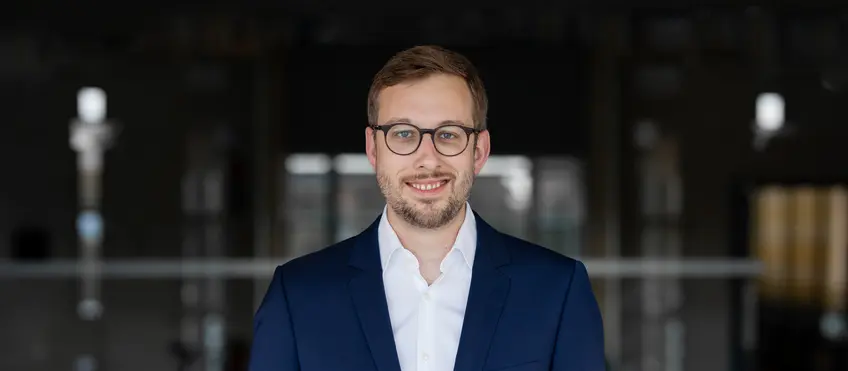
© MPI for Medical Research
- The NeoCircuit team plans to take a new approach to rewire cancer cells by developing chemicals that can bring proteins inside a cell close together and create new protein functions to trigger cancer cells to self-destruct.
- The team is led by Nathanael Gray from Stanford University and consists of Roman Sarott and six other co-investigators from five countries.
- It is one of 12 on the 2025 shortlist and now competes with them for up to 20 million pound sterling each, with the aim of delivering breakthroughs that no single researcher, lab, institute or country could achieve alone.
Tackling one of the most complex problems in cancer research
A Cancer Grand Challenge represents one of the most complex problems in cancer research, requiring scientists from different research institutions to work together in international, multidisciplinary teams to find a solution. Cancer Grand Challenges are announced and funded by the global research initiative of the same name. The initiative provides significant funding to enable innovative approaches and accelerate progress in the fight against cancer. In March 2025, it announced seven new challenges, from turning Artificial Intelligence on cancer to rewiring cancer cells. A record 227 bold submissions were received.
Facing the challenge of rewiring cancer cells
The team NeoCircuit tackles the Cancer Grand Challenge of rewiring cancer cells to their disadvantage. “Our team is seeking ways to turn the molecular causes of cancer into cancer killers, effectively tricking cancer cells into self-destructing”, explains Nathanael Gray. It aims to establish a new treatment paradigm, critically with the potential to provide durable cures to patients.
“The challenge of reprogramming cancer cells instead of just inhibiting their growth is a perfect fit for our research program. I am delighted to be part of the fantastic NeoCircuit team and that we have made it onto the shortlist. Together with the team, I am doing everything I can to ensure that we secure the funding in New York and can use it to develop new cancer therapies.” says Roman Sarott.
Director of Cancer Grand Challenges, Dr David Scott, said: “Congratulations to the 12 finalist teams who now have the opportunity to drive the next major breakthroughs in cancer research, as part of this pioneering global initiative.”
Now 30.000 pound sterling in seed funding
Each team will now receive 30.000 pound sterling in seed funding to allow the team members to come together and develop their full research proposal and compete for up to 20 million pound sterling in funding. The funded teams will be announced in March 2026 at the Cancer Grand Challenges Summit in London.