February 27, 2026

Seeing cells in a new light
Seeing cells in a new light

Illuminating the tiniest details of living cells just got a major boost: Scientists at the Max Planck Institute for Medical Research have developed new markers that glow in the far-red range and are activated by light. They are stable, easy to control, and compatible with several super-resolution microscopy techniques, as outlined in a paper published in the journal Chem.
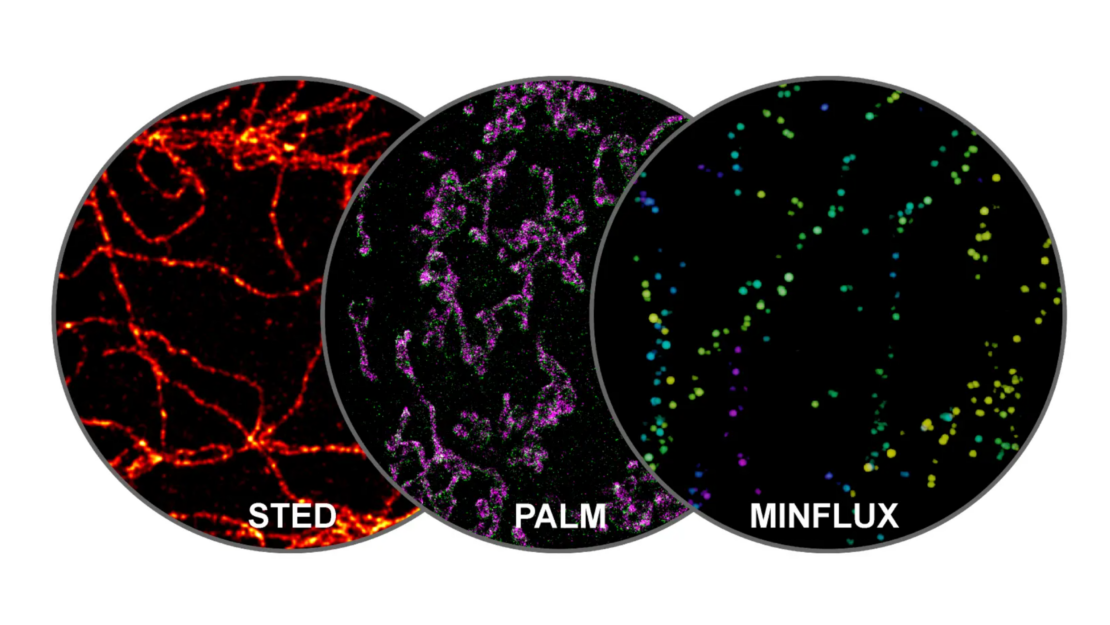
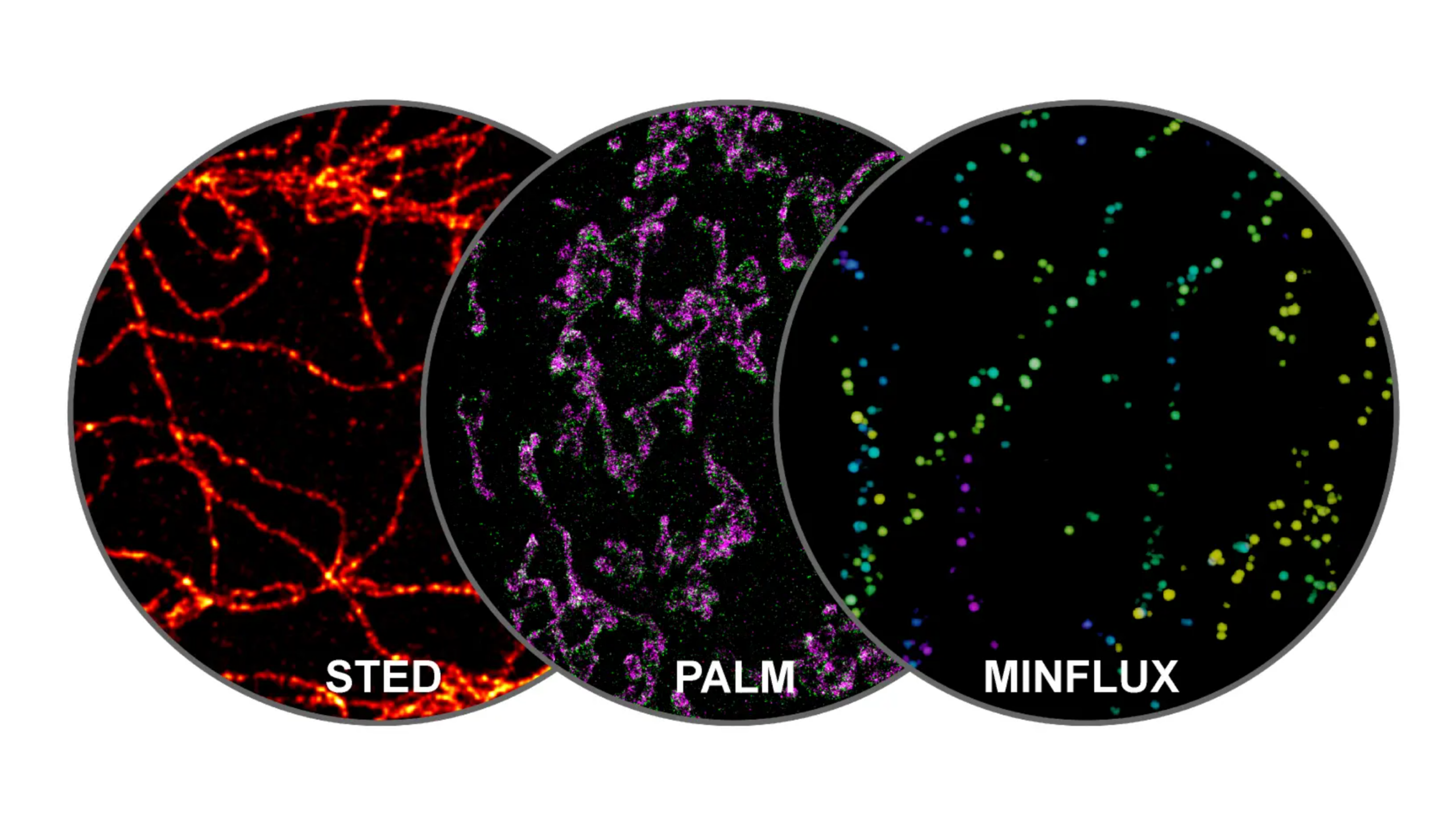
© MPI for Medical Research | For detailed imaging: Scientists at the Max Planck Institute for Medical Research have developed new far-red dyes and successfully used them in STED, PALM, and MINFLUX microscopy (from left to right). The dyes work in living cells and can be excited with standard red laser sources.
  • Using red light excitation and far-red emission, the dyes now enable even single molecules to be labeled for detailed imaging.
  • The dyes are activated with little light and without by-products – for precise spatial and temporal control even of a small number of markers in living cells.
  • They are compatible for living and preserved cells as well as for procedures in which specific cell components are made visible with antibodies and protein tags.

So-called photoactivatable dyes, i.e. dyes activated by light, help scientists to see tiny structures, molecules, or processes inside cells. They can be irreversibly switched on by mild ultraviolet or visible light and can be precisely controlled.

Challenges in imaging living cells

In order to study living cells, dyes must be able to easily penetrate the cells and function under normal growth conditions. Previous photoactivatable dyes for living cells were often unstable or could not be reliably activated. This could affect their labelling efficiency, image uniformity, and the duration of imaging experiments. In addition, these older methods often only work in preserved cells, not in living ones. 

Spectrum of PaX dyes expanded

The new far-red markers complete the family of PaX dyes (short for “photoactivatable xanthones”) that scientists from the Department of Optical Nanoscopy at the Max Planck Institute for Medical Research previously developed. PaX dyes can be activated without appending bulky protective groups reactive to light to the dye – so called “caging”, a traditional approach – and quickly convert into a single, bright fluorescent product without forming any reactive or toxic by-products. Until now, PaX dyes could only produce blue to orange light. Robust red and far-red versions remained elusive, even though they are most helpful for imaging in living cells.

Successfully used in fluorescence nanoscopy

The new far-red additions to the PaX family are compatible with a wide range of conventional and super-resolution fluorescence microscopy techniques. The research team has already successfully validated them in advanced nanoscopy methods including PALM, STED, and MINFLUX procedures.

The new far-red markers can be combined with other PaX dyes, or any commonly used fluorescent labels. This enables multicolor imaging, allowing scientists to observe multiple cell structures simultaneously. In the future, the dyes could help track single molecules with light microscopes and study the interactions of proteins in living cells with molecular-level precision.


Our latest News

discover more
SPT Labtech to collaborate with Illumina to develop automated platform supporting genomics in decentralized healthcare settings

SPT Labtech to collaborate with Illumina to develop automated platform supporting genomics in decentralized healthcare settings

Cambridge, UK, 25 February 2026: SPT Labtech, a global leader in the design and development of laboratory automation and liquid handling solutions, today announced a strategic collaboration with Illumina to develop a novel automated sample preparation platform designed to streamline and standardize genomics workflows across decentralized healthcare environments. The collaboration will focus on helping labs […]

€1.48 Million in Federal Funding Secured for SAM3 Research Project at Mannheim University of Applied Sciences

€1.48 Million in Federal Funding Secured for SAM3 Research Project at Mannheim University of Applied Sciences

Mannheim University of Applied Sciences has been awarded approximately €1.48 million in federal funding for the research project SAM3 – Smart Applications for Multimodal Molecular Pattern Recognition (2026–2028). The funding is provided through the “HAW-ForschungsPraxis 2024” program of the German Federal Ministry for Research, Technology and Space. The project focuses on advancing biochemical analytics used […]

Seeing cells in a new light

Seeing cells in a new light

Illuminating the tiniest details of living cells just got a major boost: Scientists at the Max Planck Institute for Medical Research have developed new markers that glow in the far-red range and are activated by light. They are stable, easy to control, and compatible with several super-resolution microscopy techniques, as outlined in a paper published […]

GET IN TOUCH

Stay Updated with bioRN’s Newsletter

Sign up for our newsletter to discover more!
* required

BioRN (BioRN Network e.V. and BioRN Cluster Management GmbH) will use the information you provide on this form to be in touch with you and to provide updates and marketing. Please let us know all the ways you would like to hear from us:

You can update your subscription preferences or unsubscribe at any time. Just follow the unsubscribe or update link in the footer of automated emails you receive from us, or by contacting us at info@biorn.org. We will treat your information with respect. For more information about our privacy practices please visit our website: www.biorn.org. By clicking below, you agree that we may process your information in accordance with these terms.

We use Mailchimp as our marketing platform. By clicking below to subscribe, you acknowledge that your information will be transferred to Mailchimp for processing. Learn more about Mailchimp's privacy practices.

Intuit Mailchimp