When Brake Cells Become Killer Cells: Double Honor for DKFZ Researcher Julius Michel
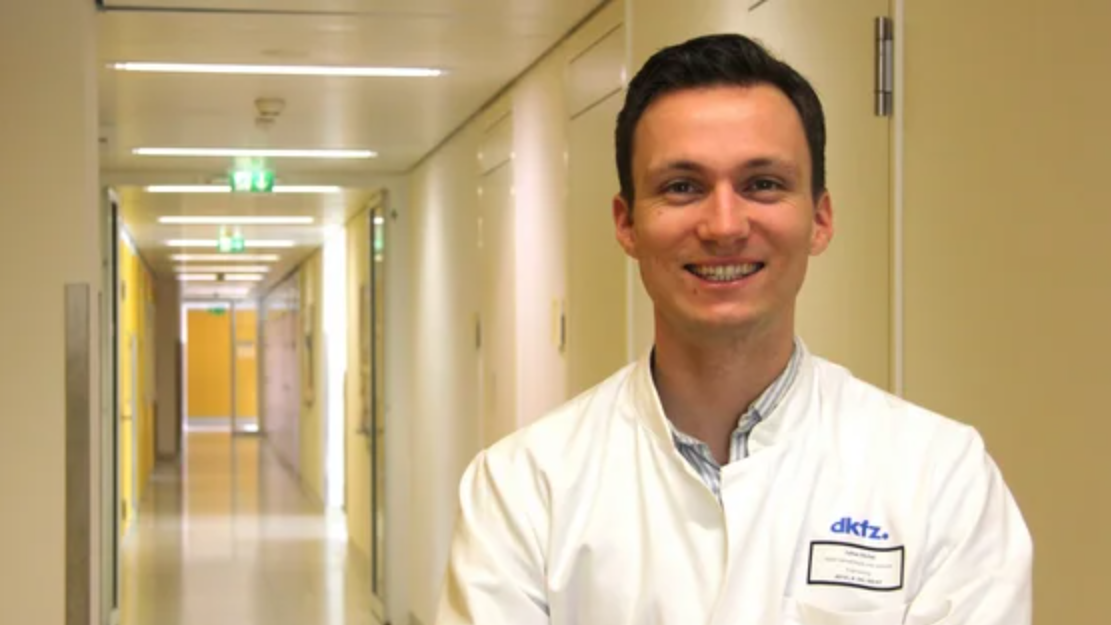
Julius Michel, a postdoctoral researcher at the German Cancer Research Center (DKFZ), has received two awards: the Craig Tendler Award for Myeloma Research from the American Society of Hematology – awarded for the first time and accompanied by a $10,000 prize – as well as another award from the society. He has discovered that a modern antibody therapy for multiple myeloma transforms – of all things – the very immune cells that normally suppress the immune system into cancer cell killers.
Multiple myeloma is a cancer that affects certain immune cells in the bone marrow. In recent years, so-called bispecific T-cell engagers have led to major advances in the treatment of multiple myeloma. These are antibodies with two “hands.” One hand binds to the cancer cell, while the other binds to an immune system cell – a T cell. This brings the two together, allowing the T cell to destroy the cancer cell. Until now, it was assumed that this effect was caused almost exclusively by conventional killer T cells. Another group of T cells, regulatory T cells (Tregs), was considered an obstacle. This is because Tregs suppress immune responses, including those against some tumors.
Julius Michel and an interdisciplinary team from the DKFZ and Heidelberg University Hospital analyzed bone marrow and blood samples from patients with newly diagnosed multiple myeloma. As part of a phase 2 clinical trial, the patients received the T-cell engager teclistamab in combination with other myeloma drugs as first-line therapy. Using single-cell analyses of more than 430,000 T cells, the researchers made a surprising observation: The most significant change was not observed in the classic killer cells, but in the Tregs. In the laboratory, these reprogrammed Tregs specifically killed myeloma cells. The transformation depends on a regulatory protein, the transcription factor BATF. When the researchers inactivated BATF using the CRISPR-Cas9 gene-editing tool, the Tregs lost their ability to attack cancer cells.
The mechanism is not limited to a single drug. The team also observed it in other T-cell activators used to treat multiple myeloma, acute lymphoblastic leukemia, and lymphomas. The findings could help make combination therapies more targeted. In addition, the killer signature of Tregs could serve as a marker in the future to predict response to therapy.
Julius Michel, who is also a resident physician at the Department of Hematology, Oncology and Rheumatology at Heidelberg University Hospital, will present these findings on December 14, 2026, at the annual meeting of the American Society of Hematology in New Orleans, USA. There, he will receive the inaugural Craig Tendler Award as well as the prize – worth an additional $2,000 – for the best conference presentation by a resident.