When metabolism provides more than fuel
New EMBL research discovers an unexpected relationship between metabolism and cell communication during embryonic development
Summary
- Metabolism does more than fuel embryonic growth; it also sends out signals that control the tempo of development.
- Metabolism consists of metabolic activities and signalling that occurs as a part of those activities, which makes it challenging to dissociate these functions.
- EMBL scientists found that metabolism signals to control the tempo of development in a manner distinctly separate from its role in energy and biomass production. They identified a specific sugar molecule that can function as a signalling molecule to control the rhythm of the segmentation clock, which is essentially a ‘biological clock’ that controls the tempo of development.
- Future research will probe the importance of metabolism – not just for making energy and building blocks – but also for sending signals that guide cell fate, developmental timing, and even disease.
Pregnant women rely on a balanced diet and supplements to deliver proper nutrients to their babies, to ensure they grow healthfully. Such nutrients contribute to fueling development and providing cellular building blocks that lead to healthy brains, bones, organs, and immune systems.
While this kind of nutritional preparation helps during pregnancy, EMBL scientists found that metabolism – the way cells break down food into energy – during embryonic development does more than just provide energy and cellular building blocks for proper embryonic development. Metabolism has a surprising signalling element. And by modulating metabolism in a tailored fashion, they could identify a signalling metabolite controlling the tempo of development.
“What we noticed was that as metabolism got faster, a particular developmental clock slowed down,” said Hidenobu Miyazawa, one of the new study’s first authors and a research staff scientist in the Aulehla Group at EMBL. “The observation hinted that the role of metabolism is not just providing energy and biomass to fuel the biological processes.”
Miyazawa, along with two other first authors and Aulehla group members at the time, Nicole Prior and Jona Rada, plus other EMBL researchers, discovered that metabolism also has a signalling component. The scientists studied mouse embryos while they formed repeating body segments that ultimately developed into spines. The signalling role of metabolism became clear when they discovered that even tiny amounts of certain metabolites – not enough to actually fuel cells – could still keep the embryo’s ‘biological clock’ for segment formation ticking. This clock is referred to as the segmentation clock.
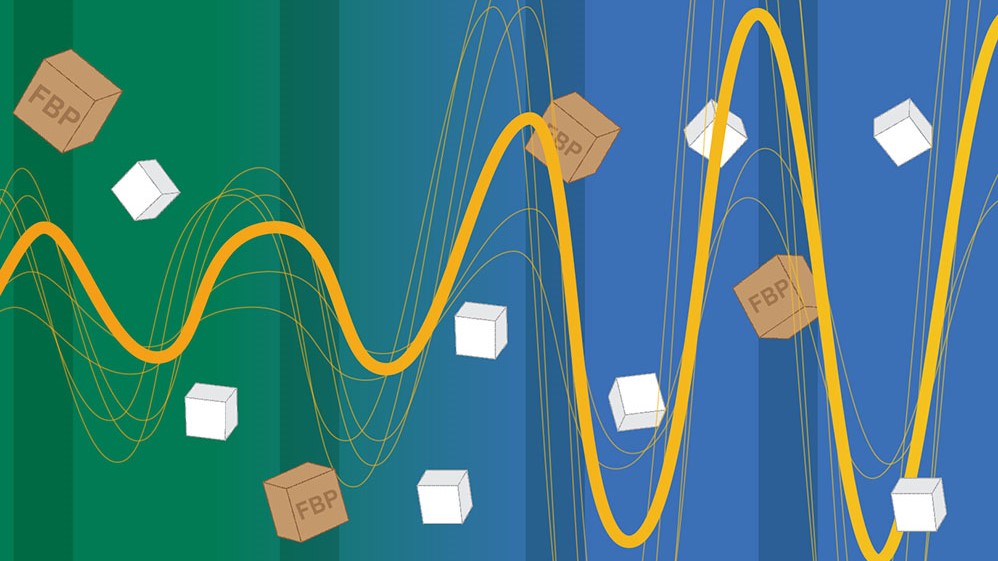
The scientists found an inverse relationship between metabolic activity and the tempo of the segmentation clock. This means the higher the metabolic activity in the cells, the slower the segmentation clock. Surprisingly, they could reverse this ‘slow clock’ phenotype by restoring cellular signalling, without modulating metabolism per se. This led them to conclude that metabolic activity impacted cell signalling.
To identify which key metabolites control the clock rhythm, the scientists turned to an experimental approach based on synchronisation theory. As your internal body rhythm follows external day-night cycles, the embryo’s segmentation clock can also adapt to an external signalling cue when provided periodically. “In this project, we asked whether a metabolite can serve as a signalling cue to control the segmentation clock,” Miyazawa explained.
Using this unique approach, the scientists found that a specific sugar molecule, FBP, was the key metabolite regulating the segmentation clock. FBP affects the rhythm of the segmentation clock through an important signalling pathway called Wnt signalling.
Additionally, Miyazawa explained that as the research team tracked the changes, the molecular oscillations associated with the segmentation clock could change the spatial patterns of the embryo’s body segments.
While this scientific finding is an important one in fundamental research, it may have bearing on what scientists can understand and control in the future. This signalling role of metabolism might reflect how organisms respond to their environment, e.g. by adjusting development based on available food.
“The results actually raise an important question: could metabolism itself act as a pacemaker that connects internal biological clocks with external rhythms in the environment?” said Alexander Aulehla, senior author on the paper and EMBL’s Developmental Biology Unit director. “Since metabolism is naturally linked to external cues and cycles, such as the circadian clock, our work showing that metabolism can ‘set’ the segmentation clock supports this idea that we will test in future studies.”
Source article(s)
A noncanonical role of glycolytic metabolites controlling the timing of mouse embryo segmentation.
Miyazawa H., Rada J., Prior N., et al.
Science Advances 19 September 2025
10.1126/sciadv.adz9606