A human placenta model to protect pregnant women and their babies
EMBL researchers were awarded a BII foundation grant to support Model-MI – an in vitro model that mimics the maternal-fetal interface
Pregnancy is a period of both excitement and concern for the healthy development of the foetus and the well-being of the expectant mother. During the ~40 weeks of gestation, many external factors constitute a danger for mothers and their babies: raw food, alcohol, and medications, among other exposures, may lead to pregnancy complications. The most crucial protector against all foetal exposures is the placenta, the temporary foetal organ that regulates the exchange of all molecules – nutrients, gases, and wastes between mother and child.
Researchers at EMBL Barcelona present Model-MI – a human in vitro model that mimics the maternal-foetal interface of the placenta, allowing for the study of molecule exchange and drug transport.
Kristina Haase, Group Leader at EMBL Barcelona and Principal Investigator of the project, stated: “Our goal is to develop a reliable placenta model to enable drug safety testing by researchers and the pharma industry. The lack of information on drug safety leaves women having to make tough choices related to their own health. We need reliable models to test all drugs and vaccines for women.”
Despite ~4 million annual births in the European Union, there is a lack of knowledge regarding drug safety and development for pregnant women and foetuses. Many medications – especially those for pre-existing conditions – remain untested for this at-risk group, despite the often continued use of one or more medications during pregnancy.
“There is an urgency for safety information on common drugs – those used for hypertension, cancer treatments, epilepsy, migraine, or common cold and flu,” said Marta Cherubini, former research scientist at Haase Group, now Lead Scientist of Model-MI. “Animals are not good substitutes for safety testing on the human placenta, both for ethical and physiological reasons. A human model is desperately needed, and we aim to provide that with Model-MI.”
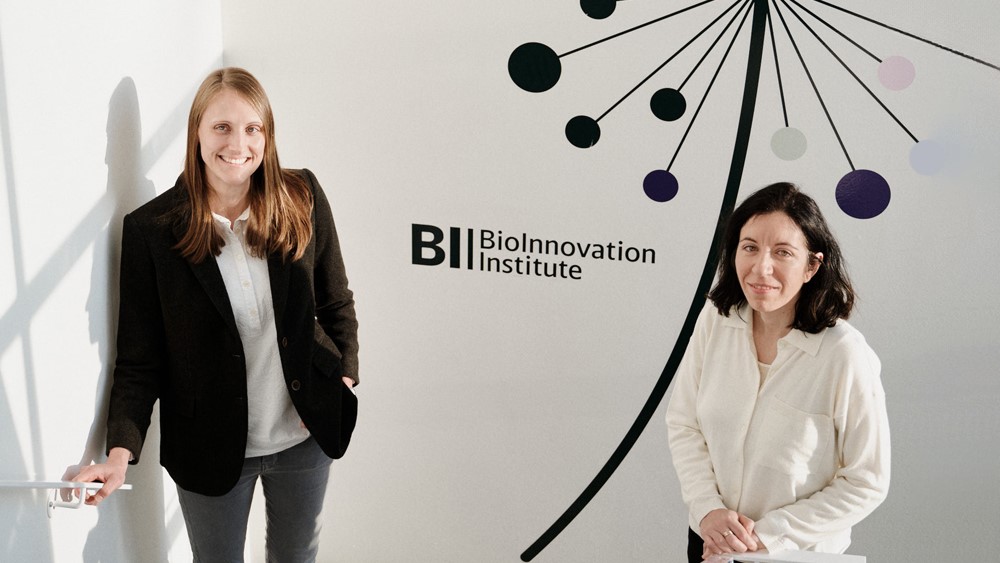
The Model-MI Bio Studio project has received up to € 3 million in funding for the next three years from the BioInnovation Institute (BII). The grant will enable the project team to develop a robust, validated, and market-ready tool that has the potential to transform the drug industry targeting women’s health. A small team is being established at BII in Copenhagen, led by Entrepreneur-in-Residence Pernille Singer, supported by Marta Cherubini as Lead Scientist and Kristina Haase as PI of the project.
Ultimately, Model-MI aims to address the drug-safety gap in pregnancy and the team at BII aims to take the project from lab bench to spin-out and make an impact for all women.
The Model-MI project is part of a broader collaboration between EMBL and the BioInnovation Institute (BII), designed to accelerate the translation of fundamental research into real-world innovations. EMBLEM Technology Transfer GmbH (EMBLEM), EMBL’s wholly owned technology transfer partner and commercial arm, actively contributed to shaping the framework of this collaboration and managing EMBL’s background and foreground intellectual property. This collaboration enables the Model-MI human placenta model to advance toward a validated, market-ready platform, bridging the gap between cutting-edge research and practical solutions to improve drug safety during pregnancy.
Un modelo humano de placenta en un chip para proteger a las mujeres embarazadas y a sus bebés
Investigadoras del EMBL Barcelona reciben financiación de la Fundación BII para desarrollar Model-MI, un modelo in vitro que reproduce la interfaz materno-fetal
El embarazo es un periodo de gran ilusión, pero también de preocupación por el desarrollo saludable del feto y el bienestar de la gestante. Durante las aproximadamente 40 semanas de gestación, diversos factores externos pueden representar un riesgo tanto para la madre como para el bebé: el consumo de alimentos crudos, alcohol o determinados medicamentos, entre otras exposiciones, puede derivar en complicaciones durante el embarazo. El principal protector frente a estas exposiciones es la placenta, un órgano fetal temporal que regula el intercambio de moléculas – nutrientes, gases y desechos – entre la madre y el feto.
Investigadoras del Laboratorio Europeo de Biología Molecular en Barcelona (EMBL por sus siglas en inglés) presentan Model-MI, un modelo humano in vitro que imita la interfaz materno-fetal de la placenta y que permite estudiar el intercambio de moléculas y el transporte de fármacos.
Kristina Haase, líder de grupo en EMBL Barcelona e investigadora principal del proyecto, explica: “Nuestro objetivo es desarrollar un modelo de placenta fiable que permita realizar pruebas de seguridad de fármacos tanto a investigadores como a la industria farmacéutica. La falta de información sobre la seguridad de los medicamentos obliga a las mujeres a tomar decisiones difíciles relacionadas con su propia salud. Necesitamos modelos fiables para probar todos los fármacos y vacunas destinados a mujeres gestantes.”
A pesar de los cerca de cuatro millones de nacimientos anuales en la Unión Europea, sigue existiendo un gran desconocimiento en torno a la seguridad y el desarrollo de medicamentos para mujeres embarazadas y fetos. Muchos tratamientos – especialmente los destinados a afecciones preexistentes – no se han probado en este grupo de riesgo, a pesar de que el uso de uno o más medicamentos durante el embarazo es habitual.
“Existe una necesidad urgente de información sobre la seguridad de fármacos comunes, como los utilizados para la hipertensión, el tratamiento del cáncer, la epilepsia, la migraña o los resfriados y la gripe”, señala Marta Cherubini, antigua investigadora del grupo de Haase y ahora científica principal de Model-MI. “Los animales no son sustitutos adecuados para las pruebas de seguridad en la placenta humana, tanto por razones éticas como fisiológicas. Se necesita con urgencia un modelo humano, y eso es precisamente lo que queremos ofrecer con Model-MI.”
El proyecto Model-MI Bio Studio ha recibido hasta 3 millones de euros en financiación para los próximos tres años por parte del BioInnovation Institute (BII). Esta subvención permitirá al equipo desarrollar una herramienta sólida, validada y lista para el mercado, con el potencial de transformar la industria farmacéutica enfocada en la salud femenina.
Con este objetivo, se ha constituido un pequeño equipo en el BII de Copenhague, dirigido por la Emprendedora en Residencia Pernille Singer, con el apoyo de Marta Cherubini como científica principal y Kristina Haase como investigadora principal del proyecto.
En última instancia, el objetivo de Model-MI es abordar la brecha existente en la seguridad de los medicamentos durante el embarazo, y el equipo del BII pretende llevar el proyecto del laboratorio al mercado, generando un impacto real para todas las mujeres.
Related links
Tags: AI, barcelona, emblem, engineering, haase, organ on chip, technology development, technology transfer, tissue biology, tissue engineering