A Matter of Quantity: A Universal Target for CAR-T Cells Against Cancer

CAR-T cell therapies have proven successful in treating several types of blood and lymphoid cancers. However, their use in treating other tumors is significantly more challenging, in part because suitable target structures are lacking. A team led by scientists from the Heidelberg Faculty of Medicine at the Institute of Pathology of Heidelberg University Hospital, in collaboration with researchers from the German Cancer Research Center, has now developed an innovative approach: They are targeting proteins that, while not typical cancer drivers, are present in large quantities on the surface of cancer cells.
Joint press release from the Heidelberg Faculty of Medicine at Heidelberg University and the German Cancer Research Center
CAR-T cell therapies have fundamentally transformed the treatment of several blood and lymph node cancers. However, their use in solid tumors such as liver, breast, or lung cancer has so far been significantly more difficult. This is due, among other things, to the lack of suitable target structures on the cancer cells. Cancer immunotherapies typically target features that are characteristic of a tumor and that, in some cases, directly drive its growth. However, such mutations are not always present or cannot be exploited therapeutically.
The team led by Darjus Tschaharganeh, scientist at the Institute of Pathology of Heidelberg University Hospital and the Heidelberg Faculty of Medicine, as well as a former junior research group leader at the German Cancer Research Center, took an unconventional approach in their search for target structures: They focused on genes that are overexpressed in tumor cells but do not necessarily act as typical cancer drivers themselves. What mattered far more was whether these genes encode proteins that are present in large quantities on the surface of cancer cells and are thus easily accessible for cellular therapy.
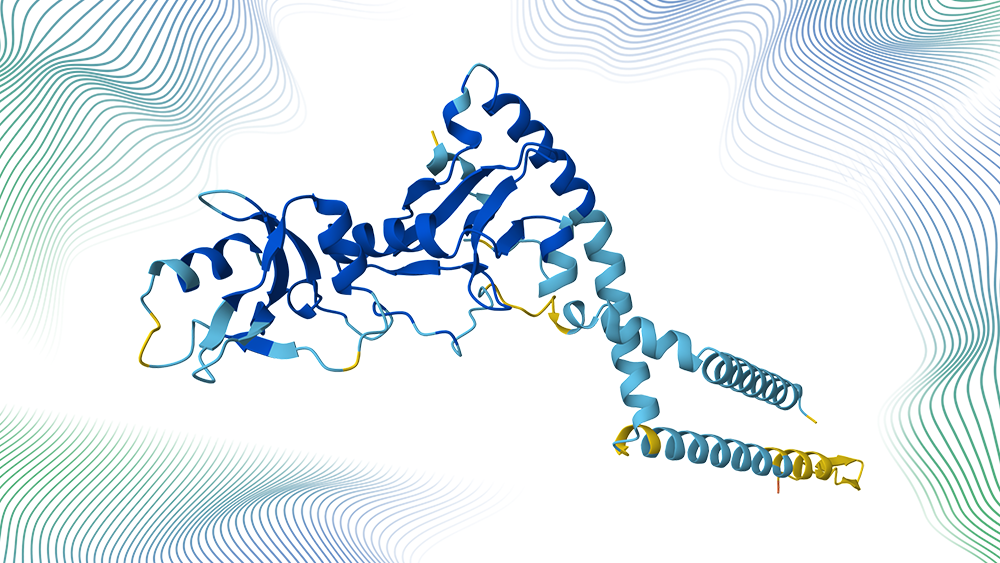
While analyzing genomic data from various types of cancer, the team came across the MPZL1 gene.
It is located in a chromosomal region that is often amplified in various solid tumors. Human tumor cells therefore often express large amounts of the MPZL1 protein on their cell surfaces, whereas healthy tissue expresses significantly less. The team discovered this by analyzing 2,200 tumor samples from various types of cancer as well as samples of healthy tissue.
MPZL1-specific CAR-T cells attack tumors in a mouse model
CAR-T cells carry a genetically engineered chimeric T-cell receptor that acts like a sensor to detect target molecules on the surface of cancer cells. When the sensor recognizes its target protein—in this case, MPZL1—the T cell is activated and can attack the tumor.
In the laboratory, the MPZL1-specific CAR-T cells destroyed tumor cells from many different types of cancer that exhibited a high density of MPZL1 proteins on their surface. The researchers observed this in cells from liver, breast, lung, and pancreatic cancers, as well as in glioblastomas. When MPZL1 was absent, however, the attack on the cancer largely failed to occur.
In two different cancer-bearing mouse models, MPZL1-positive tumors also regressed significantly after a single administration of the CAR-T cells. The MPZL1-specific CAR-T cells infiltrated MPZL1-positive tumor tissue from patients and exhibited typical signs of immune activation there. In healthy tissue, both the infiltration of CAR-T cells and the release of corresponding signaling molecules were lower.
These results do not yet prove that the therapy is effective or safe for cancer patients. In particular, potential side effects must be further investigated. Since the CAR-T cells recognize human MPZL1 but not the corresponding variant of the protein in mice, potential adverse effects on healthy tissue could only be assessed to a limited extent in the mouse experiments.
A Concept with Potential for Expansion
“Here, we are demonstrating for the first time an innovative method for identifying new targets for cancer therapies,” comments Darjus Tschaharganeh, one of the two project leaders. “Instead of searching exclusively for genetic alterations that drive tumor growth, other genes in duplicated chromosomal segments may also be of interest—provided that the proteins they encode are preferentially located on the surface of cancer cells.”
The researchers hope that, in the long term, this approach could help expand the search for targets for immunotherapies to other solid tumors. Following the promising results from cell culture and mouse experiments, the next step is to determine whether these findings can be applied to human tumors.
The work was funded, among other sources, by the ERC Starting Grant “Crisp-SCNAs” awarded to Darjus Tschaharganeh.
Publication
Jiménez-Vázquez S, Berthel A et al. Cancer-driver-agnostic targeting of amplified surface proteins identifies MPZL1 for selective CAR-T cell therapy. Nat Commun 17, 9695 (2026). doi.org/10.1038/s41467-026-77465-5