Harnessing Synthetic Cellular Systems as Immune Cell Boosters
How can cell-based immunotherapies for cancer and autoimmune diseases become more widely available in the long term? The SYNTHIA project is addressing this challenge: The Max Planck Institute for Medical Research and the Fraunhofer Institute for Cell Therapy and Immunology IZI are collaborating on new research approaches to advance the development of cell-based immunotherapies. The three-year project is funded through the Fraunhofer–Max Planck Cooperation Program.
© Fraunhofer IZI
- The project lies at the intersection of synthetic biology and immunology and brings together the expertise at the Max Planck Institute for Medical Research (MPIMR) in engineering and studying biological systems with Fraunhofer IZI’s expertise in translating scientific findings into robust cell-based manufacturing processes.
- The SYNTHIA team will investigate how synthetically engineered cellular systems interact with immune cells and what therapeutic potential this holds.
- In the long term, it aims to advance the development and production of scalable and broadly available immune cell therapies.
Currently approved CAR-T cell therapies are manufactured individually for each patient. Immune cells are collected from the patient’s blood and genetically engineered to recognize and eliminate specific cancer cells. While this approach is clinically established and has achieved significant therapeutic success, patient-specific manufacturing is labor-intensive and limits scalability and broad availability.
A chance for “off-the-shelf” cell therapies
Therapies based on natural killer (NK) cells offer a promising alternative. NK cells are part of the innate immune system and play a key role in recognizing and eliminating altered or diseased cells. Importantly, allogeneic NK cells – sourced from healthy, unrelated donors –can potentially be used to treat multiple patients with the same cell product. This opens the possibility of ready-made, “off‑the‑shelf” cell therapies that can be manufactured in advance and supplied when needed.
A major challenge is producing NK cells in the laboratory at sufficient scale while maintaining consistent quality and functionality. In research settings, “feeder cells” –typically irradiated tumor cells –are often used to stimulate NK cells growth and activation. Although effective, the use of living feeder cells can complicate the development of standardized and clinically compliant manufacturing processes.
Studying cellular processes under tightly defined conditions
To address this challenge, the SYNTHIA team is investigating how new synthetic, controllable cellular feeder systems can be used to support the activation and expansion of immune cells. The project lies at the intersection of synthetic biology and immunology and aims to advance the development and production of scalable and broadly available immune cell therapies.
The MPIMR team led by Dr. Ilia Platzman and Prof. Dr. Joachim P. Spatz from the Department of Cellular Biophysics contributes expertise in synthetic biology – an engineering-driven approach that seeks to understand, probe, and precisely control biological processes. Dr. Dominik Schmiedel, head of the NK Cell Technologies Unit in the Department of Cell and Gene Therapy Development at Fraunhofer IZI, and his colleagues contribute immunological expertise, including how immune cells interact with each other and their microenvironment. Together, these perspectives enable the study of cellular processes under tightly defined conditions.
A vision for tailored immune cell responses
In the coming years, the SYNTHIA team will investigate how synthetically engineered cellular systems interact with immune cells and what therapeutic potential this holds. Dr. Ilia Platzman emphasizes: “In the context of immunotherapy, our research lays the foundation for a new generation of programmable synthetic cells for personalized medicine. Within SYNTHIA, we aim to establish synthetic cellular systems as a modular, scalable, and adaptable platform for controlling immune-cell function. By engineering synthetic cells to deliver precisely defined combinations of signals, we envision being able to tailor immune-cell responses to specific therapeutic requirements. In the longer term, such programmable systems could provide a versatile technology platform for developing individualized and next-generation immunotherapies.”
Dr. Dominik Schmiedel adds: “We are initially developing and testing the approach using NK cells, to showcase the potential of this strategy. Looking ahead, we will examine which findings can also be applied to other immune cell-based approaches.”
Close integration of basic research and process development
A key strength of SYNTHIA is the close integration of basic research and process development. The project brings together the expertise of the Max Planck Institute for Medical Research in engineering and studying biological systems with Fraunhofer IZI’s expertise in translating scientific findings into robust cell-based manufacturing processes. Practical feasibility can therefore be considered from an early stage of the project, rather than only at the end.
In addition to the NK Cell Technologies group, the GMP process development team at Fraunhofer IZI, led by Dr. Anna Dünkel and Dr. Katrin Mestermann, is participating in SYNTHIA. Early work will identify which laboratory procedures can be standardized and reliably controlled, and where adaptations may be required to transfer the processes into controlled manufacturing environments. The focus is on reproducibility, quality, safety, and manufacturability.
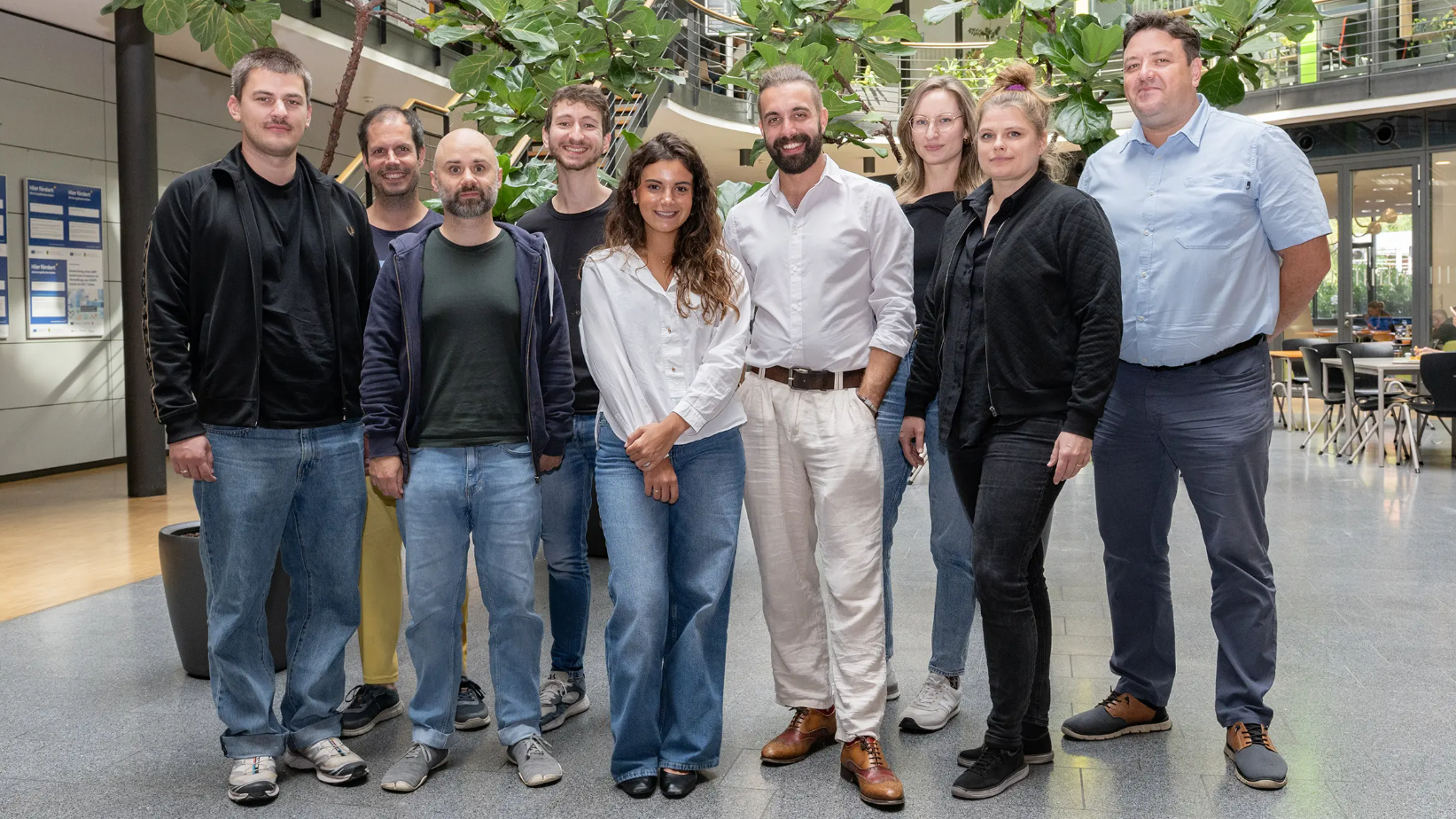
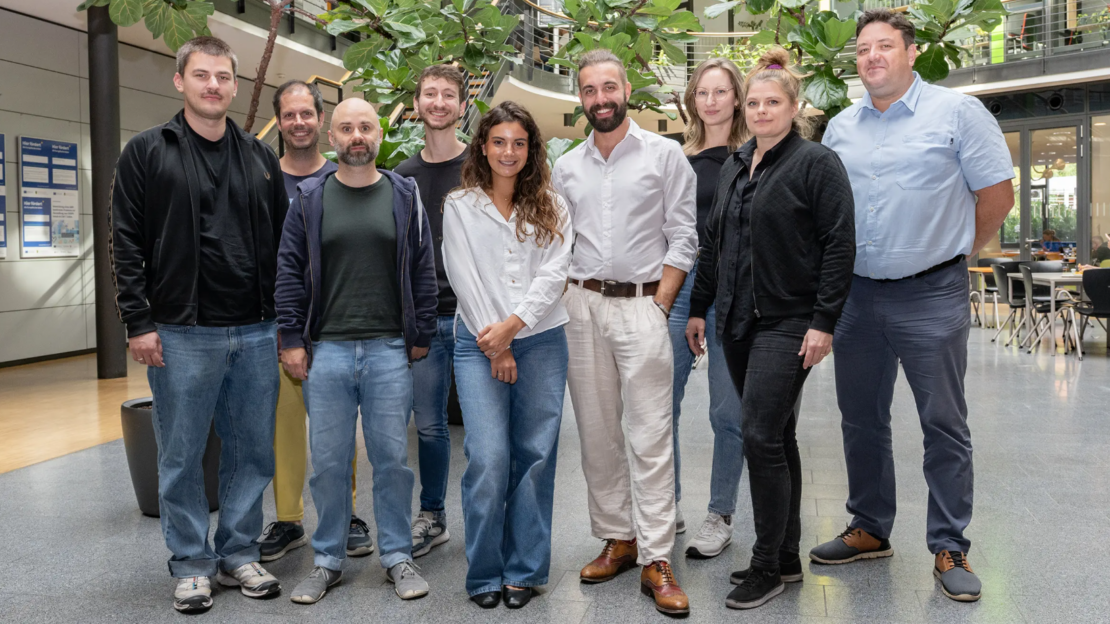
With SYNTHIA, the scientists aim to establish the scientific and technical foundations for cell-based immunotherapies that are more robust, controllable and scalable, with long-term goal of making such therapies accessible to a broader range of patients. In early October, the project partners met at Fraunhofer IZI for a kick-off meeting to define the next steps for their joint research.
Joint Projects of the Fraunhofer-Gesellschaft and the Max Planck Society
The Fraunhofer-Gesellschaft and the Max Planck Society cooperate in a targeted manner in both specialized and interdisciplinary areas. As part of the Pact for Research and Innovation adopted in 2005, numerous projects at the interface between applied and basic research have been funded since then.
All currently ongoing projects are listed here:
https://www.fraunhofer.de/en/institutes/cooperation/max-planck-cooperation.html
About the Fraunhofer Institute for Cell Therapy and Immunology IZI
The Fraunhofer Institute for Cell Therapy and Immunology IZI investigates and develops solutions to specific problems at the interfaces of medicine, life sciences and engineering. One of the institute’s main tasks is to conduct contract research for companies, hospitals, diagnostic laboratories and research institutes operating in the fields of biotechnology, pharmaceuticals and medical engineering. The Fraunhofer IZI develops, optimizes and validates methods, materials and products within the business units cell and gene therapy, drugs and vaccines, molecular diagnostics and immunodiagnostics, as well as extracorporeal therapies. Its areas of competence lie in cell biology, immunology, drug biochemistry, bioanalytics and bioproduction as well as process development and automation.
– Original press release by Fraunhofer IZI –