Blood vessels guide immune cells to metastases
It has long been suspected that endothelial cells, the specialized cells lining the inner walls of blood vessels, play a key role in determining how the body’s immune system responds to tumors. Researchers at the German Cancer Research Center (DKFZ) in Heidelberg and the Medical Faculty Mannheim of Heidelberg University have now identified, in mouse studies, a specialized population of blood vessel lining endothelial cells that enable an effective immune defense against cancer metastases in the liver. The findings could pave the way for novel combination therapies for cancer.
Immunotherapies are designed to empower the body’s own immune cells to recognize and destroy cancer cells. However, many patients respond poorly to these treatments. One major reason is that immune cells often fail to enter tumors in sufficient numbers. A research team led by Hellmut Augustin of DKFZ and Heidelberg University therefore set out to investigate the role of tumor blood vessels in this process.
Blood vessels guide immune cells
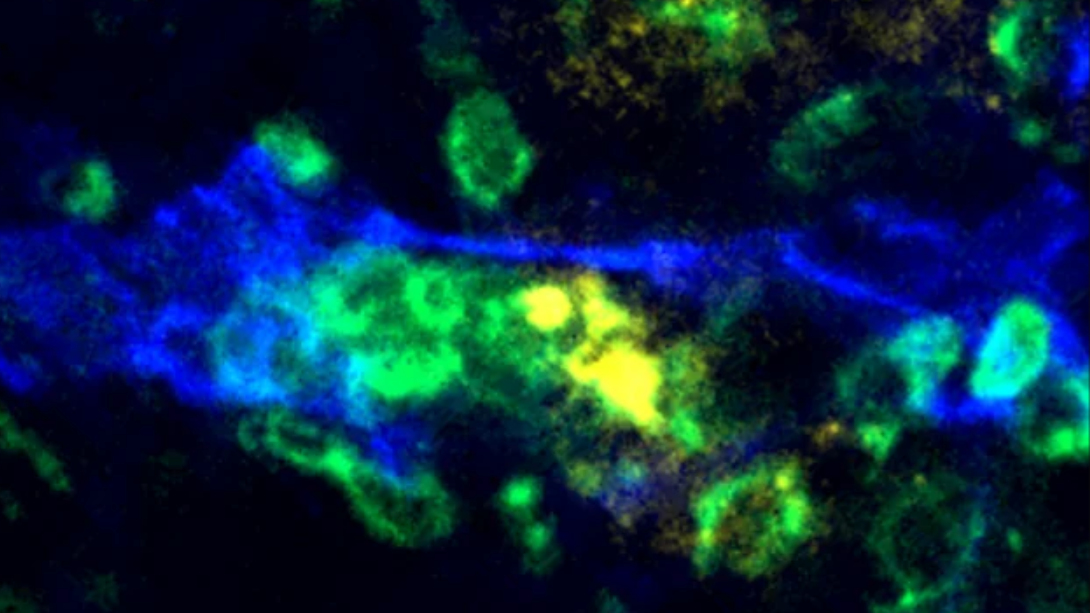
The researchers focused on liver metastases, which commonly occur in advanced cancer and are often difficult to treat with immunotherapy. Within the blood vessels of metastases, the team identified a specialized subgroup of endothelial cells, the cells lining the inside of blood vessels. These cells produce lipoprotein lipase (LPL), a key enzyme involved in fat metabolism. The LPL-producing endothelial cells act like guides for activated T cells, the immune cells capable of specifically attacking cancer cells. The more LPL-producing endothelial cells were present, the more T cells were able to enter the tumor and fight cancer cells.
Blood vessel cells display a “wanted poster” of the tumor
The researchers discovered that these LPL-rich endothelial cells can present tumor-derived components on their surface, a process known as antigen presentation. This function is normally performed by specialized immune cells. The team has now shown that LPL also enables this specific subgroup of endothelial cells within tumors to perform this task. Endothelial cells display a molecular “wanted poster” of the tumor to passing T cells, alerting them to the presence of cancer cells. As a result, T cells can more readily recognize where tumor tissue is located and migrate from the bloodstream into the tumor, where they can exert their cancer-fighting functions.
“Blood vessels are not merely passive pipelines supplying blood to tumors. They actively instruct the immune system and help T cells recognize and attack metastatic cancer cells,” says Xiaowen Zhang, first author of the study.
LPL improves tumor control
In several experimental mouse models of melanoma metastasis in the liver, the researchers found that increasing LPL levels in endothelial cells allowed more T cells to enter the metastases, leading to stronger tumor regression. Conversely, when LPL was switched off, the immune response was significantly weaker.
This discovery opens new perspectives for cancer immunotherapy. In particular, for so-called “immunologically cold” tumors, which espond poorly to immunotherapy, targeted activation of this mechanism may help in the future to recruit more immune cells into tumors.
Evidence of clinical relevance
Analyses of human liver metastases from different tumor types confirmed the clinical relevance of the findings: tumors with high numbers of LPL-positive blood vessels also showed increased infiltration by T cells.
“We have uncovered a surprising new mechanism by which the vascular system regulates anti-tumor immunity,” explains study leader Hellmut Augustin. Co-study leader Mahak Singhal adds: “In many metastatic tumors, T cells fail to gain access to tumor tissue. Our findings suggest that targeted reprogramming of tumor blood vessels could help make such therapy-resistant tumors responsive to immunotherapy.”
Xiaowen Zhang, Miki Kamiyama, Margaret Tulessin, Lorna Rinck, Jan-Philipp Mallm, Michael Kilian, Dennis A. Agardy, Mathias Heikenwälder, Michael Platten, Carolin Mogler, Mahak Singhal, Hellmut G. Augustin: LPL-positive endothelial cells control T cell homing in liver metastasis.
Cancer Discovery 2026, DOI: https://aacrjournals.org/cancerdiscovery/article/doi/10.1158/2159-8290.CD-25-1411
A picture is available for download:
https://www.dkfz.de/fileadmin/user_upload/Skoe/Pressemitteilungen/2026/Picture-CD-press-release.png
Picture Caption: Intratumoral blood vessels of a liver metastasis are stained in blue, T cells in green.
Note on use of images related to press releases
Use is free of charge. The German Cancer Research Center (Deutsches Krebsforschungszentrum, DKFZ) permits one-time use in the context of reporting about the topic covered in the press release. Images have to be cited as follows: “Source: Augustin/DKFZ”.
Distribution of images to third parties is not permitted unless prior consent has been obtained from DKFZ’s Press Office (phone: ++49-(0)6221 42 2854, E-mail: presse@dkfz.de). Any commercial use is prohibited.