Carl-Zeiss-Stiftung Funds Pioneering AI Project at the DKFZ
How can artificial intelligence support medical imaging diagnostics in the future and significantly improve patient care? Researchers led by Lena Maier-Hein (German Cancer Research Center, DKFZ, and NCT Heidelberg) have developed an innovative concept to address this question. The Carl Zeiss-Stiftung is funding the MEDAL* project with a total of three million euros.
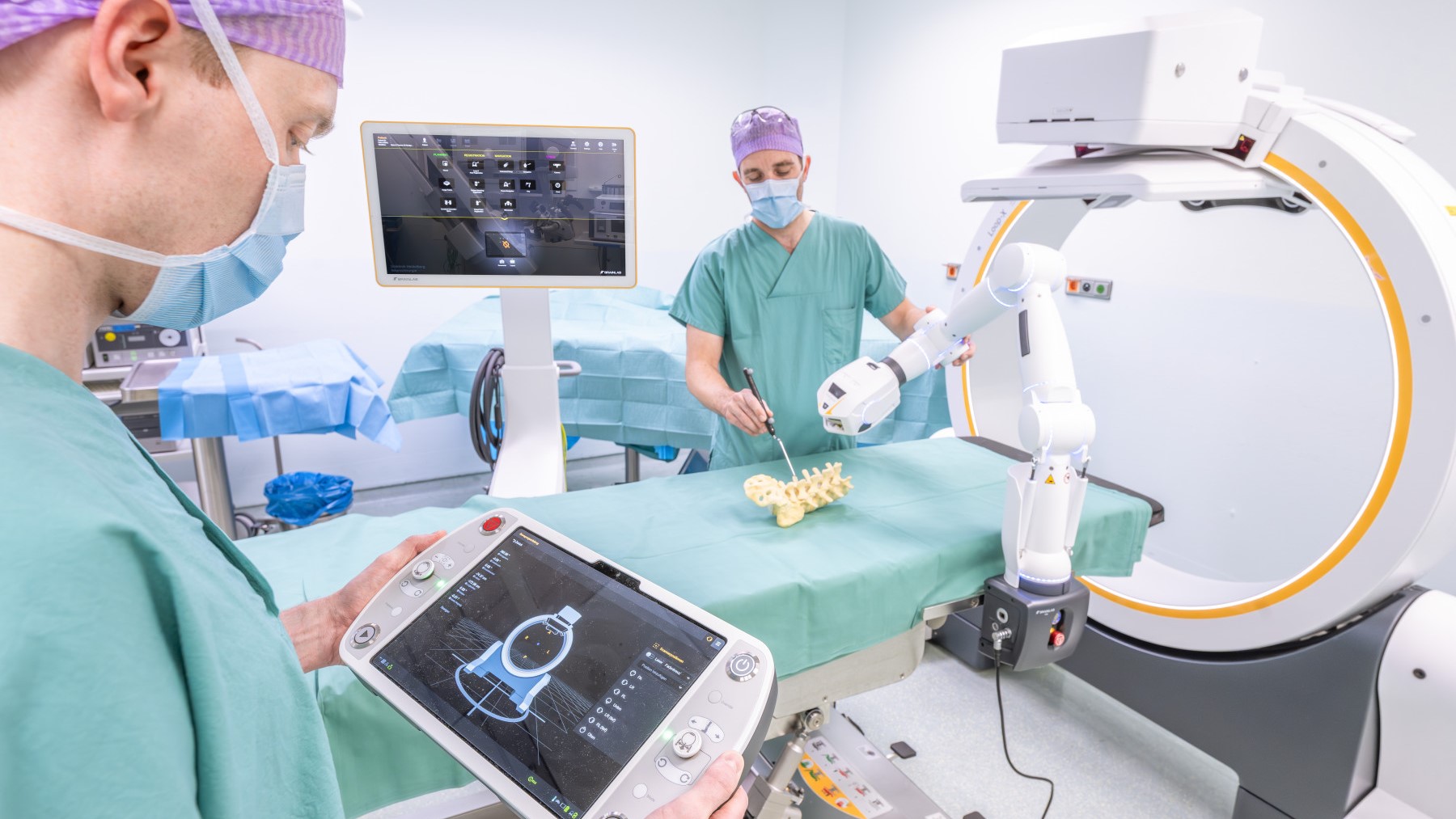
Experts and the general public alike expect artificial intelligence to bring improvements in many areas of medicine, particularly in diagnostic imaging. Potential applications range from early detection to diagnosis, from therapy assistance to Follow-up care. However, the development of such helpful AI solutions depends on the availability of relevant image data derived from CT or MRI imaging, pathology, and video documentation from surgical procedures. “Data drives research—current analyses show that research topics in AI are often selected based on what data is available, rather than on which clinical problems need to be solved most urgently,” says project leader Lena Maier-Hein, a medical informatics specialist at the DKFZ.
“Current test datasets often merely reflect simple routine tasks, such as recognizing or outlining specific structures. They therefore reveal little about how well modern AI systems understand complex medical contexts or can function reliably in new situations,” says Annika Reinke, senior scientist on the project.
This is exactly where MEDAL comes in: The project has the ambitious goal of building a globally unique collection of relevant clinical questions along with the corresponding image data. To this end, experts around the world are being called upon to participate in a large-scale crowdsourcing campaign and submit important clinical problems along with the associated multimodal data. A total prize fund of one million euros will be distributed among the contributors of the selected tasks.
With MEDAL, the researchers aim to create a kind of “final exam” that artificial general intelligence (AGI) systems in medical imaging must pass to demonstrate their clinical utility.
In Heidelberg, an international panel of experts comprising clinicians, data scientists, patient representatives, and AI researchers is currently being established under the leadership of Lena Maier Hein. The experts will select from among the submitted proposals those whose solutions are truly relevant to patients. The goal is to redirect the resources and creativity of the world’s brightest minds in the field of AI away from irrelevant or purely technical questions and toward the greatest clinical challenges of our time.
“We thank the Carl Zeiss-Stiftung for joining us on this unusual path. We hope to create a globally recognized standard with MEDAL to objectively measure the progress of medical AI,” says project leader Maier-Hein, adding: “Above all, however, MEDAL is intended to benefit patients by ensuring that future AI systems are specifically developed to address the most critical medical challenges.”
The funding from the Carl-Zeiss-Stiftung enables the implementation of this globally unique project and simultaneously strengthens Germany’s role in international AI research.
* MEDAL stands for “Medical Imaging AGI’s Last Exam”