

Research
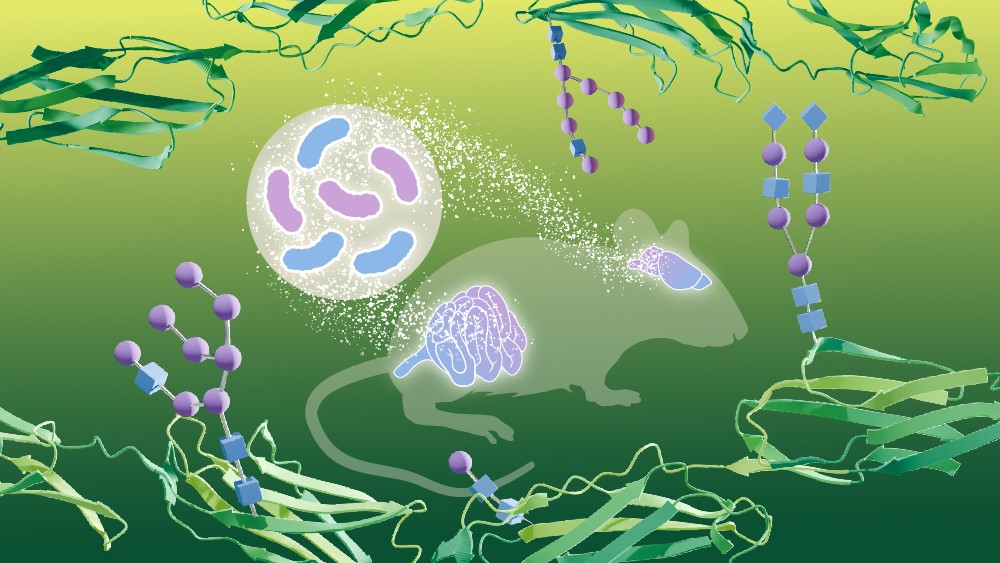
Using a new method to study how carbohydrates modify proteins, scientists have discovered that gut bacteria can alter molecular signatures in the brain Summary Our guts are home to trillions of bacteria, and research over the last few decades has established how essential they are to our physiology – in health and disease. A new study […]
read more
Spliceosome: How Cells Avoid Errors When Manufacturing mRNA
Structural biologists provide a first-time look at the atomic level into the quality control mechanism of this complex molecular machine A complex molecular machine, the spliceosome, ensures that the genetic information from the genome, after being transcribed into mRNA precursors, is correctly assembled into mature mRNA. Splicing is a basic requirement for producing proteins that […]
read more
Therapeutic Designer Peptide to Combat Acute Heart Muscle Weakness
Researchers of the Heidelberg University, Heidelberg University Hospital (UKHD) and Heidelberg Institute for Theoretical Studies (HITS) have developed a synthetic peptide based on the natural protein S100A1, a nearly universal “fuel” for weakened hearts. The researchers combined computer-aided methods with lab studies to investigate the therapeutic effect of the so called S100A1ct peptide molecule. The […]
read more
Novel analysis of intrinsically disordered proteins
Researchers from Mainz University and EMBL Hamburg present a new approach for structurally characterising disordered proteins by combining two different analysis methods. Proteins are the molecules that perform most ‘actions’ in the cell, and thus, are key for our body functions. Essentially, proteins are strings of amino acids, which, in most cases, fold like origami […]
read more
Repeated polyp diagnoses in relatives indicate higher risk of colorectal cancer
Researchers at the German Cancer Research Center (DKFZ) and at the National Center for Tumor Diseases (NCT) Heidelberg have investigated the association between an individual’s risk of colorectal cancer and repeated diagnoses of colorectal polyp in relatives. They conclude that, in particular, the risk of developing colorectal cancer at a young age is significantly increased […]
read more
Who has to go into intensive care after brain surgery?
Dr. Paul Naser from the Department of Neurosurgery at Heidelberg University Hospital and the Heidelberg Faculty of Medicine at Heidelberg University has been awarded the German Society for Neurointensive and Emergency Medicine (DGNI) Young Investigator Award. The prize is endowed with 20,000 euros in funding. He receives the prize for a research project that aims […]
read more
Low-cost cancer prevention: AI-generated influencers reach at-risk groups on social media
Artificial Intelligence (AI) is transforming cancer prevention: A groundbreaking study conducted at the German Cancer Research Center (DKFZ) demonstrates that AI-generated social media influencers can effectively reach at-risk groups with preventive health messages—at a fraction of the cost of traditional campaigns. In this pilot study, researchers created a virtual influencer named “Wanda” who shared educational […]
read more
How the Ebola virus multiplies in cells
Like all viruses, the Ebola virus is dependent on host cells in order to replicate. Researchers at Heidelberg University Hospital, in collaboration with colleagues from the Friedrich Loeffler Institute, have been able to show for the first time using state-of-the-art imaging techniques how the replication compartments of the Ebola virus change during replication in infected […]
read more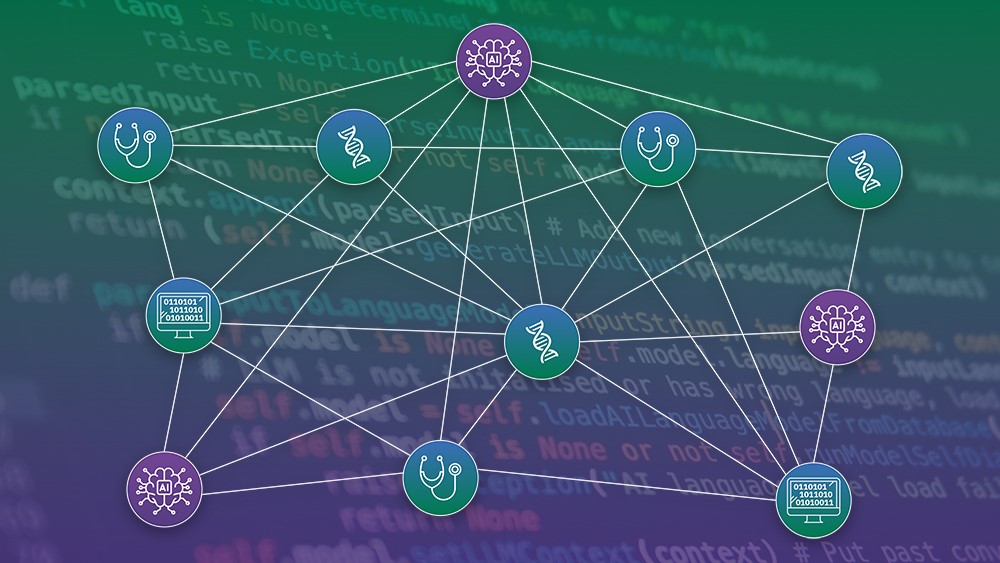
BioChatter: making large language models accessible for biomedical research
Introducing an open-source large language model (LLM) framework designed for custom biomedical research Summary Large language models (LLMs) have transformed how many of us work, from supporting content creation and coding to improving search engines. However, the lack of transparency, reproducibility, and customisation of LLMs remains a challenge that restricts their widespread use in biomedical […]
read more