Electrospinning in regenerative medicine
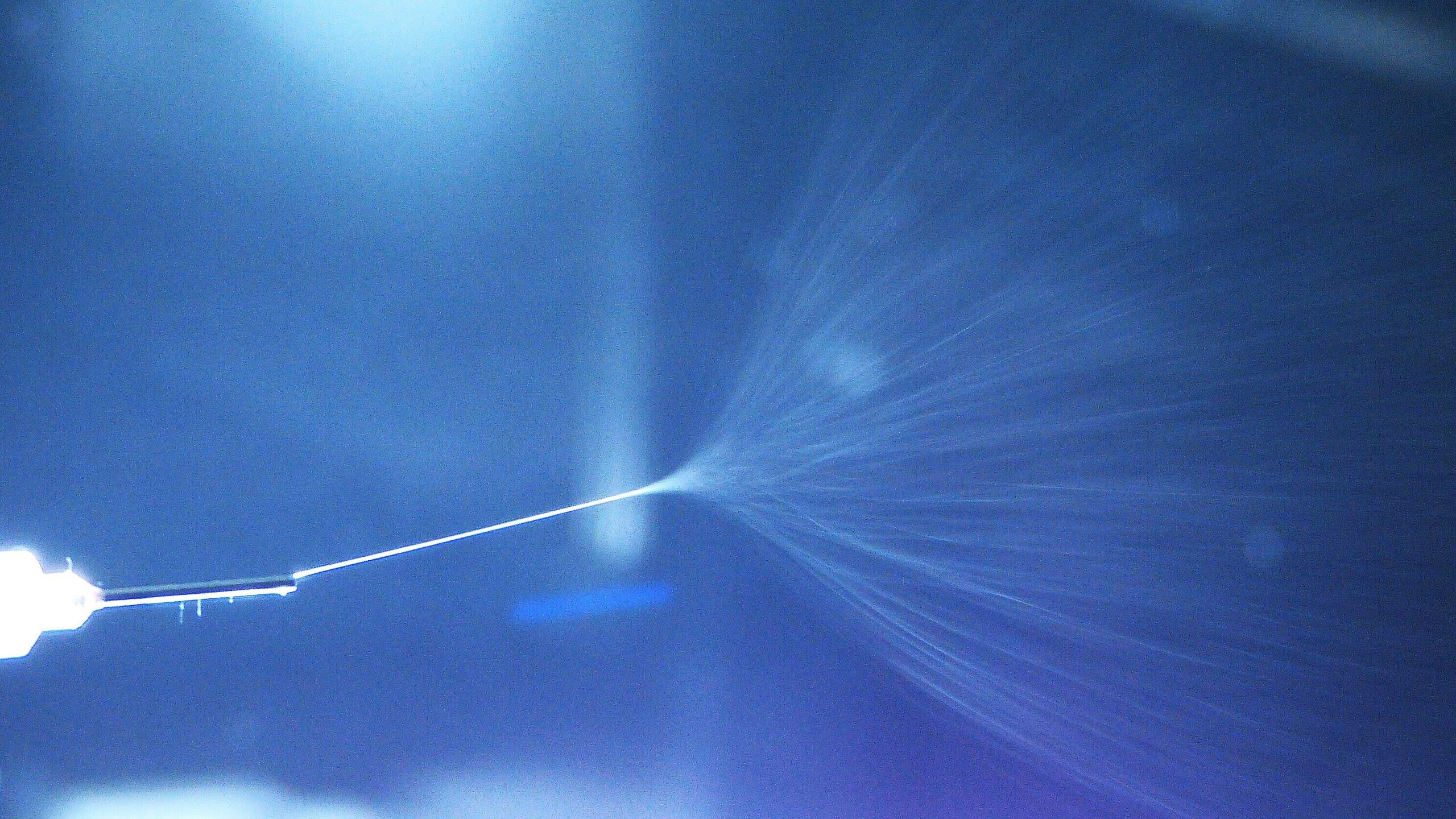
Electrospun fibers open up a wide range of possibilities in regenerative medicine and for in vitro testing. A key factor in ensuring success is replicating the natural extracellular matrix (ECM) as closely as possible. Electrospun fibers play a significant role in this regard due to their nanofiber structure. In a recent review article, Julia Schütz, Ruben Daum, and Hanna Hartmann provide a detailed overview of methods for fiber production and functionalization, as well as various application examples.
To enable targeted cell-material interactions, the polymer fibers can also be biofunctionalized. This includes surface coating with ECM proteins to improve cell adhesion and interaction, as well as the integration and release of active substances for targeted stimulation, and, last but not least, the development of electrically conductive fibers.
In addition, the NMI researchers describe the development of hybrid fiber-hydrogel systems in which electrospun fiber fragments are integrated into hydrogels. This combination unites the biofunctional and mechanical properties of fibrillar scaffolds with the flexibility of hydrogels in terms of shape and size.
Paper: Schütz, J. et al., Functionalization of Electrospun Fibers and Hydrogel Integration: Tailoring Scaffolds for Tissue-Specific Regeneration. Regenerative Biomaterials.