EU-Funded Research Project on Pancreatic Cancer: Heidelberg University Hospital Takes Leading Role in Major EU-Funded Pancreatic Cancer Initiative
The European Union is funding the PALACROS project with nearly €10 million under its “Horizon Europe” research programme. Researchers from Heidelberg University Hospital and Heidelberg University are helping shape the European PALACROS consortium, developing new standards for the treatment of locally advanced pancreatic cancer.
PALACROS (Prioritising Multimodal Surgical Care for Patients with Locally Advanced Pancreatic Cancer Across Europe) aims to advance the treatment of locally advanced pancreatic cancer, establish harmonised standards across Europe, and expand access to specialised pancreatic surgery. Researchers from the Department of General, Visceral and Transplantation Surgery at Heidelberg University Hospital contribute with their internationally recognised expertise in pancreatic surgery to the consortium. Funded with nearly €10 million over six years through the EU’s “Horizon Europe” programme, the project brings together 21 partners from academia, clinical practice, industry, and patient advocacy across twelve European countries. Together with Amsterdam UMC (the Netherlands), the coordinating centre of the consortium, and the University of Verona (Italy), Heidelberg is one of the consortium’s three leading clinical and scientific centres.
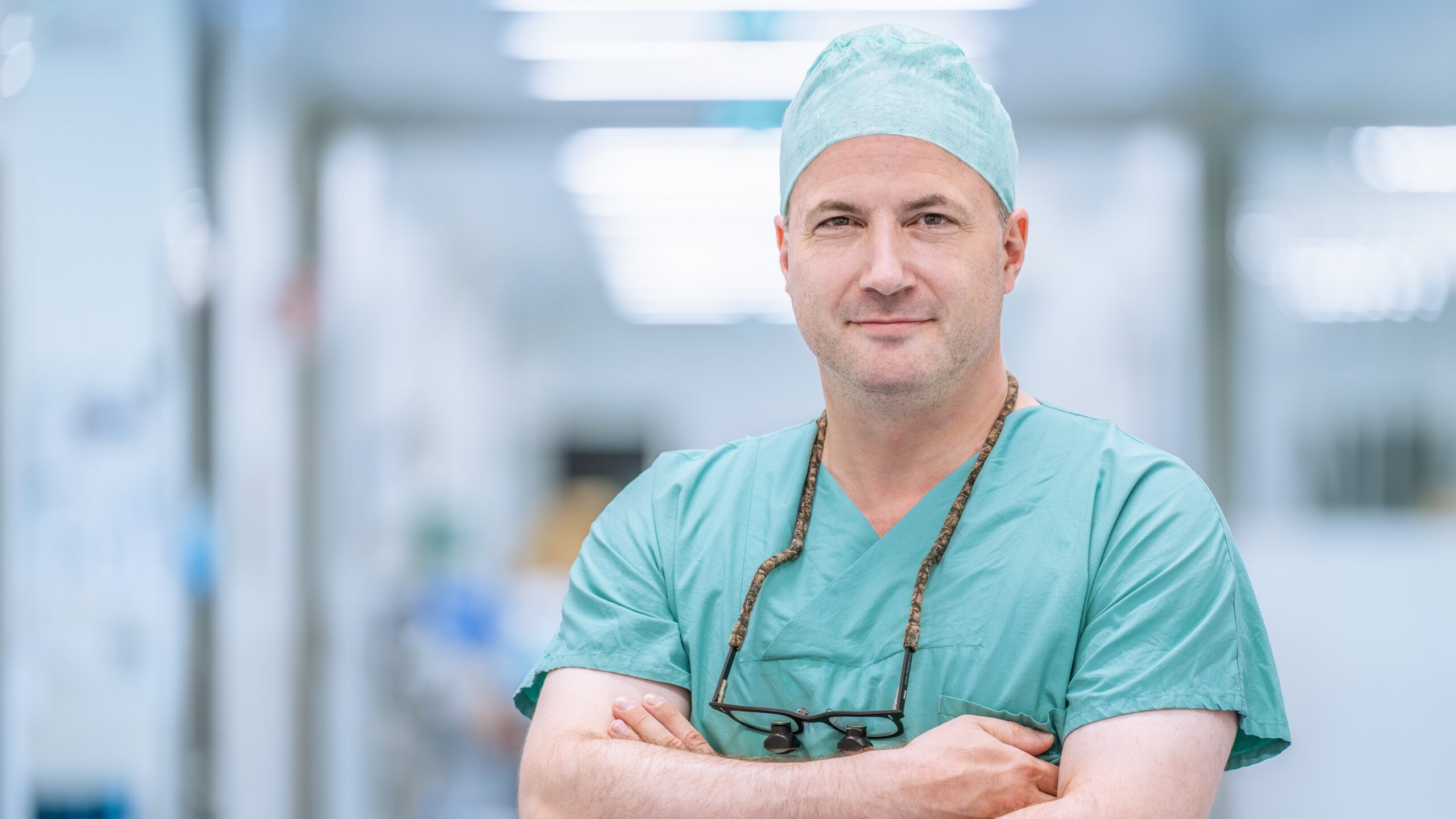
Within the consortium, the European Pancreas Center Heidelberg plays a central role in the scientific development and Europe-wide implementation of surgical treatment strategies for locally advanced pancreatic cancer. The Heidelberg activities are led by Privatdozent (PD) Dr. Thomas Hank, Department of General, Visceral and Transplantation Surgery and head of the Clinical and Translational Pancreatic Cancer Prognostics (PCP) research group at the Heidelberg Medical Faculty at Heidelberg University.
With approximately 700 pancreatic resections performed each year, the European Pancreas Center Heidelberg is one of Europe’s largest and most renowned pancreatic surgery centres. Internationally, Heidelberg is particularly recognised for its surgical management of locally advanced pancreatic cancer following neoadjuvant chemotherapy. In recent years, Heidelberg surgeons have made decisive contributions to advancing surgical strategies for patients whose tumors were considered unresectable only a few years ago, thereby opening new opportunities for potentially curative treatment.
“Locally advanced pancreatic cancer remains one of the greatest challenges in modern pancreatic surgery. Thanks to modern multimodal treatment strategies, significantly more patients can now undergo potentially curative surgery than just a few years ago. With PALACROS, we aim to further drive this progress scientifically and, together with our European partners, establish new standards for the surgical treatment of locally advanced pancreatic cancer,” says PD Dr. Thomas Hank.
At the core of PALACROS are three international clinical trials investigating new treatment strategies. The goal is to create a scientific basis for standardized treatment protocols across Europe and to accelerate their implementation in clinical practice. Building on decades of experience at the European Pancreas Center Heidelberg and the Pancreatic Surgery Section led by Professor Dr. Martin Loos, the Heidelberg team is developing an international training and mentoring programme. This initiative is designed to share the expertise of Europe’s leading pancreatic centres and establish common quality standards. At the same time, researchers from the Heidelberg team are collaborating with their European partners to rapidly translate successful therapeutic strategies into routine clinical care and international clinical guidelines.
“Research, innovation and outstanding patient care have long gone hand in hand in Heidelberg. Taking on a leading role in this major European project reflects both the scientific excellence and the high level of surgical expertise of our team,” says Professor Dr. Christoph Michalski, Medical Director of the Department of General, Visceral and Transplantation Surgery at Heidelberg University Hospital. In addition to PD Dr. Thomas Hank, the Heidelberg PALACROS team includes Dr. Katharina Marstaller and Dr. Ingmar Rompen, who play key roles in the consortium’s scientific programme.
Further information is available online
Website of the Department of General, Visceral and Transplantation Surgery at UKHD (in German)
Website of the European Pancreas Center
Project information in the European Commission’s CORDIS system
Press release from Amsterdam UMC
Contact
PD Dr. Thomas Hank
Department of General, Visceral and Transplantation Surgery, Heidelberg University Hospital
Head of the Clinical and Translational Pancreatic Cancer Prognostics (PCP) research group at the Heidelberg Faculty of Medicine at Heidelberg University
thomas.hank@med.uni-heidelberg.de