Four Million Euros in EU Funding to Improve Prostate Cancer Care
A European research consortium led by the German Cancer Research Center (DKFZ) aims to fundamentally improve the diagnosis and treatment of prostate cancer using AI agents, big data, and patient-centered clinical decision support. The central goal is to detect aggressive tumors early and accurately, reduce unnecessary interventions, and tailor treatment decisions more closely to the individual patient. The European Commission is funding the “PROMETHEUS” consortium project with a total of four million euros over four years, of which 1.6 million euros will be allocated to the DKFZ.
Prostate cancer is the most common cancer among men. Although tumors detected at an early stage can be treated in curative intent, survival rates decrease considerably in advanced stages. At the same time, current unorganized screening practices result in many unnecessary biopsies and the diagnosis of tumors that do not require treatment.
PROMETHEUS* aims to address this clinical challenge. “With PROMETHEUS, we are taking precision oncology to the next level: moving away from isolated findings toward intelligent, multimodal, and explainable clinical decision support,” says Magdalena Görtz, research group leader at the DKFZ and consultant in urology at Heidelberg University Hospital. “If this allows us to reduce unnecessary interventions while simultaneously detecting aggressive prostate tumors at an early stage, it can in the long term improve patients’ quality of life, advance medical care in Europe, and relieve the burden on the healthcare system.”
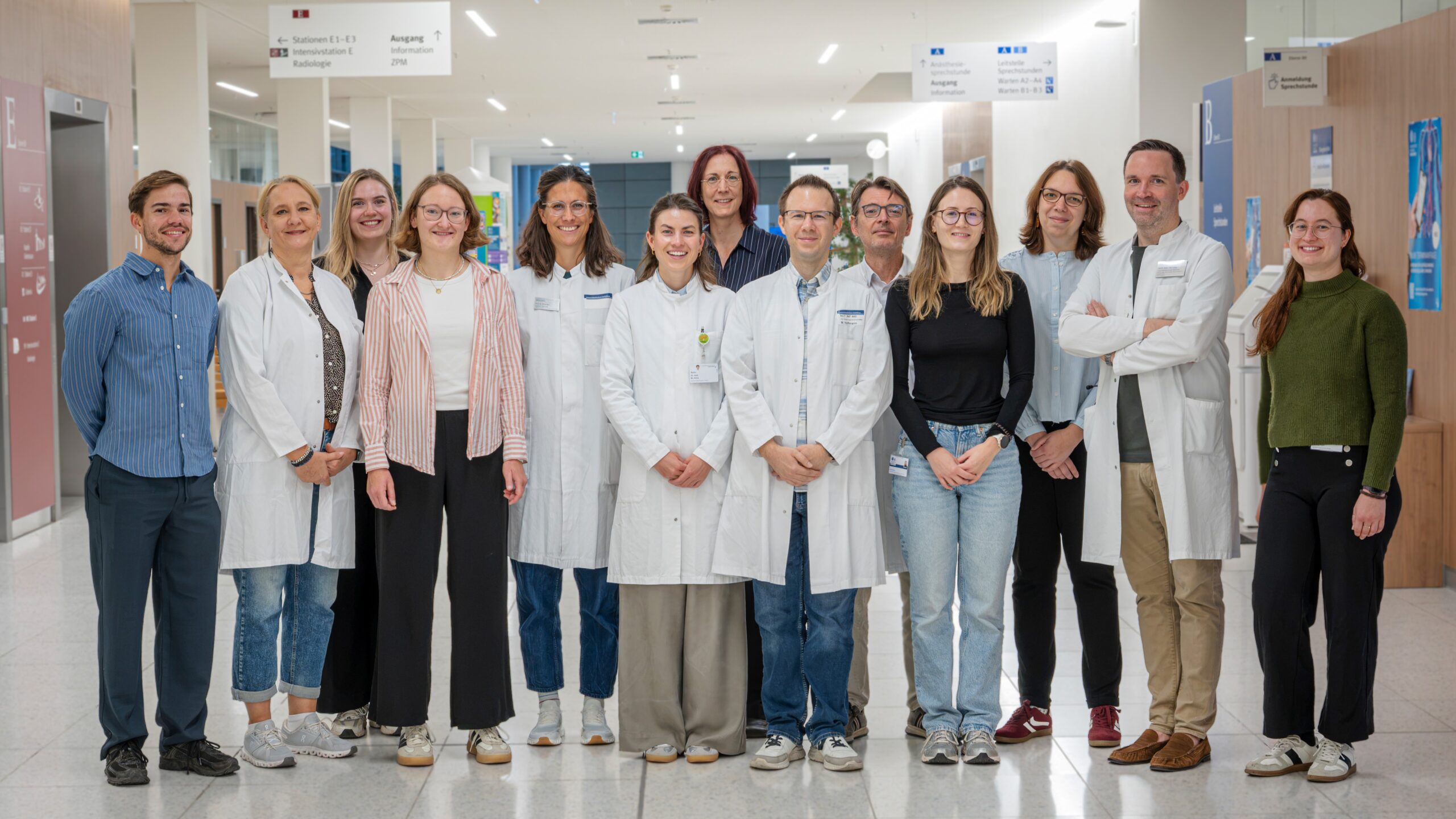
PROMETHEUS was initiated by Magdalena Görtz, who now leads the European research consortium comprising six leading scientific and clinical institutions. Together, the partners contribute clinical expertise, state-of-the-art diagnostics, artificial intelligence, and large patient datasets.
Rather than focusing on individual clinical parameters in isolation, the EU consortium is developing an intelligent “multi-agent system”. Several specialized AI agents are being integrated within a collaborative framework. These AI agents analyze and integrate clinical patient data, multiparametric imaging, histopathological findings, and long-term oncological outcomes. This integration is intended to enable comprehensive and dynamic modeling of disease trajectories. In the future, the resulting decision-support system is intended to help physicians assess whether an intervention is necessary and which treatment strategy is best suited for each individual patient.
A particular focus of the project is on the explainability and trustworthiness of AI. The AI agents will be designed not only to provide predictions but also to provide comprehensible justifications and make uncertainties transparent. “We are not developing a black box, but rather a transparent, AI-supported agentic system that brings together medical knowledge, high-quality data and longitudinal disease trajectories and makes them accessible for clinical decision-making,” explains Görtz. In addition, PROMETHEUS generates synthetic medical data to facilitate data-privacy-compliant, cross-site AI development in Europe without the need to directly exchange sensitive patient data.
In addition to the DKFZ, the EU consortium includes the Erasmus Medical Center in Rotterdam, Heidelberg University Hospital, the Karolinska Institute in Stockholm, Radboud University Medical Center in Nijmegen, Umeå University, and PNO Innovation. The collaboration brings together interdisciplinary expertise from the fields of urology, radiology, oncology, epidemiology, data science, and AI to address highly relevant clinical questions in prostate cancer care. The close international network provides the basis for validating the AI system across several European clinical sites and, in the long term, integrating it into routine clinical practice.
An international Scientific Advisory Board and patient representatives ensure that the EIC PROMETHEUS project is not only technologically innovative, but also clinically relevant, patient-centered, and specifically geared toward medical application.
Through its EIC Pathfinder Program, the European Commission aims to identify new, innovative technologies with the potential to create future markets. To this end, visionary breakthrough projects at an early stage of technological development are funded.
*PROMETHEUS stands for “PROstate cancer Multimodal Explainable Transferable Holistic Expert for Universal Stratification.”