Frank Winkler receives the Brain Prize 2025
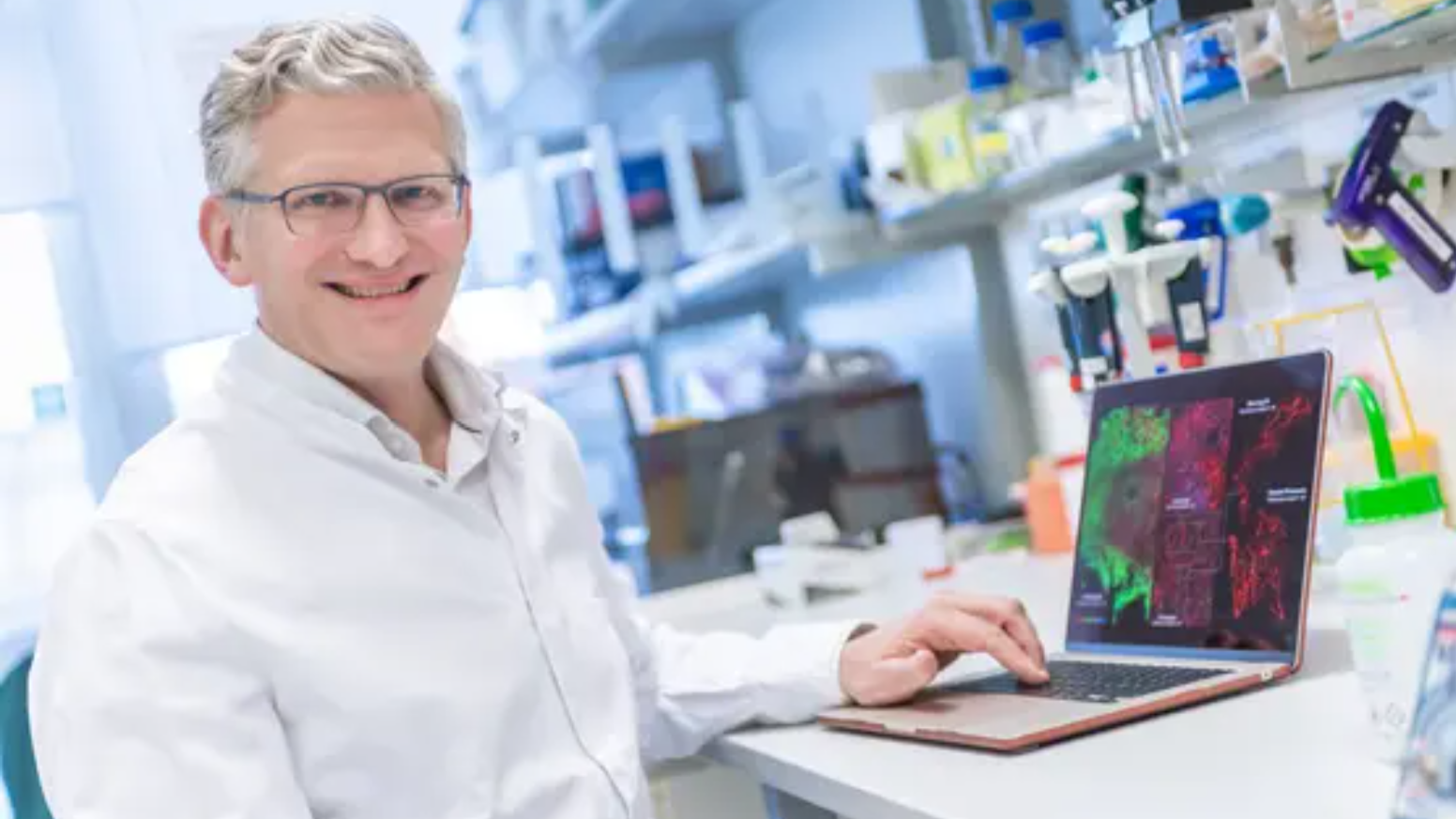
This year, the most highly endowed award in the neurosciences and neuromedical research honors pioneering work on the interactions between the nervous system and brain tumors: Neurologist Frank Winkler, who conducts research at the University of Heidelberg and at the German Cancer Research Center (DKFZ) and treats patients with brain tumors at Heidelberg University Hospital, discovered that nerve cells in the brain communicate with brain tumor cells. This causes the disease to progress. The finding opens up completely novel treatment approaches. Winkler shares the prize with Michelle Monje from Stanford University, USA. The award, which is endowed with more than one million euros, will be presented by the Danish King Frederik X in Copenhagen on May 28, 2025.
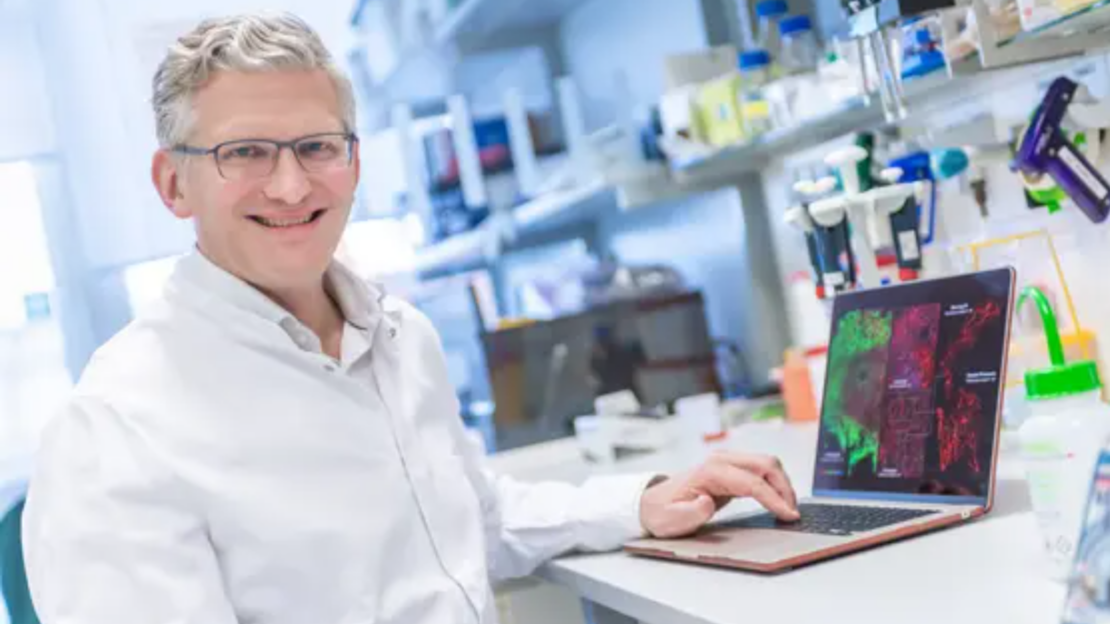
With the Brain Prize 2025, the Danish Lundbeck Foundation honors the groundbreaking research of the scientifically and clinically engaged neurologist Frank Winkler. Over the past 15 years, he has gained groundbreaking insights into the functioning of incurable glioblastomas, highly aggressive brain tumors. He showed that the tumor cells form contacts with healthy nerve cells and receive signals from them – which fuels the invasive growth of the tumors. Furthermore, some tumor cells develop into pacemakers, which, together with the excitatory signals from the nerve cells, promote the formation of a mycelium-like tumor network in the brain. This network enables the tumor cells to communicate in a complex way and gives them enormous resistance to common therapies. Winkler’s results open up new avenues for therapeutic strategies that are currently being tested in clinical trials. The prize will be presented in person by the Danish King Frederik X in Copenhagen on May 28.
Frank Winkler shares the Brain Prize, endowed with 1.3 million euros, with Michelle Monje, who is researching inoperable brain tumors in children at Stanford University. “Michelle Monje and Frank Winkler have independently changed our understanding of the biology of these neurological cancers,” said Andreas Meyer-Lindenberg, Chair of the Brain Prize Selection Committee. “Together, Monje and Winkler have initiated a paradigm shift by incorporating neuroscience into cancer research, thus creating the basis for what is now known as ’Cancer Neuroscience’.”
The new research area of cancer neuroscience focuses on the interaction between the nervous system and cancer: What role does the nervous system play in the development and spread of a tumor? Do possible interactions influence the prognosis? Can these processes be stopped or used for therapies? “As a scientist and physician, I treat and care for patients with brain tumors every day and can scientifically test the hypotheses that arise from my direct experience with the disease in the clinic. This allows me to ask the right questions that are truly relevant for the underlying mechanisms of the tumor and for those affected,” says Winkler, Managing Senior Physician at the UKHD’s Department of Neurology. “I feel incredibly honored and grateful that this two-pronged approach, which I have been pursuing with great passion for more than 15 years with numerous colleagues in Heidelberg, is now receiving such great recognition.”
“Cancer Neuroscience will become an even more important research topic in the future. It is becoming increasingly clear that the nervous system plays an important role in cancer, including cancers outside the brain. In Heidelberg, we have many of the world’s leading research groups in this field and, together with our partners on campus and in the region, we want to play a leading role in shaping and further expanding this development,” says Michael Boutros, Dean of the Medical Faculty Heidelberg at the University of Heidelberg. ”I am all the more pleased that Frank Winkler’s work and thus our proven focus in oncology and neuroscience is being recognized with this award. My warmest congratulations on this great honor!”
Michael Baumann, Chairman and Scientific Director of the DKFZ, also congratulates: “Frank Winkler’s work is a wonderful example of how excellent, innovative research at the very highest level is the driving force behind translational approaches that have the potential to make a real difference for patients. On behalf of the entire DKFZ, I congratulate him on this well-deserved prize.”
The findings of Frank Winkler and his team not only shed new light on glioblastomas, which have so far been incurable. They have also shown that a certain drug used to treat epilepsy can disrupt the communication between nerve cells and tumor cells. Winkler’s team is currently conducting a clinical trial to determine whether the drug can benefit patients with glioblastomas. “This is translational research in action, with new research findings being quickly incorporated into clinical care. The Heidelberg location offers excellent conditions for this thanks to the close links between the university and university hospital and non-university research institutions such as the DKFZ,” says Jürgen Debus, Senior Medical Director of the University Hospital Heidelberg (UKHD). “I warmly congratulate Frank Winkler on this great success at the interface between patient-oriented research and clinical practice.”
Glioblastomas are highly aggressive and, so far, incurable brain tumors. Despite surgery, chemotherapy and radiotherapy, patients usually die within two years. Winkler and his research group at the Neuro-Oncology Clinical Cooperation Unit of the Heidelberg University Hospital (UKHD) and the German Cancer Research Center (DKFZ) discovered one reason for this as early as 2015: the glioblastoma cells are connected to each other by long cell processes and grow like a fungal network into the healthy brain. On the one hand, this network cannot be completely removed by surgery, and on the other hand, the cells exchange important substances via these connections, thus protecting themselves from the damage caused by the therapy.
In 2019, Winkler, together with his team colleague Varun Venkataramani and Thomas Kuner, head of the Department of Functional Neuroanatomy at the Institute of Anatomy and Cell Biology of the University of Heidelberg, published further groundbreaking findings: nerve cells in the brain establish contacts with the tumor cells of glioblastomas, transmit excitatory signals to them, and thus fuel the spread and networking of cancer cells in the brain. They also found that the cell-cell contacts are true synapses, which are structured exactly like the contact points between healthy nerve cells. They function in the same way and can also be inhibited by the same drugs. This has opened up new possibilities for clinical applications.
Winkler’s research is part of the “UNITE GLIOBLASTOMA – Overcoming Therapy Resistance in Glioblastomas” (SFB1389) collaborative research center, which is coordinated from Heidelberg. The spokesperson is Wolfgang Wick, Medical Faculty Heidelberg of the University of Heidelberg, Medical Director of the UKHD’s Department of Neurology and Head of the UKHD and DKFZ’s “Neuro-Oncology” Clinical Cooperation Unit. Frank Winkler has already received the German Cancer Award in the category “Translational Research” in 2022 and the BIAL Award in Biomedicine in 2024 for his outstanding work.
About the Brain Prize
The Brain Prize, awarded by the Lundbeck Foundation, is the largest neuroscience and neuromedical research prize in the world. It recognizes particularly innovative and far-reaching advances in all areas of brain research, from basic neuroscientific research to applied clinical research. Established in 2011, the Brain Prize has since been awarded annually to a total of 47 scientists from ten countries. The endowment of 10 million Danish crowns (1.3 million euros) is intended as personal prize money.
Further information on the internet:
- Explanatory video of the German Cancer Society: https://www.youtube.com/watch?v=Bv8FhabBUA0&t=1s
- The Brain Prize: https://lundbeckfonden.com/the-brain-prize
Source: Press release from Heidelberg University Hospital