Freezing brain tumor cells in a dormant state

Every brain tumor is made up of cells in successive stages of activation. Researchers at the German Cancer Research Center (DKFZ) and Heidelberg University have now analyzed the individual structure of these activation pyramids in malignant brain tumors for the first time. In doing so, they discovered a signaling protein that slows down the transition from a dormant to an activated state by epigenetically reprogramming the cancer cells. The hope is that this will permanently freeze cancer cells in a dormant state and thus halt tumor growth.
Glioblastoma is the most common and most aggressive form of brain tumor in adults. Despite surgery, radiation, and chemotherapy, the tumors usually return within a few months after treatment. As with many other types of cancer, glioblastoma growth is driven by cancer stem cells, from which tumor cells emerge in various transitional stages of activation.
“You can imagine the composition of glioblastoma cells as a pyramid: the dormant cells form the base, followed by those activated for division, and at the top are the so-called differentiated tumor cells, which actually have some characteristics of nerve cells,” explains study leader Ana Martin-Villalba from the DKFZ.
Many cancer therapies are not sustainable because they target, for example, the actively dividing tumor cells, but their losses are quickly replenished from the population of dormant cells at the base of the pyramid. “That’s why it’s important to understand which molecular signaling pathway is responsible for the transition between these two states of activity. Then you can search specifically for a drug to block it, according to the scientist. However, these molecular pathways and the dynamics with which the different activation states transition into one another are a previously little-studied aspect of tumor biology.
This is now changing with the current work of Martin-Villalba’s team. The Heidelberg researchers developed an innovative analysis method based on single-cell mRNA sequencing that enabled them to systematically map the activation states of glioblastoma cells for the first time. To do this, they compared the molecular profiles of tumor cells from 55 glioblastoma patients with those of healthy neural stem cells from the mouse brain. “This has enabled us to determine the individual structure of the pyramid for each patient for the first time – a previously underestimated aspect of tumor biology,” explains Leo Carl Foerster, one of the two lead authors of the study.
Proportion of dormant cells best marker for slow tumor growth
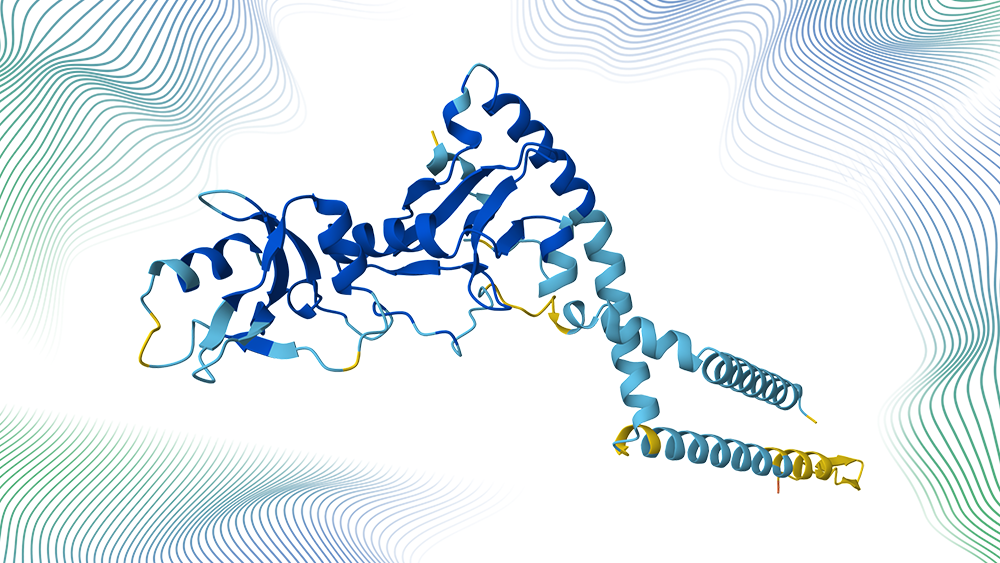
A key finding: the higher the proportion of dormant tumor cells at the base of the pyramid, the slower the glioblastoma grows – and the better the prognosis for patients. By comparing gene expression dynamics in healthy cells and tumor cells, the team discovered that the expression of the signaling protein SFRP1 is dysregulated during the transition from a dormant to an activated state. SFRP1 inhibits the important Wnt signaling pathway, which is important for the activation of stem cells, for example.
In mouse models, overexpression of SFRP1 significantly slowed tumor growth. “SFRP1 enabled us to put the human tumor cells into a dormant mode. This not only slows down their growth, but also significantly prolongs the survival of the mice,“ reports Oguzhan Kaya, also a first author.
Freezing cancer cell in a dormant state?
Under the influence of SFRP1, the tumor cells not only changed their activity, but also their epigenetic profile – in other words, the ”memory” of their cell identity. They developed characteristics of mature astrocytes, i.e., brain cells that no longer have the ability to divide. This epigenetic reprogramming could potentially help prevent tumors from returning: The epigenetic methyl marks on the genome restrict cellular plasticity by limiting the genome to the specific functions of differentiated cells.
The researchers also found that determining the epigenetic methylation profile reflects the composition of each tumor’s individual activation pyramid and can thus be used to stratify patients.
In future work, the Heidelberg team wants to investigate whether SFRP1-mediated remodeling of methylation can permanently “freeze” glioblastoma cells in a dormant state. This could open up a potential therapeutic approach to diseases that have been virtually uncontrollable until now, such as glioblastoma. “Our results confirm that killing active cancer cells is not the only decisive factor; rather, blocking the transitions between activity and dormancy is crucial for the outcome of therapy,” says Ana Martin-Villalba, summarizing the findings of the study.
Publication:
Leo Carl Foerster, Oguzhan Kaya, Valentin Wust, Diana-Patricia Danciu, Vuslat Akcay, Milica Bekavac, Kevin Chris Ziegler, Nina Stinchcombe, Anna Tang4 Jocelyn Tang, Jan Brunken, Noelia Gesteira Perez, Xiujian Ma, Ahmed Sadik, Christiane Opitz, Haikun Liu, Christian Rainer Wirtz, Anna Marciniak-Czochra, Simon Anders, Angela Goncalves, and Ana Martin-Villalba: Cross-species comparison reveals therapeutic vulnerabilities halting glioblastoma progression.
Nature Communications, 2025, DOI: https://doi.org/10.1038/s41467-025-62528-w