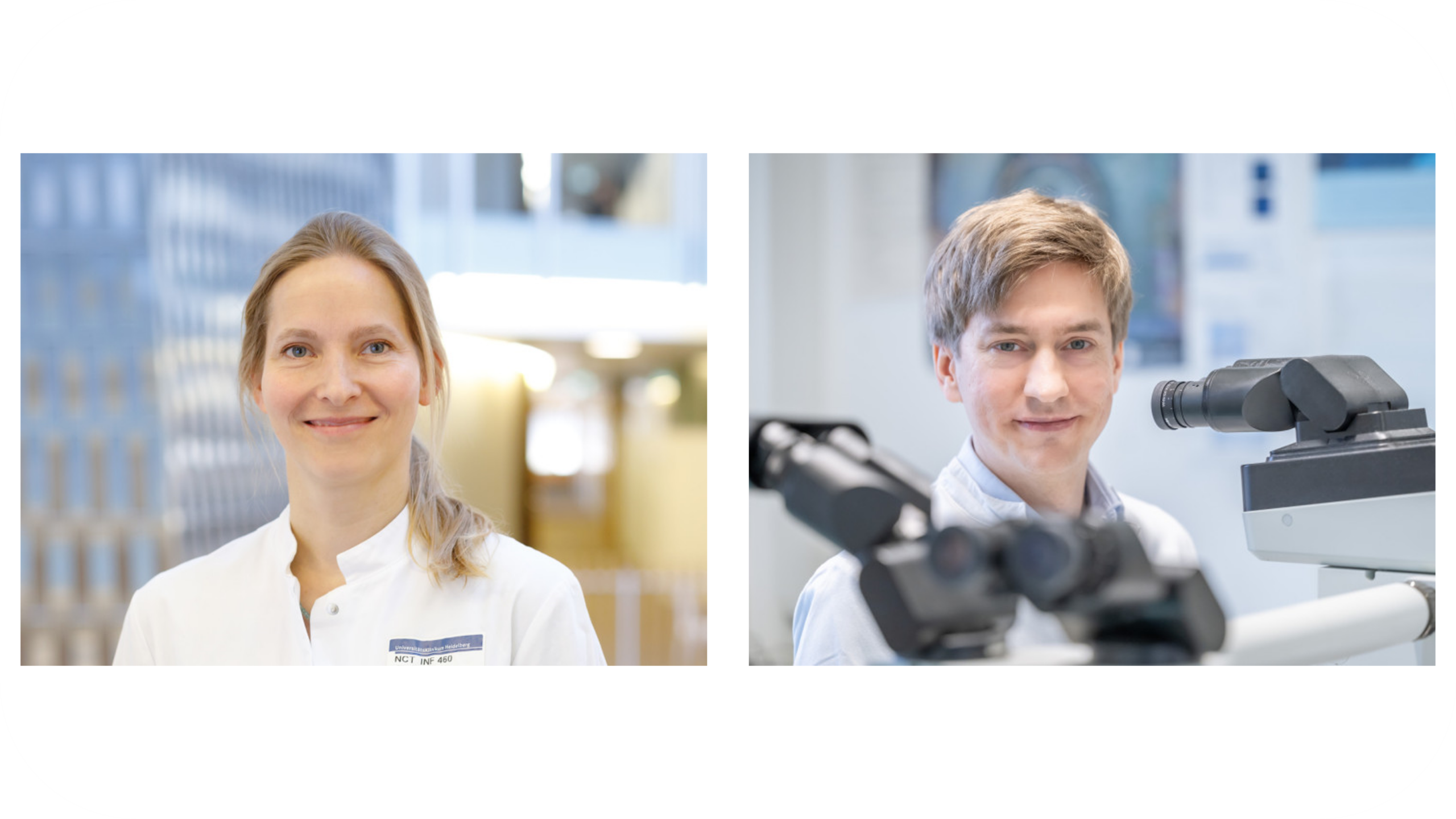
Heidelberg neurologist and neuroscientist becomes new member of the EMBO Young Investigator Program

Dr. Varun Venkataramani, Heidelberg Medical Faculty of Heidelberg University and German Cancer Research Center, discovered that nerve cells in the brain come into contact with tumor cells, thereby significantly promoting the growth of highly aggressive glioblastomas. In doing so, he laid the groundwork for the new field of research known as “cancer neuroscience.” The European Molecular Biology Organization (EMBO) has now selected Dr. Venkataramani for its Young Investigator Program, which supports outstanding young scientists, in recognition of this pioneering work.
Neuro-oncologist and neuroscientist Dr. Varun Venkataramani, Heidelberg Medical Faculty of Heidelberg University and German Cancer Research Center, is one of 28 newly elected members of the renowned EMBO Young Investigator Program. The European Molecular Biology Organization (EMBO) promotes excellence in the life sciences in Europe and beyond by supporting talented researchers and scientific exchange. With its Young Investigator Program, the organization supports young scientists who have already attracted attention with outstanding research work to establish independent research groups, network internationally, and build collaborations. During their initial four-year active membership, they are part of the international EMBO network with more than 2,100 members from the life sciences.
In 2019, Venkataramani published a groundbreaking article in the journal Nature as first author: Using high-resolution microscopic techniques, he had discovered previously unknown contact points between tumor cells of the highly aggressive brain tumor glioblastoma and healthy nerve cells in the brain. He demonstrated that these contacts are synapses, which nerve cells normally use to transmit signals and thus information to other nerve cells. Venkataramanis research showed that they do not distinguish between healthy neighbors and invasive tumor cells. What’s more, the signals transmitted via the synapses promote the further spread of cancer cells in the brain. If signal transmission is experimentally blocked, invasive growth is inhibited. This discovery laid the foundation for a new field of research at the interface between neuroscience and oncology: cancer neuroscience. There is now growing evidence that other tumors also form close connections with the nervous system and benefit from them.
To find out whether tumor cells preferentially maintain contact with certain nerve cells, the 36-year-old developed a sophisticated tracking method: he infected human glioblastoma cells with modified rabies viruses that spread along nerve connections. The infected tumor cells infected the nerve cells with which they came into direct contact in mouse brains and human tissue models. Modifications to the viruses prevented them from spreading to “uninvolved” nerve cells. Infected cells received the blueprint for a fluorescent protein from the viruses and glowed green under the microscope. This showed that the tumor cells are already connected to different types of nerve cells throughout the brain at a very early stage of the disease—long before the tumor becomes visible through clinical imaging and long before neurological disorders occur. This means that they form a network connected to brain cells much earlier than previously thought, which makes these tumors so difficult to treat.
The goal of Varun Venkataraman’s research is to find ways to block communication between tumor and healthy nerve cells, thereby making glioblastomas more sensitive to radiation and drugs. His work has already prompted a study currently underway at Heidelberg University Hospital and the National Center for Tumor Diseases (NCT) in Heidelberg, in which an epilepsy drug that blocks uncontrolled nerve cell communication in the brain during epileptic seizures is being investigated for its effect on glioblastoma growth.
The neurologist received his doctorate in medicine in 2019 and his doctorate in natural sciences in 2020 from Heidelberg University. As a postdoctoral researcher, he conducted research at the German Cancer Research Center and the Heidelberg Medical Faculty, as well as a visiting scientist in Boston (USA) and at the European Molecular Biology Laboratory in Heidelberg. Since 2022, Dr. Dr. Venkataramani has headed a junior research group based at the Heidelberg Medical Faculty of Heidelberg University and Heidelberg University Hospital. He already received several awards for his outstanding achievements.