How immune cells become accomplices of tumors – Langener Wissenschaftspreis awarded to DKFZ researcher Daniel Kirschenbaum
Daniel Kirschenbaum has developed an experimental method for investigating immune responses in living organisms with high temporal resolution. The technique enabled him and his colleagues to reconstruct the temporal sequence of the immune response in malignant brain tumors for the first time. This opens up new perspectives for the development of targeted and temporally precise immunotherapies – for which the Paul Ehrlich Institute, together with the City of Langen and Stadtwerke Langen GmbH, has awarded him the Langen Science Prize(„Langener Wissenschaftspreis“), worth €15,000.
Daniel Kirschenbaum
In many cancers, researchers have observed that competent immune cells, which would normally be able to fight off the cancer, become accomplices of the tumor over time. How such changes in the immune system come about has been studied for a long time. However, previous methods for analyzing the coordinated interaction of cells in response to environmental signals—such as single-cell transcriptomics—only allowed snapshots of the cell state.
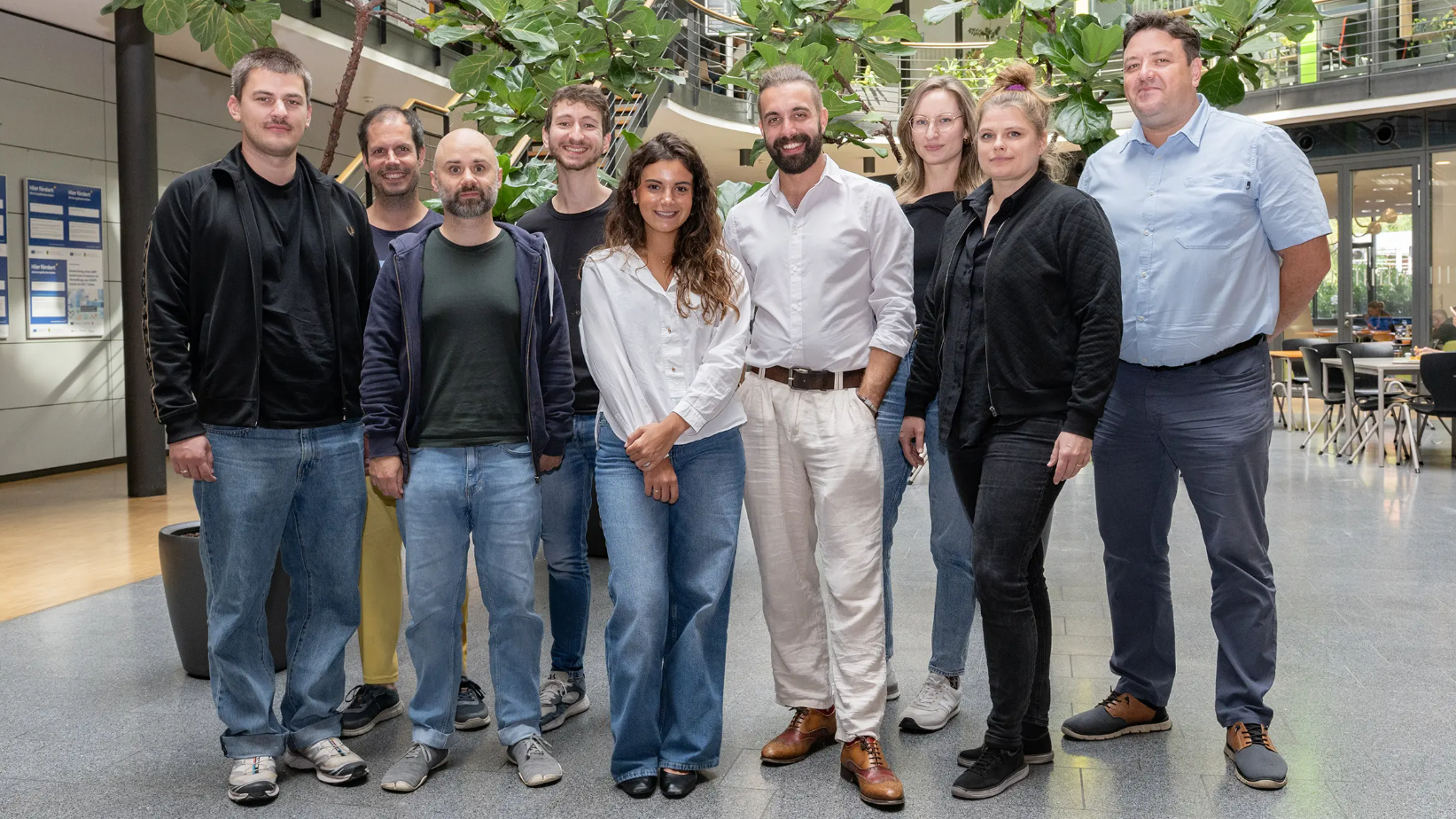
Daniel Kirschenbaum, who has been leading a junior research group at the German Cancer Research Center (DKFZ) since early 2025, has found a solution to this problem together with his colleagues at the Weizmann Institute of Science in Israel: With “Zman-seq,” the researchers have developed an innovative technology that, for the first time, allows the activity of individual cells in the body to be tracked over time. Zman-seq now adds a temporal dimension to single-cell transcriptomics data by marking immune cells in the blood with “time stamps” so that they can later be recognized in tissues, such as tumors.
The method makes it possible to observe cell changes in real time and understand how immune cells react in the course of diseases or—as in the case of glioblastomas—are rendered dysfunctional by the tumor environment.
How glioblastoma slows down the immune response
Using the new method, Kirschenbaum and colleagues were able to reconstruct the temporal sequence of the immune response in glioblastoma in mice for the first time. Within just 24 hours of entering the tumor tissue, naturally powerful natural killer cells (NK cells) lose their ability to kill cancer cells – controlled by the inhibitory signaling molecule TGF-β. At the same time, immigrated immune cells transform into so-called tumor-associated macrophages (TAMs), which actively support the growth of the tumor.
However, by experimentally blocking an important immune receptor, the researchers were able to reverse this process: instead of becoming suppressive TAMs, the immune cells developed into pro-inflammatory, tumor-controlling macrophages. The result provides an important new approach for further research to advance the development of targeted immunotherapies against previously therapy-resistant tumor types such as glioblastoma. For this, the jury awarded Daniel Kirschenbaum the 2025 Langen Science Prize.
Every two years, the Paul Ehrlich Institute, together with the city of Langen and Stadtwerke Langen GmbH, awards the Langen Science Prize, which is endowed with 15,000 euros. The prize is sponsored by the Association for the Promotion of the Langen Science Prize e.V. and has been recognizing the special achievements of scientists in the field of health research since 1993. The award commemorates the groundbreaking achievements of one of the most important researchers: Paul Ehrlich. He was the founder of chemotherapy and co-founder of immunology. Paul Ehrlich received the Nobel Prize in 1908.