Immune Cells in Bone Marrow Cancer: Limited Defense Readiness
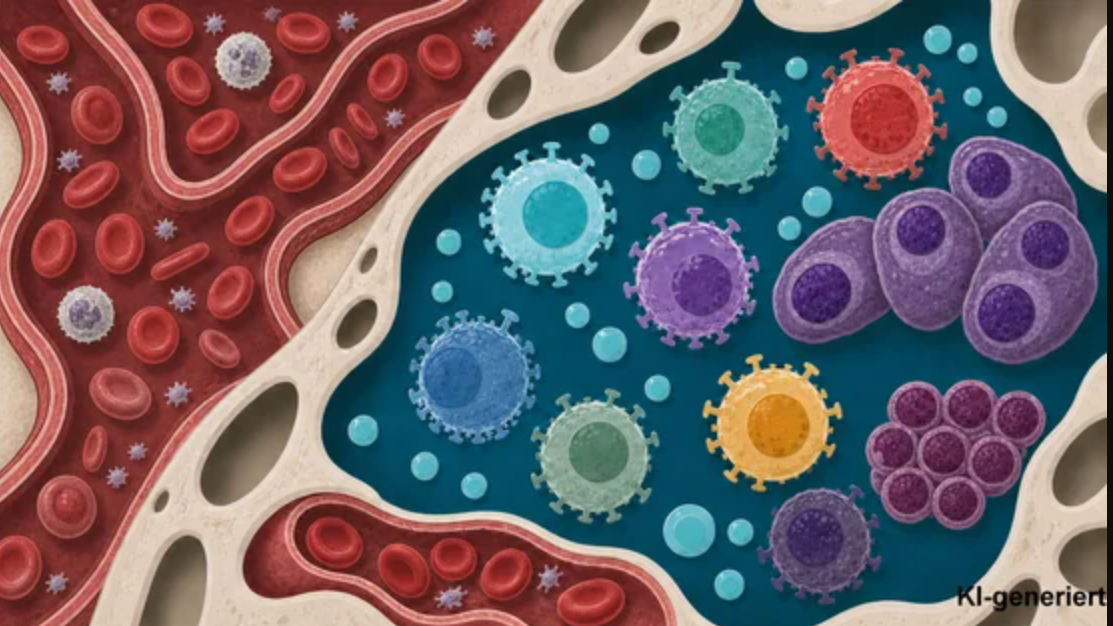
A team led by researchers from the German Cancer Research Center (DKFZ), the HI-STEM* Stem Cell Institute, and Medical Clinic V at Heidelberg University Hospital (UKHD) has characterized T cells in the bone marrow in cases of multiple myeloma and acute myeloid leukemia: A specific group of tumor-reactive T cells can recognize and, in principle, fight cancer cells, but is often not sufficiently activated. Nevertheless, the number of these cells influences the prognosis. A specific gene signature identifies the tumor-reactive T cells and could predict the success of immunotherapies.
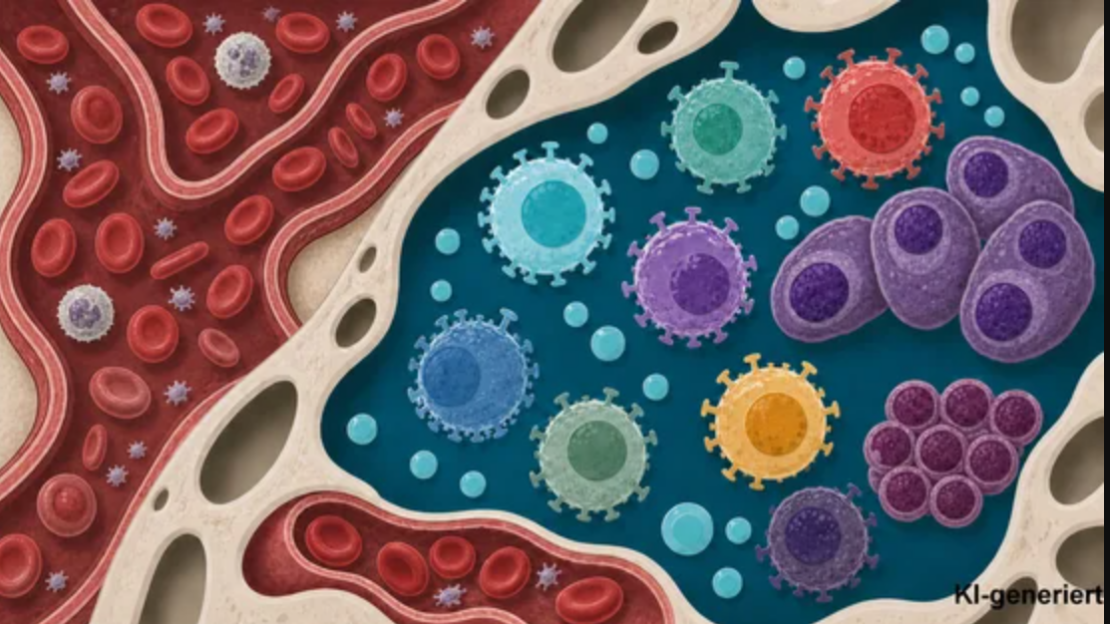
T cells play a crucial role in controlling cancer. While T-cell responses to solid tumors have been relatively well studied, corresponding information for cancers of the bone marrow has been largely lacking until now.
Through a comprehensive combined molecular and functional analysis of immune cells in the bone marrow of 21 patients, the Heidelberg researchers aimed to close these gaps in knowledge. They focused on multiple myeloma, which originates from plasma cells, and acute myeloid leukemia (AML), the two most common types of cancer arising in the bone marrow.
The study revealed that the tumor-reactive T cells in the bone marrow differ significantly from the T cells in solid tumors, which are often severely “exhausted.”
Immune Cells in the Bone Marrow: Limited Defense Readiness
The T cells in the bone marrow exhibited key characteristics of potent immune cells and were fundamentally capable of responding to tumor cells. However, they did not appear to be permanently involved in effectively combating tumors within the body but rather remained in a state of “conditional preparedness”: They possess the necessary biological tools but are apparently not activated sufficiently or continuously in the bone marrow.
This could explain why certain immunotherapies have varying degrees of effectiveness against blood and bone marrow cancers. Study leader Mirco Julian Friedrich (DKFZ, HI-STEM, and UKHD) comments: “The good news is that therapies such as bispecific antibodies can activate these ‘conditionally prepared’ T cells against cancer, which does not happen sufficiently through natural means.”
Gene Signature as an Indicator of Tumor-Reactive T Cells
Based on the activity of 15 genes, the researchers identified a specific “signature” that can be used to distinguish tumor-reactive T cells from other immune cells. In an independent group of patients, the method achieved a high level of predictive accuracy.
Although they are only partially primed, tumor-reactive T cells affect the prognosis: In multiple myeloma, they were already more frequently present before the start of treatment in patients whose disease later responded better to therapy. During treatment with the bispecific antibody—which brings T cells into direct contact with their target cells—the T-cell clones classified as tumor-reactive proliferated in particular. A higher baseline level of these cells was associated with a more favorable clinical course.
In AML as well, a correlation was observed between the number of tumor-reactive T cells and the success of immunological treatments. In contrast, this signature did not predict the success of conventional chemotherapy. This suggests that it reflects the activity of the immune defense and not merely the general course of the disease.
New Target Structures for Immunotherapies
The team further investigated which target antigens on the cancer cells the T cells recognize. Among the more than 17,000 different protein fragments on the tumor cells examined, some were found in multiple patients and even in both diseases studied. Such common tumor characteristics could serve as starting points for more broadly applicable immunotherapies in the future.
“The results provide us with important initial impulses for further research,” explains Niklas Kehl, the study’s first author. In the long term, these findings could help identify in advance which patients are likely to benefit from immunotherapies and contribute to the development of new treatments for bone marrow cancers.
However, study leader Friedrich adds a caveat: “The signature is not yet a clinical test that can be used routinely and must be confirmed in larger, prospective studies.” Furthermore, key functional analyses are based on in vitro experiments. While the study was able to show that tumor-reactive T cells recognize cancer cells and can thereby be activated, However, direct evidence that they also reliably kill the tumor cells is still lacking.
Seven research groups from the DKFZ were involved in the project, combining their expertise ranging from stem cell and myeloma research to single-cell and genomic analysis and T-cell immunology. “A study of this scope—ranging from single-cell analysis of bone marrow samples to the identification of recognized tumor antigens and the functional investigation of T cells—can only be undertaken collaboratively. The fact that several research groups at the DKFZ pooled their methods, data, and experience was essential to achieving this result,” emphasizes Friedrich.
Kehl et al.: Latent effector T cells mediate immunotherapy responses in the bone marrow microenvironment. Cancer Cell (2026), https://doi.org/10.1016/j.ccell.2026.07.011
*The Heidelberg Institute for Stem Cell Technology and Experimental Medicine (HI-STEM) gGmbH was founded in 2008 as a public-private partnership between the DKFZ and the Dietmar Hopp Foundation.