Innovation Award of the German BioRegions 2026: Projects from Braunschweig, Frankfurt and Würzburg honored
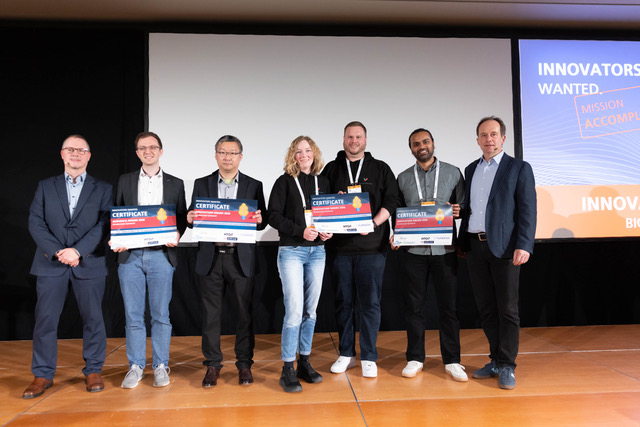
On the occasion of German Biotech Days (DBT) 2026 in Leipzig, the Working Group of the German BioRegions once again presented its renowned Innovation Award on 21 April 2026. For the past 19 years, the award has honored innovative biotechnological ideas that have been patented or filed for patent protection and show strong potential for practical implementation and economic impact.
A total of six finalists from Dresden, Braunschweig, Berlin, Leipzig, Würzburg and Frankfurt am Main presented their research projects to an international expert audience, including potential investors. An independent jury selected three equal-ranking award winners, each receiving prize money of EUR 2,000. This year’s Innovation Award ceremony was jointly organized by the InfectoGnostics Research Campus Jena and BioLago, the health network for the Lake Constance region.
Innovative approach against resistant infections
Among the award winners was the project “First-in-class small-molecule inhibitor of Staphylococcus aureus α-toxin” by Dr. Aditya Shekhar (Helmholtz Centre for Infection Research, Braunschweig).
The project addresses a key challenge in modern medicine: severe bacterial infections in the context of increasing antimicrobial resistance. Rather than killing the pathogen itself, the approach focuses on neutralizing the α-toxin of Staphylococcus aureus, a crucial virulence factor responsible for tissue damage.
The jury particularly praised the project’s consistent scientific and translational development, its in vivo validated mode of action, its strong intellectual property position, and its clear path toward clinical application.
A new target in cancer therapy
Another award-winning project was “SpliceTACs: First-in-class spliceosome-targeting degraders” by Dr. Xinlai Cheng (Buchmann Institute for Molecular Life Sciences, Goethe University Frankfurt).
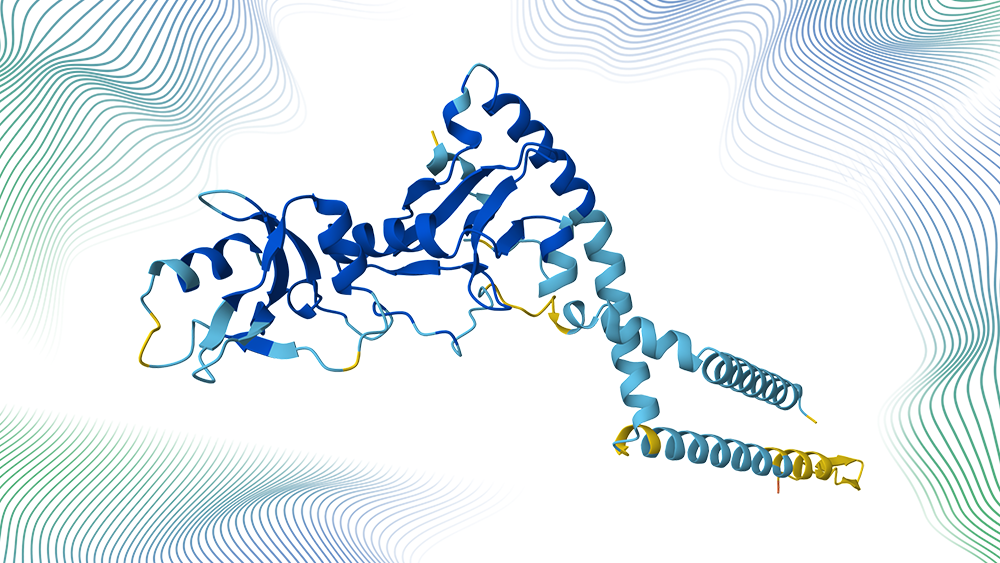
This novel approach aims at the targeted degradation of the spliceosomal protein USP39, disrupting key processes of RNA processing and thereby inducing tumor cell death.
The jury emphasized that the project addresses a molecular target long considered “undruggable” and combines deep mechanistic insight with modern drug development strategies such as AI-supported ligand discovery and targeted protein degradation. It also highlighted the project’s solid IP strategy and its strong transformative potential.
Platform technology for realistic tissue models
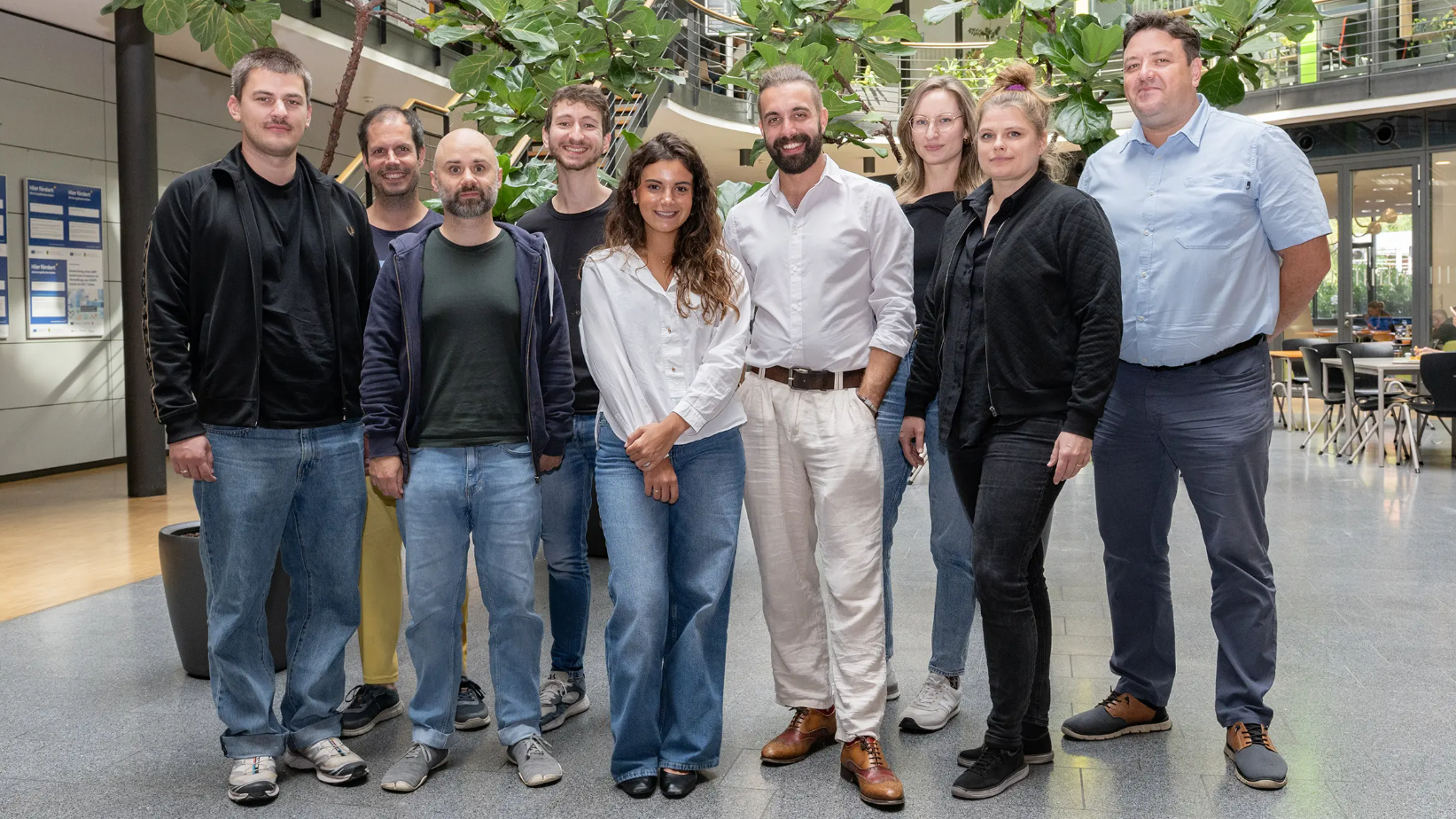
The third Innovation Award went to the project “Vasc-on-Demand – Platform for vascularized tissue models,” presented by Alexander Radüchel and Katinka Theis (University Hospital Würzburg).
The platform enables the standardized production of vascularized tissue models using ready-to-use artificial blood vessels, allowing more realistic and reproducible investigations of biological processes and drug effects.
The jury particularly highlighted the platform character of the project, its broad range of applications from drug development to personalized medicine, and its clear path toward practical implementation.
Audience Award for “MakulaPatch”
In addition, all finalists had the opportunity to win the 2026 Audience Award, which was determined through online voting. The Audience Award went to Felix Wagner for the project “MakulaPatch” from Dresden University of Technology, in which mini-retinas are being developed to effectively combat degenerative eye diseases in the future.
The other finalists included Dr. Ronny Frank from Leipzig University with the project “N∑P-Enzyme Induced Degradation Measurement Assay of Polymers” and Dr. Anthea Wirges from the Max Delbrück Center for Molecular Medicine with the project “In vivo anti-CXCR5 CAR T-cells”.
Recognition and strong partnerships
The prize money for the Innovation Award of the German BioRegions 2026 was provided by Dehmel & Bettenhausen Patent Attorneys, High-Tech Gründerfonds, Fundess GmbH, and BIOspektrum / Springer Verlag GmbH. The award winners were honored during the ceremony by representatives of the prize sponsors. Participants included Dr. Florian Rückerl (Dehmel & Bettenhausen Patent Attorneys), Dr. Angelika Vlachou (High-Tech Gründerfonds), and Dr. Rosi Hermann (Fundess GmbH).
The award ceremony was jointly moderated by Dr. Jens Hellwage (InfectoGnostics Research Campus Jena) and Andreas Baur (BioLago).
The Innovation Award once again highlights the strong innovative power of German biotechnology and makes an important contribution to giving visionary ideas visibility while further strengthening collaboration among the BioRegions and BIO Deutschland.
Christian Döring, Press and Public Relations
InfectoGnostics Research Campus Jena e. V.