December 04, 2025

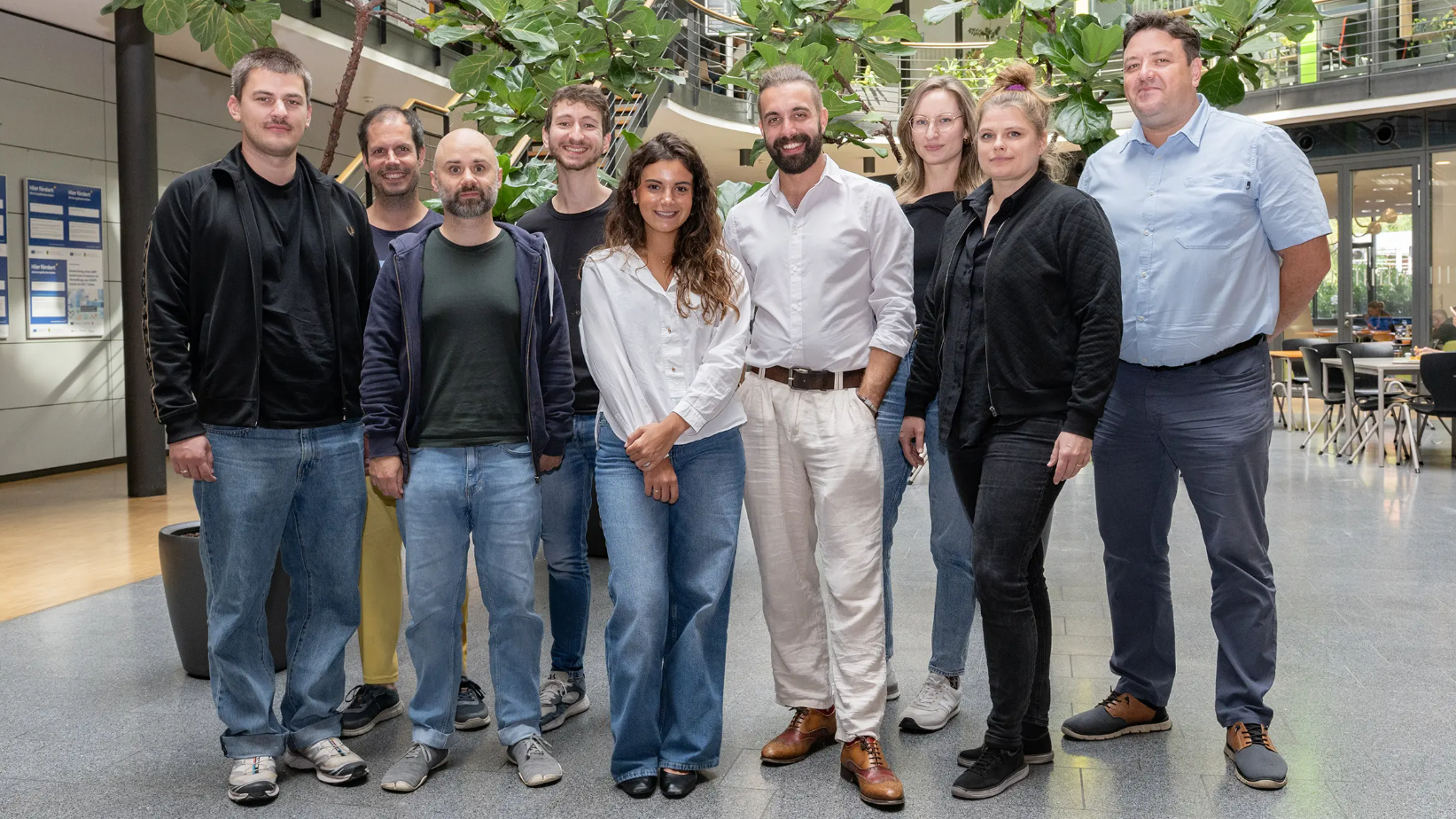
Lautenschläger Prize for Young Scientists 2025 awarded to Lukas Bunse
Lautenschläger Prize for Young Scientists 2025 awarded to Lukas Bunse

As a clinician scientist at the German Cancer Research Center (DKFZ) and the Mannheim Medical Faculty of Heidelberg University, neurologist Lukas Bunse is investigating how the body’s own immune system can be supported in fighting brain tumors. For this work, he has been awarded the Lautenschläger Prize for Young Scientists, which is endowed with €25,000.

Malignant brain tumors from the group of gliomas and glioblastomas are extremely difficult to treat with available therapies. While still a medical student, Lukas Bunse was involved in the development of a vaccine against a specific form of brain tumor, known as IDH1-mutated glioma.

Glioblastomas, which mainly affect middle-aged people, have an even worse prognosis than IDH-mutated gliomas. Unlike gliomas, they do not present a uniform mutation as a target antigen on their surface that could be vaccinated against. Here, Bunse and his team are testing a cell therapy approach. First, he succeeded in identifying suitable target molecules for the immune system in glioblastoma cells. The researchers then equipped the patient’s own T cells with receptors for these tumor proteins outside the body.

The T cells equipped in this way are then transferred back to the patient and can specifically hunt down brain tumor cells. These approaches have already proven successful in mice. Initial clinical trials of this innovative cellular immunotherapy with transgenic T cells are now in preparation.

Lukas Bunse studied medicine at Heidelberg University and University College London. After completing his medical doctorate, he completed another doctorate in biology in 2020. He is a clinician scientist at the Mannheim Medical Faculty of Heidelberg University and has been a senior physician in neurology since 2024. He also conducts research as team leader in the Clinical Cooperation Unit Neuroimmunology and Brain Tumor Immunology at the DKFZ. After receiving the Ruprecht Karls Prize in 2018 and the Hella Bühler Prize in 2019, which is endowed with 100,000 euros, he was awarded the Novartis Prize for therapy-relevant immunological research by the German Society for Immunology in 2023. In 2025, he was awarded the Heinz Maier-Leibnitz Prize, which is considered Germany’s most important award for young scientists.

The founder of the prize and honorary senator of Heidelberg University, Manfred Lautenschläger, awards the Lautenschläger Prize for Young Scientists to outstanding researchers at Heidelberg University in the early stages of their careers.
Our latest News

discover more
AbbVie Announces TEPKINLY® (epcoritamab) in Combination with Lenalidomide and Rituximab is Approved by the European Commission for the Treatment of Relapsed or Refractory Follicular Lymphoma

AbbVie Announces TEPKINLY® (epcoritamab) in Combination with Lenalidomide and Rituximab is Approved by the European Commission for the Treatment of Relapsed or Refractory Follicular Lymphoma

NORTH CHICAGO, Ill., July 6, 2026 /PRNewswire/ — AbbVie (NYSE: ABBV) today announced that the European Commission (EC) granted marketing authorization for TEPKINLY® (epcoritamab) in combination with lenalidomide and rituximab (TEPKINLY + R2) for the treatment of adult patients with relapsed or refractory (R/R) follicular lymphoma (FL). The approval is based on results from the pivotal Phase 3 […]

Optimized Formula: New Bio-Ink Can Depict the Cell Environment Even More Accurately

Optimized Formula: New Bio-Ink Can Depict the Cell Environment Even More Accurately

It should be biofunctional – that is, it should replicate the natural cellular environment as closely as possible – and it should be printable: bioink. Achieving both of these properties at the same time is an enormous challenge that conventional biomaterials often fail to meet. Together with two partner companies, researchers at the NMI have now taken an important […]

New AI System Provides Treatment Recommendations for Complex Blood Cancers

New AI System Provides Treatment Recommendations for Complex Blood Cancers

Researchers from the German Cancer Research Center (DKFZ), the HI-STEM* Stem Cell Institute, and the Heidelberg University Hospital (UKHD) have developed “HemaGuide,” an AI assistant that supports physicians in making difficult treatment decisions. In extensive testing, the system has shown a high degree of agreement with the recommendations of experienced experts and could significantly improve […]

GET IN TOUCH

Stay Updated with bioRN’s Newsletter

Sign up for our newsletter to discover more!
* required

BioRN (BioRN Network e.V. and BioRN Cluster Management GmbH) will use the information you provide on this form to be in touch with you and to provide updates and marketing. Please let us know all the ways you would like to hear from us:

You can update your subscription preferences or unsubscribe at any time. Just follow the unsubscribe or update link in the footer of automated emails you receive from us, or by contacting us at info@biorn.org. We will treat your information with respect. For more information about our privacy practices please visit our website: www.biorn.org. By clicking below, you agree that we may process your information in accordance with these terms.

We use Mailchimp as our marketing platform. By clicking below to subscribe, you acknowledge that your information will be transferred to Mailchimp for processing. Learn more about Mailchimp's privacy practices.

Intuit Mailchimp