September 10, 2026

Making Medications Safer: NMI Participates in the HEARTCORE Project
Making Medications Safer: NMI Participates in the HEARTCORE Project

Predicting whether active pharmaceutical ingredients are cardiotoxic – that is, whether they could damage the heart – is a key factor in their development. Researchers at the NMI, together with partners from academia and industry, aim to make these predictions more reliable. They are collaborating on the EU Pathfinder project HEARTCORE, which is led by Hannover Medical School (MHH).

To date, cardiotoxicity testing has relied either on animal models or highly simplified cell culture assays. The applicability of these results to humans is therefore limited.

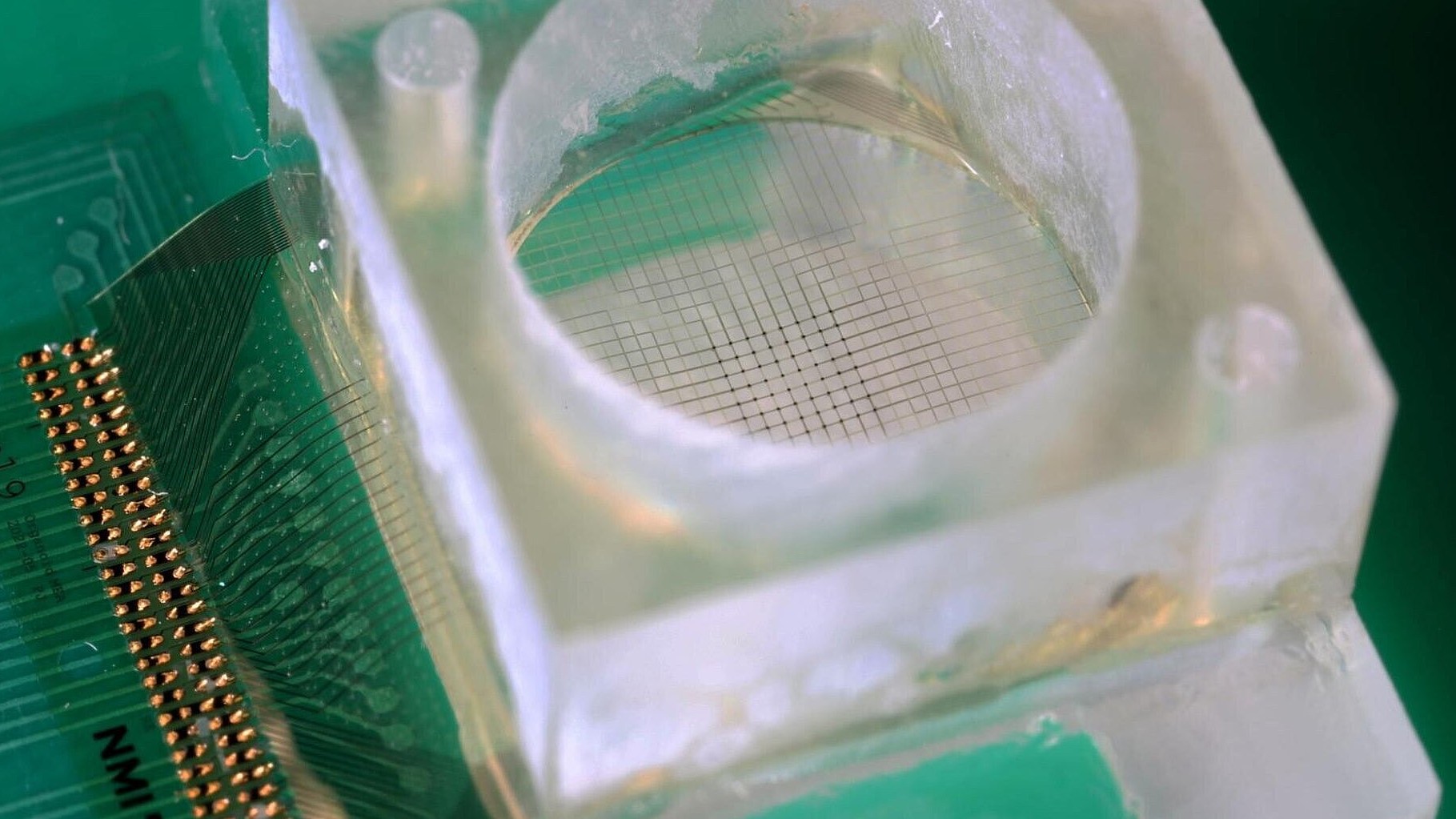
Using heart organoids on microelectrode arrays, these predictions are expected to be significantly improved. “At HEARTCORE, we have set ourselves the goal of bringing safety testing in cardiology closer to human physiology,” explains Dr. Udo Kraushaar, project leader at the NMI and an expert in electrophysiology. “By combining state-of-the-art cardiac organoid biology with three-dimensional electrophysiological recordings and computer-aided modeling, we aim to create a more meaningful basis for the early assessment of drug safety.”

NMI scientist Dr. Peter Jones, an expert in the development of microelectrode arrays (MEAs), adds: “With our Mesh MEA – a wafer-thin mesh with integrated electrodes – we can measure electrical activity within the organoids and thus gain even better insights into how certain active ingredients affect heart cells.”

“HEARTCORE is developing the world’s first integrated platform that combines 3D human heart organoids, multilayer mesh MEAs, laser optoporation, and AI-based risk prediction – thereby enabling 3D electrophysiological recordings from human heart tissue,” summarizes Robert Zweigerdt, a professor at MHH and the project leader.

The HEARTCORE project is funded by the EU Pathfinder Program, which has very strict eligibility criteria. It is therefore a major success for the NMI and all other participants. The project is scheduled to run for four years and is funded by the EU with 3 million euros. (Grant ID: 101257413)

In addition to the MHH, which coordinates the overall project, and the NMI, the Universitat Politècnica de València, the Reutlingen-based company Multi Channel Systems GmbH (MCS), and the Italian startup Foresee Biosystems (FBS) are also participating in HEARTCORE.

Press release of MHH: https://www.mhh.de/presse-news/neue-test-plattform-fuer-herzsicherheit-von-medikamenten

HEARTCORE project page: https://www.heartcore-eic-pathfinder.eu/

Our latest News

discover more
Hummingbird Diagnostics Showcases New Data Utilizing Blood-Based Small RNA for Lung Cancer Treatment Monitoring at ESMO Congress 2026

Hummingbird Diagnostics Showcases New Data Utilizing Blood-Based Small RNA for Lung Cancer Treatment Monitoring at ESMO Congress 2026

Study demonstrates the ability of small RNA to inform lung cancer treatment strategies HEIDELBERG, Germany, October 26, 2026 – Hummingbird Diagnostics GmbH, a pioneer in blood-based small RNA biomarker discovery and assay development, today announced new clinical data demonstrating the ability of small RNA to enable adaptive treatment strategies in lung cancer patients. The results […]

Newsletter der BMBH: Biobanking Update!

Newsletter der BMBH: Biobanking Update!

Informationen über unsere Aktivitäten und aktuelle Entwicklungen im Biobanking am Standort und darüber hinaus. IN DIESER AUSGABE__Die BMBH im ÜberblickAktuelles aus der BMBHAktuelles aus denMitgliedsbiobankenNationale / InternationaleBiobanking-AktivitätenPublikationenAnstehende Termine

Huntington’s Disease Biomarkers: Key Molecular Targets and Antibody Tools for HD Research

Huntington’s Disease Biomarkers: Key Molecular Targets and Antibody Tools for HD Research

Proteins to Watch in Huntington’s Disease Research When developing assays to study Huntington’s disease (HD), scientists have a rare advantage: they know the exact genetic cause. But that hasn’t made the biological mechanism any easier to tackle. Despite decades of research, effective treatments remain limited for this progressive degenerative disease.2 HD is inherited in an autosomal-dominant […]

GET IN TOUCH

Stay Updated with bioRN’s Newsletter

Sign up for our newsletter to discover more!
* required

BioRN (BioRN Network e.V. and BioRN Cluster Management GmbH) will use the information you provide on this form to be in touch with you and to provide updates and marketing. Please let us know all the ways you would like to hear from us:

You can update your subscription preferences or unsubscribe at any time. Just follow the unsubscribe or update link in the footer of automated emails you receive from us, or by contacting us at info@biorn.org. We will treat your information with respect. For more information about our privacy practices please visit our website: www.biorn.org. By clicking below, you agree that we may process your information in accordance with these terms.

We use Mailchimp as our marketing platform. By clicking below to subscribe, you acknowledge that your information will be transferred to Mailchimp for processing. Learn more about Mailchimp's privacy practices.

Intuit Mailchimp