More precise therapeutic agents for neuropsychiatry: The NMI is helping to unravel complex receptor mechanisms
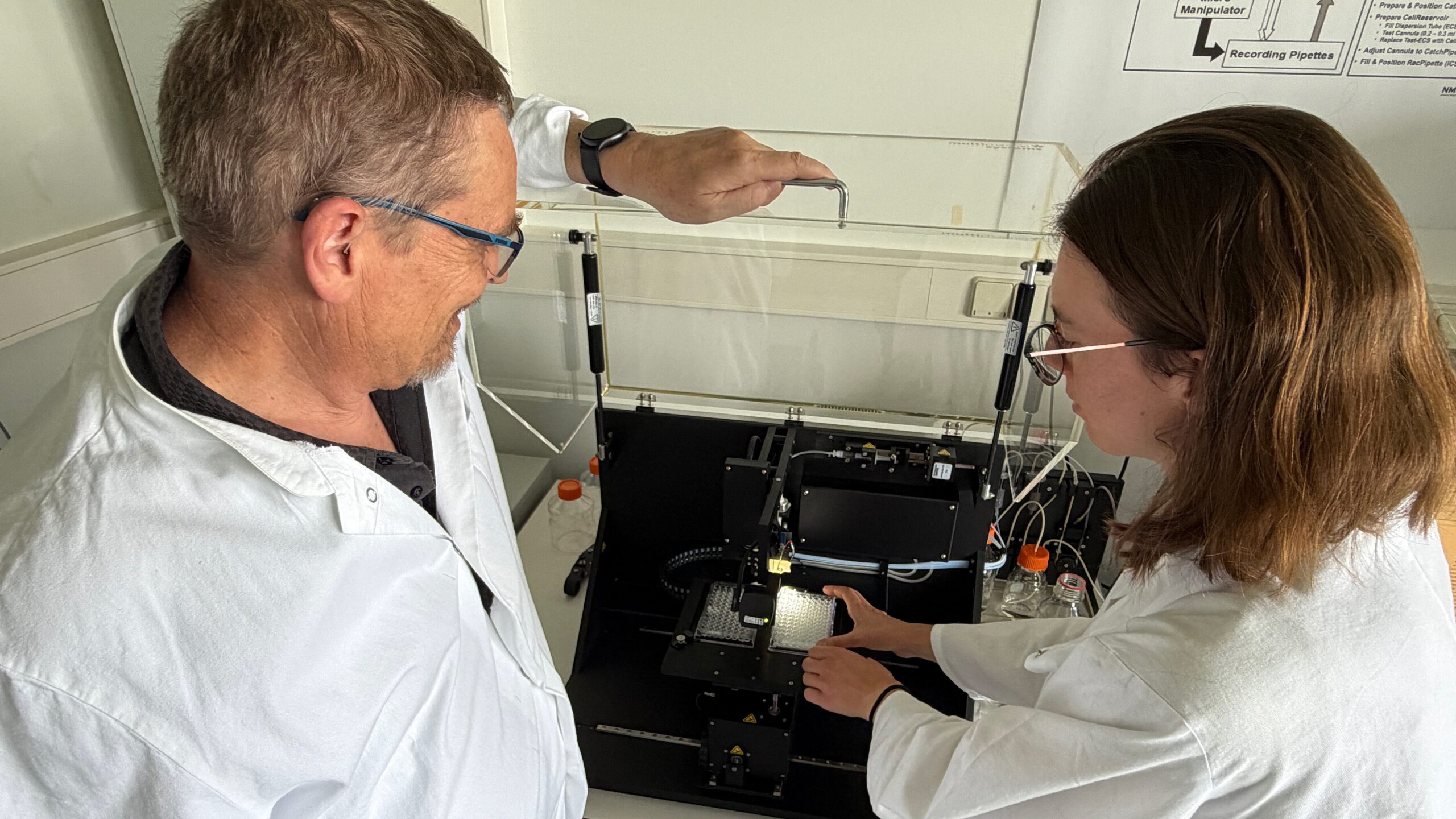
How can effective treatments for neuropsychiatric disorders be developed without having to accept unwanted side effects? Researchers at the NMI have made an important contribution to this field. In their recent paper, “NMDA receptor subtype differential affinity as a key enabler for precision neuropsychiatry,” they demonstrate how specifically targeting subunits of the NMDA receptor opens up new avenues for safer medications. In addition to Dr. Timm Danker, Hanna Müller from the NMI also played a key role in the study; the project was carried out in close collaboration with partners from France and the United States.
Currently used drugs have side effects
NMDA receptors play a central role in learning and memory processes in the brain. At the same time, they are a promising target for the treatment of depression or post-traumatic stress disorder (PTSD). However, these receptors consist of different subunits, and their varying activation can lead to widely differing effects. While drugs used to date, such as ketamine, have a rapid antidepressant effect, they are associated with side effects such as dissociation and possible cognitive impairments.
A New Candidate with No Side Effects?
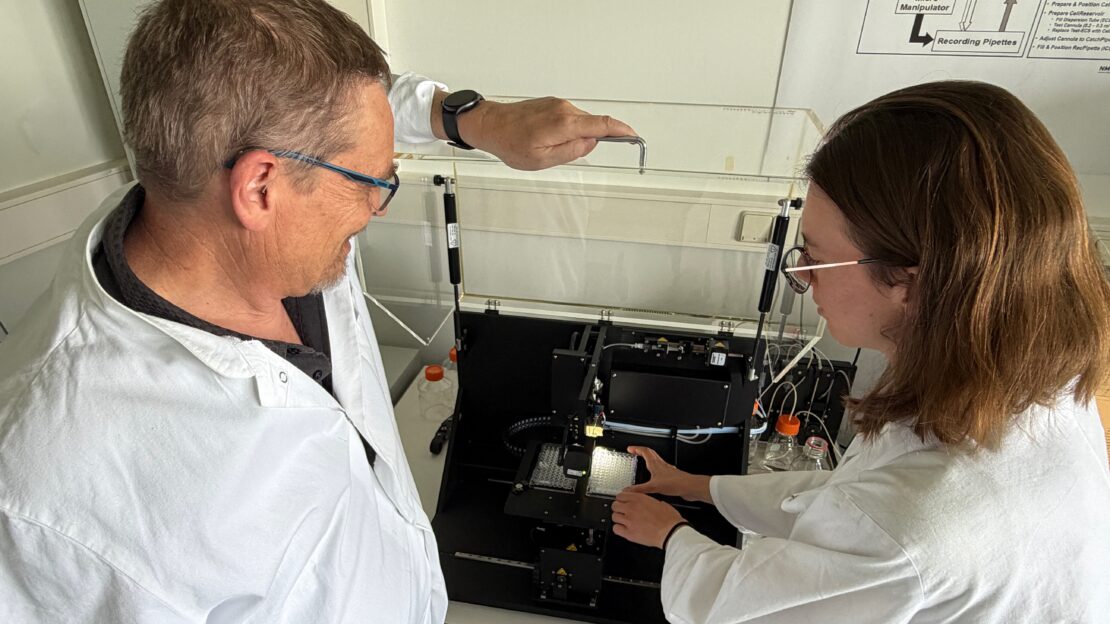
The study focuses on the new drug candidate RST-01. In preclinical models, it demonstrated comparable efficacy – but without the typical side effects and without any evidence of neurotoxic changes. To better understand the reasons behind this, researchers at the NMI conducted detailed electrophysiological studies. They analyzed how strongly RST-01 acts on various NMDA receptor variants compared to established substances.
The results paint a clear picture: RST-01 exhibits a more differentiated and selective activity profile than the comparator substances. This targeted interaction with specific receptor variants could explain why the drug is better tolerated. At the same time, the approach provides an important methodological framework for the development of future drugs.
A Differentiated Approach for More Reliable Drugs
“Our results show that it is not enough to block a receptor family across the board. What matters is which of the different receptor variants are targeted,” explains Dr. Timm Danker, an electrophysiologist at the NMI. “This differentiated approach makes it possible to develop drugs in a more targeted manner and significantly reduce side effects.”
With this work, the NMI underscores its strength in application-oriented biomedical research – and makes an important contribution toward achieving more precise and patient-centered neuropsychiatry.
Mit dieser Arbeit unterstreicht das NMI seine Stärke in der anwendungsnahen biomedizinischen Forschung – und leistet einen wichtigen Beitrag auf dem Weg zu einer präziseren und patientenfreundlicheren Neuropsychiatrie.
Paper: Aline Freyssin et al.: NMDA receptor subtype differential affinity as a key enabler for precision neuropsychiatry. Progress in Neuro-Psychopharmacology and Biological Psychiatry.
DOI: 10.1016/j.pnpbp.2026.111742
This article was written with the help of Copilot.