New Emmy Noether Junior Research Group Investigates the Mode of Action of Antimetabolite Chemotherapy
How do antimetabolite cancer drugs damage the genetic material of malignantly transformed cells and thereby destroy them? How might these drugs be used more precisely, particularly in the treatment of pediatric tumors? A new research group led by Dr. Christopher Carnie, a scientist at the Heidelberg Faculty of Medicine at Heidelberg University, will address these questions. The German Research Foundation (DFG) is funding the project entitled “NU-MAGIC: Nucleotide Metabolism and Genome Stability in Cancer” for six years with a total of approximately €1.8 million.
Antimetabolites are a class of chemotherapeutic agents that disrupt nucleotide metabolism and thereby inhibit cancer cell proliferation. In addition to this well-established effect, some antimetabolites induce damage to the genetic material of cancer cells—a property that can be therapeutically beneficial but remains incompletely understood. The molecular mechanisms underlying this genome damage, as well as the cellular responses it elicits, are the focus of the newly established research group. It is based at the Department of Pediatric Oncology, Hematology, Immunology and Pulmonology at Heidelberg University Hospital (UKHD), at the Hopp Children’s Cancer Center Heidelberg (KiTZ), and at the Molecular Medicine Partnership Unit (MMPU), a collaborative research initiative between the European Molecular Biology Laboratory (EMBL) and the Heidelberg Faculty of Medicine at Heidelberg University. The German Research Foundation (DFG) is funding the group led by Dr. Christopher Carnie, an early-career researcher at the Heidelberg Faculty of Medicine, within the framework of the Emmy Noether Programme for a period of six years with a total of approximately €1.8 million.
How antimetabolites damage cancer cells
Dr. Carnie and his team will systematically characterize the types of genetic damage induced by different antimetabolites and identify the cellular signaling pathways involved. Using a defined set of these drugs, the researchers aim to determine which genes influence drug sensitivity and resistance, and to elucidate how these genes exert their effects. A central question is which DNA repair mechanisms are activated in response to antimetabolite-induced genome damage and how these responses affect cancer cell survival.
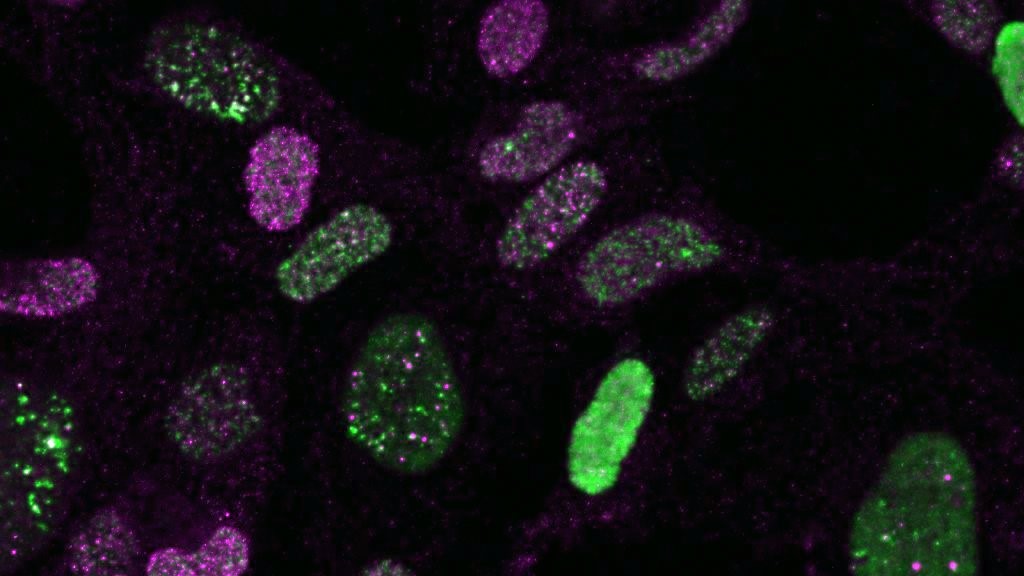
For their research, the scientists will employ advanced fluorescence microscopy techniques. With the aid of fluorescent dyes, specific structures, damage and repair machinery within the genetic material can be visualized under the microscope and precisely localized. In addition, genome-wide CRISPR screening approaches will be used to systematically identify genes that determine whether cancer cells survive or undergo cell death following treatment with antimetabolite chemotherapies.
“Antimetabolites are among the most commonly used chemotherapeutic agents. They can be highly effective in some settings and several exciting new agents are in early stage clinical and preclinical studies. However, it is not yet precisely understood how many of these induce genetic damage and kill cancer cells. Understanding these processes may help to identify particularly effective drugs for individual cancer types, reduce side effects, and develop suitable drug combinations,” says group leader Dr. Christopher Carnie. A particular focus is placed on pediatric cancers, in which there is an urgent need for new treatment options that limit the side effects and long-term health complications that can come from some commonly used chemotherapies.
Background on the DFG programme
The Emmy Noether Programme of the German Research Foundation is aimed at highly qualified researchers at an early stage of their careers. It offers participants the opportunity to qualify for a professorship at an early stage by independently leading a junior research group, while also gaining a long-term academic perspective in Germany as a research location.
Weitere Informationen im Internet
Dr. Christopher Carnies Group at Hopp Children’s Cancer Center Heidelberg (KiTZ)
Pediatric Oncology, Hematology, Immunology and Pulmonology at Heidelberg University Hospital