No more problems with reflective surfaces
Start-up nanoAR receives funding from a federal “exist”-Forschungstransfer grant for its anti-reflective surface technology
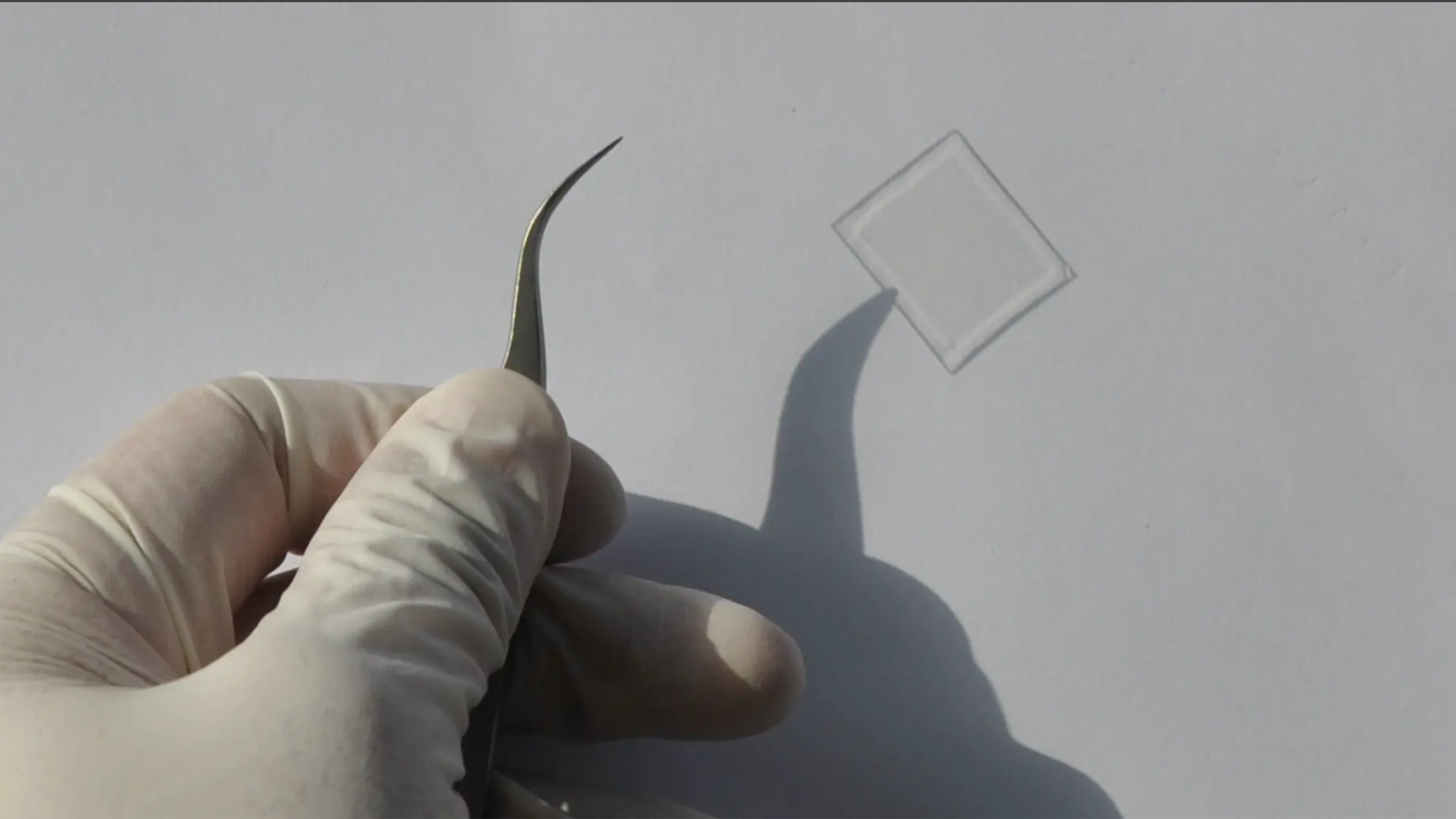
Most people have been irritated by the reflection of sunlight on their smartphone display or their spectacles. Many solutions are available — but until now none for curved surfaces or situations with a wide range of light incidence angles. Scientists at the Max Planck Institute for Medical Research have now developed a technology based on nanostructuring that prevents annoying glare effects even in these cases. Their “nanoAR” start-up aims to bring this technology to market, and is now funded by an “exist”-Forschungstransfer grant from the German government.
- The scientists who teamed up to establish the start-up nanoAR fabricate nanostructures modeled on the eyes of moths, whose structure suppresses the reflection of light.
- This technology reduces reflections on surfaces and can be applied in imaging lenses, eyeglasses, smartphones, lasers and AI vision devices.
- The funding by the “exist” Forschungstransfer will support “nanoAR” for two years while the business is launched. The team is now seeking new members for customer acquisition and business development, including for the new location of the Max Planck Institute for Medical Research on the Heilbronn Bildungscampus.
© nanoAR
Anti-reflective on curved surfaces and in various wavelength ranges
The market for global anti‑reflection (AR) coatings is large, yet current solutions often fail to meet performance requirements on curved surfaces and across a wide range of incident angles. The nanoAR technology addresses these gaps. Unlike conventional thin-film AR coatings which require different layers for different wavelength ranges, nanoAR works across multiple wavelength ranges with a single coating.
Inspired by nature: the moth-eye effect – but improved
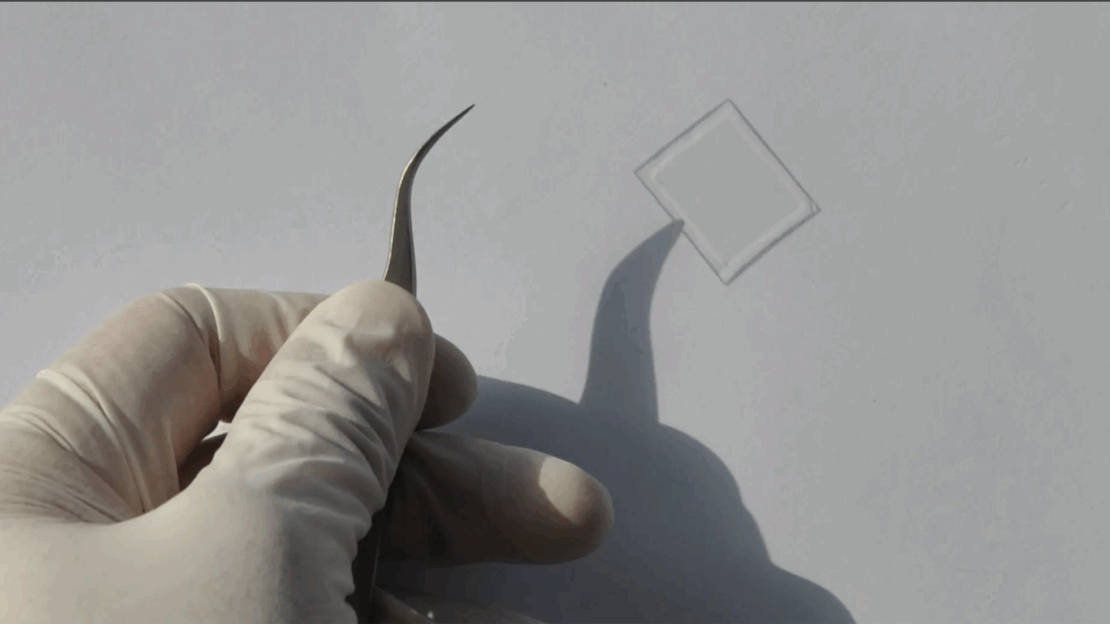
The model for this comes from nature: The technology mimics the moth’s eyes. These are covered with a regular structure of small, column-shaped protrusions. “Our structure inspired by moth eyes reduces surface reflectance to as little as 0.01 percent. What is new about our process is that it achieves uniform anti-reflective performance on curved surfaces”, explains Zhaolu Diao, scientist at the Max Planck Institute (MPI) for Medical Research and CEO of nanoAR.
The Max Planck scientists use the so-called BCML method to replicate moth eye structures in an intelligent and efficient manner. BCML stands for “block copolymer micelle lithography”, a nanostructuring technique in which polymers consisting of a linear sequence of molecules are placed on surfaces in such a way that they organize themselves into ordered patterns with the help of micelles.
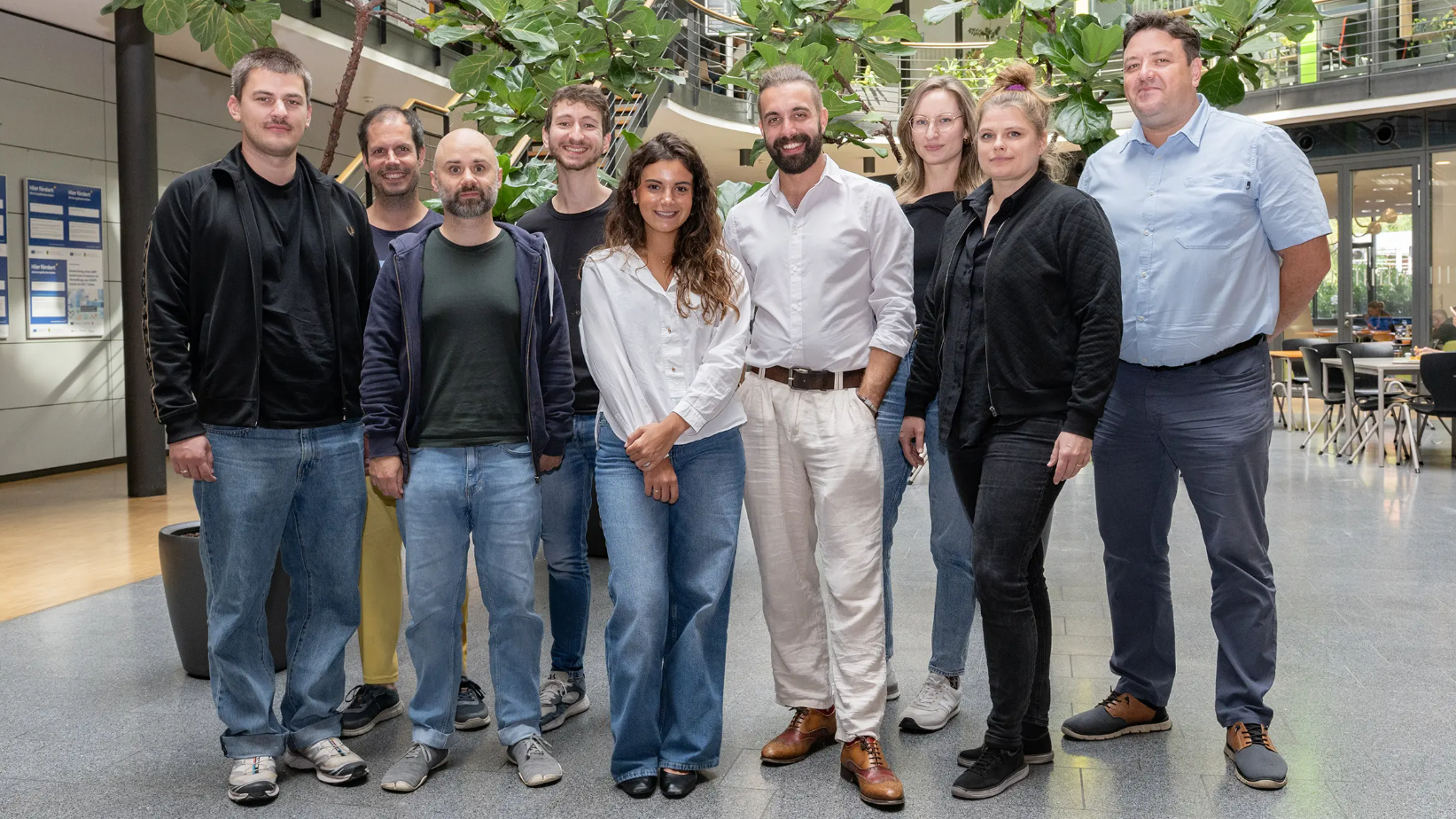
“We fabricate moth‑eye nanostructures in glass, polymers, and other optical materials. Our goal with nanoAR is to translate the technology developed at the MPI for Medical Research into market‑ready products”, says Zhaolu Diao. He joined forces with his current and former colleagues Xiaodi Hong (CTO) and Klaus Weishaupt (COO), who are also involved in the start-up. They all share a passion for translating research results into practical applications that improve everyday life. The team will also be working with its technology and spin-off at the new location of the MPI for Medical Research on the Heilbronn Bildungscampus.
Founding planned by the end of 2026
The scientists plan to establish nanoAR GmbH by the end of 2026. The next step is to secure a reference customer and establish market visibility. nanoAR offers two collaboration models: customers can license their technology and integrate the nanoAR process into their existing production lines, or nanoAR can directly supply optical components — such as glass lenses, polymer lenses, and windows — tailored to the specific requirements of the customer.
About the “exist”-Forschungstransfer grant
The “exist”-Forschungstransfer grant is a funding program of the Federal Ministry for Economic Affairs and Energy (BMWE) and is co-financed by the European Social Fund (ESF). It supports teams from universities and non-university research institutions that are interested in starting a business. The start-up teams receive an “exist”-Forschungstransfer grant with attractive conditions for a period of up to 36 months, to draw up a business plan and prepare for their business start-up with the support of their university or research institution. “exist”-Forschungstransfer is designed to support particularly risky and complex technical development work which will form the basis for an economically viable business start-up.