Not all ALK fusions act the same: Variants influence treatment success in lung cancer

About five percent of lung adenocarcinomas, one of the most common forms of lung cancer, are driven by a faulty fusion of two genes, EML4 and ALK. This fusion results in different variants, and until now, clinicians have treated all patients with these fusions the same way. However, new research led by scientists from the German Cancer Research Center (DKFZ) and Stanford University shows that not all fusion variants behave alike. The team discovered that EML4-ALK variant V3 drives more aggressive tumors than the V1 variant and responds less effectively to targeted drugs. The findings, may pave the way for more personalized therapies.
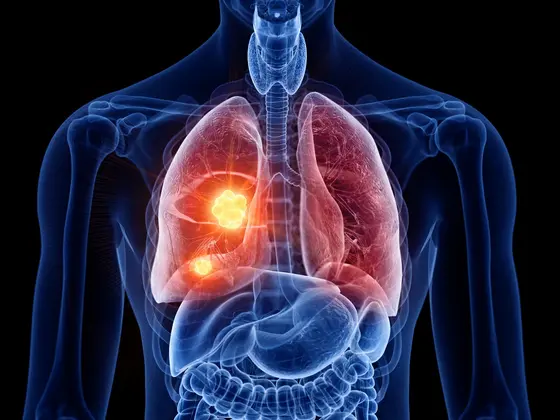
When parts of the EML4 and ALK genes fuse, they create an abnormal protein that fuels cancer growth. But the length and structure of this fusion protein vary depending on where the genes break and rejoin, giving rise to different variants. “Until now, all patients with ALK fusions were lumped together and treated with the same drugs” explains Rocío Sotillo, senior author from DKFZ. “Our research shows that this one-size-fits-all approach overlooks important biological differences.”
Different Variants, Different Outcomes
Using CRISPR/Cas9 technology, the researchers created mouse models that reproduce the two most common human variants. They found that the V3 variant causes much more aggressive tumors than the V1 variant. Mice with V3-driven tumors developed larger tumor masses quicker and had a shorter survival time.
The researchers also investigated the influence of 29 so-called tumor suppressor genes on the fusion-driven lung tumors. Tumor suppressor genes normally protect against uncontrolled cell growth. Surprisingly, their effect was found to depend heavily on the respective EML4-ALK variant: while some suppressor genes slowed the growth of V1 tumors, they had little effect on V3 tumors – and vice versa.
Implications for Treatment
“We found that the drug response really depends on the fusion variant,” explains Mulham Najajreh, an author of the study. “Tumor cells carrying the V1 variant were much more sensitive to the ALK inhibitor lorlatinib, whereas those with the V3 variant showed resistance. We also saw that additional genetic alterations, such as loss of the tumor suppressor PTEN, can further change how effective the treatment is.”
An evaluation of data from the largest patient dataset of EML4-ALK-positive lung cancers to date confirmed the differences: patients with different variants often carried different co-mutations. This suggests that EML4-ALK-driven forms of lung cancer should be considered in a more differentiated manner and, in the future, possibly also treated in a variant-specific manner.
“Our results show that not all EML4-ALK fusions are the same. This could explain why some patients respond significantly better to therapies than others,” says study leader Rocío Sotillo from the DKFZ. “In the long term, knowledge of the exact fusion variant could help to select treatments that are even more specifically tailored to the individual disease”.
This research was supported by the German Center for Lung Research, Worldwide Cancer Research and the National Institutes of Health.”
Publication:
Alberto Diaz-Jimenez, Emily G. Shuldiner, Kalman Somogyi, Karen Shih, Oscar Gonzalez-Velasco, Mulham Najajreh, Stewart Kim, Filiz Akkas, Christopher W. Murray, Laura Andrejka, Min K. Tsai, Benedikt Brors, Ilse Hofmann, Smruthy Sivakumar, Saumya D. Sisoudiya, Ethan S. Sokol, Hongchen Cai, Dmitri A. Petrov, Monte M. Winslow, and Rocio Sotillo: EML4-ALK variant-specific genetic interactions shape lung tumorigenesis.
Cancer Discovery 2025, DOI: https://aacrjournals.org/cancerdiscovery/article/doi/10.1158/2159-8290.CD-24-1417