Possible target for new immunotherapy
A research team led by the German Cancer Research Center (DKFZ) and the Luxembourg Institute of Health has found a key mechanism that weakens the immune system in chronic lymphocytic leukemia (CLL). The scientists were able to show that the protein galectin-9 plays a key role in blocking the function of T cells, which are central players in the body’s own cancer defense system.
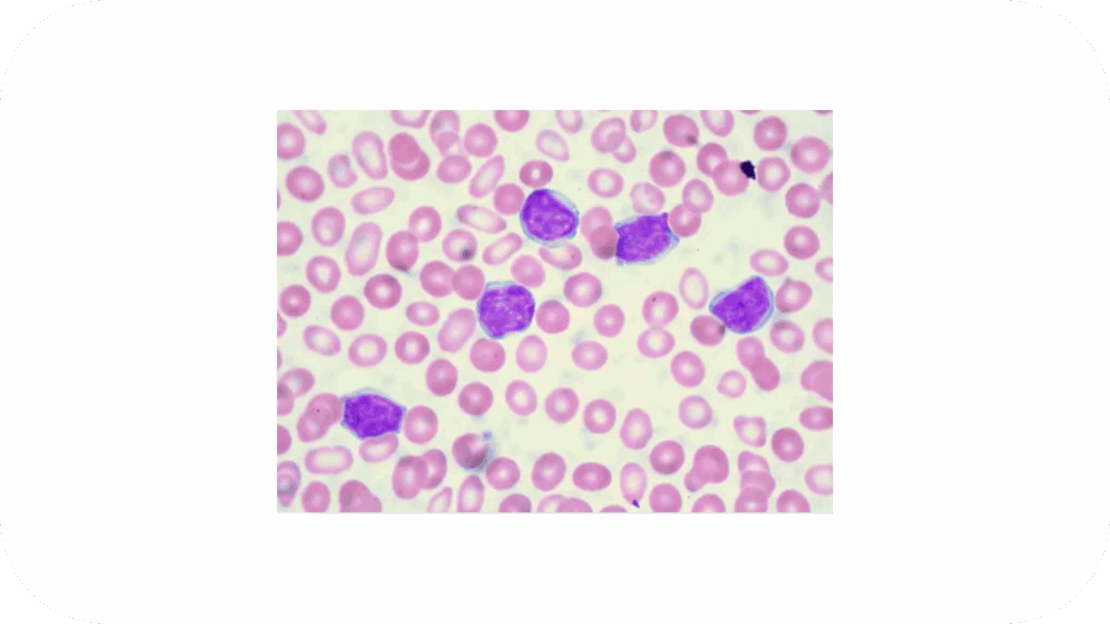
A significant proportion of cancer patients do not respond to therapies with so-called immune checkpoint inhibitors (ICI). The reasons for this are largely unclear. This also applies to patients suffering from chronic lymphocytic leukemia, the most common form of blood cancer in adults in Europe.
A research team led by Martina Seiffert at the DKFZ has now analyzed the immune system of CLL patients in unprecedented depth using state-of-the-art single-cell technologies. The researchers found that certain T cells in the patients’ lymph nodes are severely depleted. The fatal consequence of this is that depleted T cells lose their ability to effectively fight cancer cells. Galectin-9, a sugar-protein compound secreted in large quantities by leukemia cells, plays a key role in this depletion. Galectin-9 binds to the TIM-3 receptor on the surface of T cells, which acts as a brake on the immune system.
In mice, the researchers were able to show that blocking galectin-9 significantly improves the immune response and slows tumor growth. High galectin-9 concentrations were also associated with a poorer prognosis in other types of cancer, such as kidney and brain tumors – a promising indication of the broad relevance of this mechanism.
“In CLL and other types of cancer, high expression of galectin-9 correlates with poorer survival rates. This is a strong indication of its role in immune defense and its potential as a therapeutic target,“ says Martina Seiffert, adding: ”With our work, we want to pave the way for the development of new immunotherapies that will also benefit patients who have not responded to existing immunotherapies.”
Llaó Cid L, Wong JKL, Fernandez Botana I, Paul Y, Wierz M, Pilger L-M, Flörchinger A, Tan CL, Gonder S, Pagano G, Chazotte M, Bestak K, Schifflers C, Iskar M, Roider T, Czernilofsky F, Bruch P-M, Mallm JP, Cosma A, Campton DE,Gerhard-Hartmann E, Rosenwald A, Colomer D, Campo E, Schapiro D, Green EW, Dietrich S, Lichter P, Moussay E, Paggetti J, Zapatka M, Seiffert M: Integrative Multi-Omics Reveals a Regulatory and Exhausted T-Cell Landscape in CLL and Identifies Galectin-9 as an Immunotherapy Target
Nature Communications 2025, DOI: doi.org/10.1038/s41467-025-61822-x
About DKFZ
With more than 3,000 employees, the German Cancer Research Center (Deutsches Krebsforschungszentrum, DKFZ) is Germany’s largest biomedical research institute. DKFZ scientists identify cancer risk factors, investigate how cancer progresses and develop new cancer prevention strategies. They are also developing new methods to diagnose tumors more precisely and treat cancer patients more successfully. The DKFZ’s Cancer Information Service (KID) provides patients, interested citizens and experts with individual answers to questions relating to cancer.
To transfer promising approaches from cancer research to the clinic and thus improve the prognosis of cancer patients, the DKFZ cooperates with excellent research institutions and university hospitals throughout Germany:
- National Center for Tumor Diseases (NCT, 6 sites)
- German Cancer Consortium (DKTK, 8 sites)
- Hopp Children’s Cancer Center (KiTZ) Heidelberg
- Helmholtz Institute for Translational Oncology (HI-TRON Mainz) – A Helmholtz Institute of the DKFZ
- DKFZ-Hector Cancer Institute at the University Medical Center Mannheim
- National Cancer Prevention Center (jointly with German Cancer Aid)
The DKFZ is 90 percent financed by the Federal Ministry of Education and Research and 10 percent by the state of Baden-Württemberg. The DKFZ is a member of the Helmholtz Association of German Research Centers.