Sarel Fleishman receives the Otto Meyerhof Medal
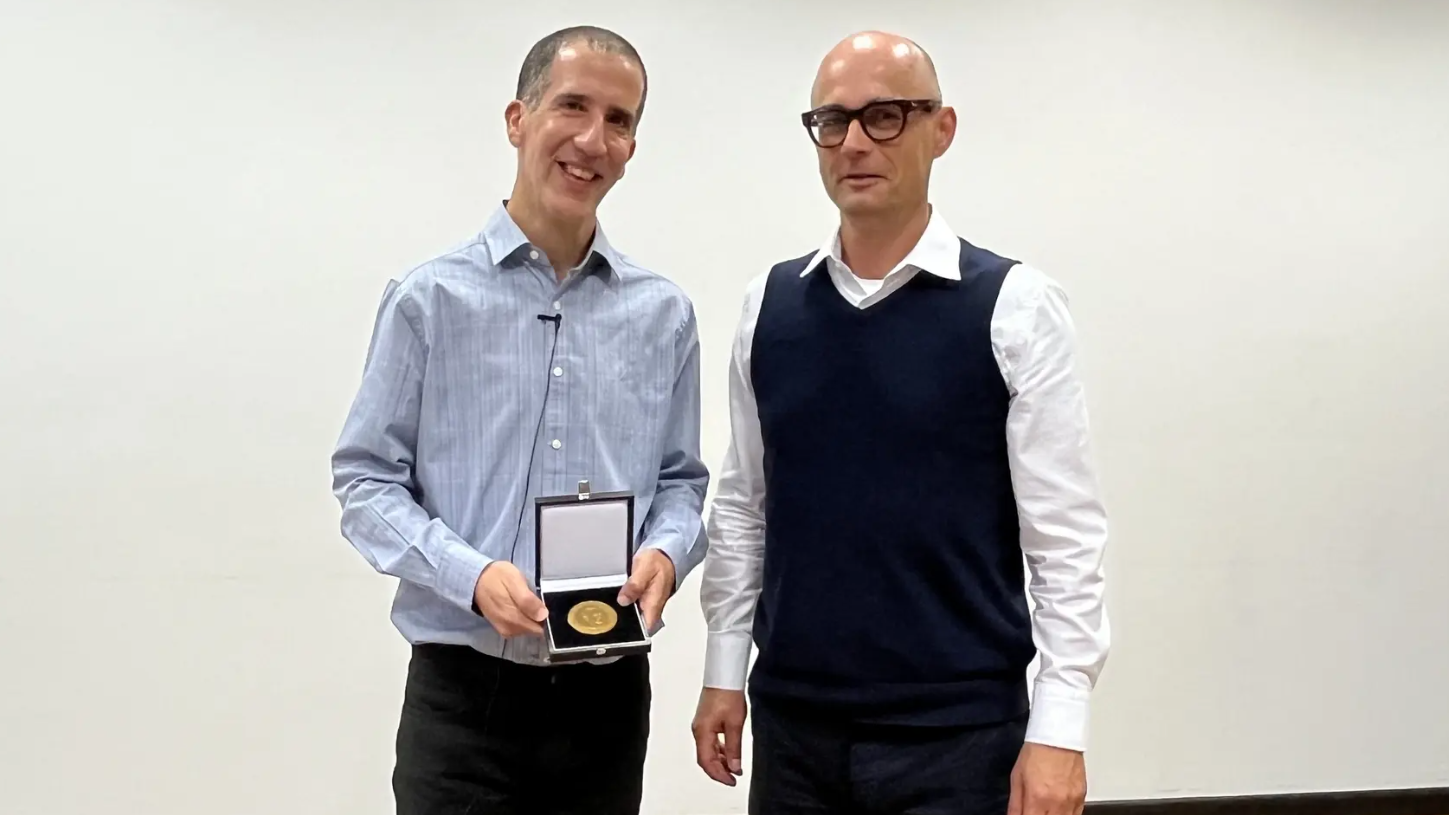
For his outstanding scientific achievements in the development of new proteins using computer-aided methods, Sarel Fleishman has been awarded the Otto Meyerhof Medal by the Max Planck Institute for Medical Research on September 30, 2026.
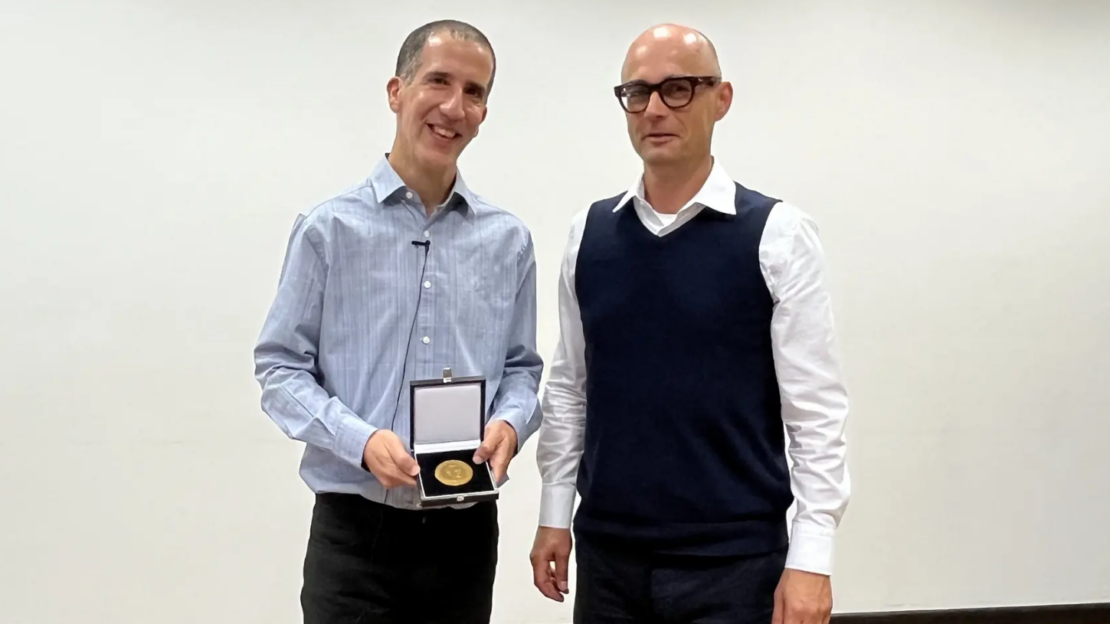
©MPI for medical research
- Protein designer Sarel Fleishman conducts research at the Weizmann Institute of Science in Rehovot, Israel.
- As the recipient of the Otto Meyerhof Medal, he traditionally delivered the Meyerhof Lecture, hosted by the institute.
- Joachim Spatz, Managing Director of the Max Planck Institute for Medical Research, presented him with the medal following the Meyerhof Lecture.
“I am deeply grateful to the Max Planck Institute for Medical Research for the honor of receiving the Otto Meyerhof Medal and for the opportunity to deliver the Meyerhof Lecture,” said the award recipient, Sarel Fleishman. “Otto Meyerhof’s foundational work illuminated the physical and chemical principles that govern living systems—a spirit that directly inspires our research today.”
Computer-Aided Design of New Proteins
In his lecture titled “Designing the Next Generation of Biocatalysts, Therapeutics, and Vaccines,” Sarel Fleishman presented his research. The scientist develops new proteins using computer-aided methods and tests their properties and activities. In doing so, he combines principles of evolution with detailed computer simulations at the atomic level to make proteins more efficient and stable. Among other things, the approaches he has developed aim to optimize antibodies, vaccines, and therapeutic enzymes.
Improve understanding and control of natural proteins
“Our research is driven by the desire to improve our understanding of and control over natural proteins—nature’s most complex and sophisticated microscopic machines,” Fleishman explained. Unraveling the fundamental physical properties that control their activity satisfies a basic curiosity about how life works at the atomic scale. “It also empowers us to design entirely new molecular solutions to address pressing challenges in human health and sustainability.”
Joachim Spatz honored the awardee as an outstanding scientist whose work has accelerated the foundation for the further development of sustainable next-generation biocatalysts, therapeutics, and vaccines.
“The computer-aided methods developed by Fleishman for highly efficient protein design empower researchers in both academia and industry,” said Joachim Spatz. “They form the foundation for hundreds of patent applications and publications and cover the entire spectrum from basic biomolecular research to practical applications.”
The symposium and awards ceremony took place on September 30, 2026, at the Max Planck Institute for Medical Research in Heidelberg.
In memory of Otto Meyerhof
Through the Meyerhof Lecture, established in 1997, the Max Planck Institute for Medical Research honors internationally recognized scientists for their outstanding achievements. Since 2021, the Meyerhof Lecture has been linked to the awarding of the Otto Meyerhof Medal.
Otto Meyerhof, after whom the lecture and medal are named, was a founding director and one of the most influential scientists in the early years of what is now the Max Planck Institute for Medical Research. From its founding in 1929, he headed the Department of Physiology. Meyerhof had already been awarded the Nobel Prize in Physiology or Medicine in 1922.
After the National Socialists came to power, living and working conditions for the Jewish scientist deteriorated progressively. In 1938, he fled Germany and eventually emigrated—like other Jewish employees of the institute—to the United States, where he died in 1951.