Two ERC Starting Grants for Scientists at Universität Heidelberg

European Research Council funds groundbreaking projects in paleoclimatology and cancer neuroscience
The European Research Council (ERC) is awarding two valuable grants for early career researchers – two ERC Starting Grants – to Heidelberg University. One of them, worth 1.5 million euros, goes to PD Dr. Sophie Warken, who does her research at the Institutes of Earth Sciences and of Environmental Physics. With the aid of dripstones, she will reconstruct the activity of tropical cyclones in the past to understand the underlying driving processes and to derive foundations for modeling future extreme weather events. The other grantee is Dr. Dr. Varun Venkataramani from the Medical Faculty Heidelberg. The neurologist and neuroscientist studies interactions between the nerve system and cancer, in order to gain new findings on the development of aggressive brain tumors. The ERC is allocating approximately 2.4 million euros for his research project on glioblastomas. The two ERC Starting Grants will be funded for five years.
Tropical cyclones – extreme weather events involving heavy rain, often with fatal consequences – are subject to natural fluctuations which it has so far not been possible to model due to incomplete databases. This is the starting point of Dr. Warken’s ERC project “Trace Metals in Speleothems – Advancing Paleotempestology Using a Novel Geochemical Proxy of Tropical Cyclone Activity” (PaleoTraCeS). In her interdisciplinary research studies in the field of paleoclimatology, the physicist and earth scientist wants to reconstruct the activity of cyclones across several hundred millennia. To do so, Dr. Warken will study the metal sediments in cave dripstones. Called speleothems, they are natural climate archives containing precisely datable information on the environmental events of past glacial and interglacial periods. The research aims to identify climatic factors in the variability of tropical cyclones and to translate them into quantifiable variables to be able to model future extreme weather events. In the long term, the findings from the PaleoTraCeS project are also to contribute to improving the hazard assessment for cyclone-prone world regions. Sophie Warken heads a research group on tropical climate variability and speleothem research based at Heidelberg University’s Institute of Earth Sciences and Institute of Environmental Physics.
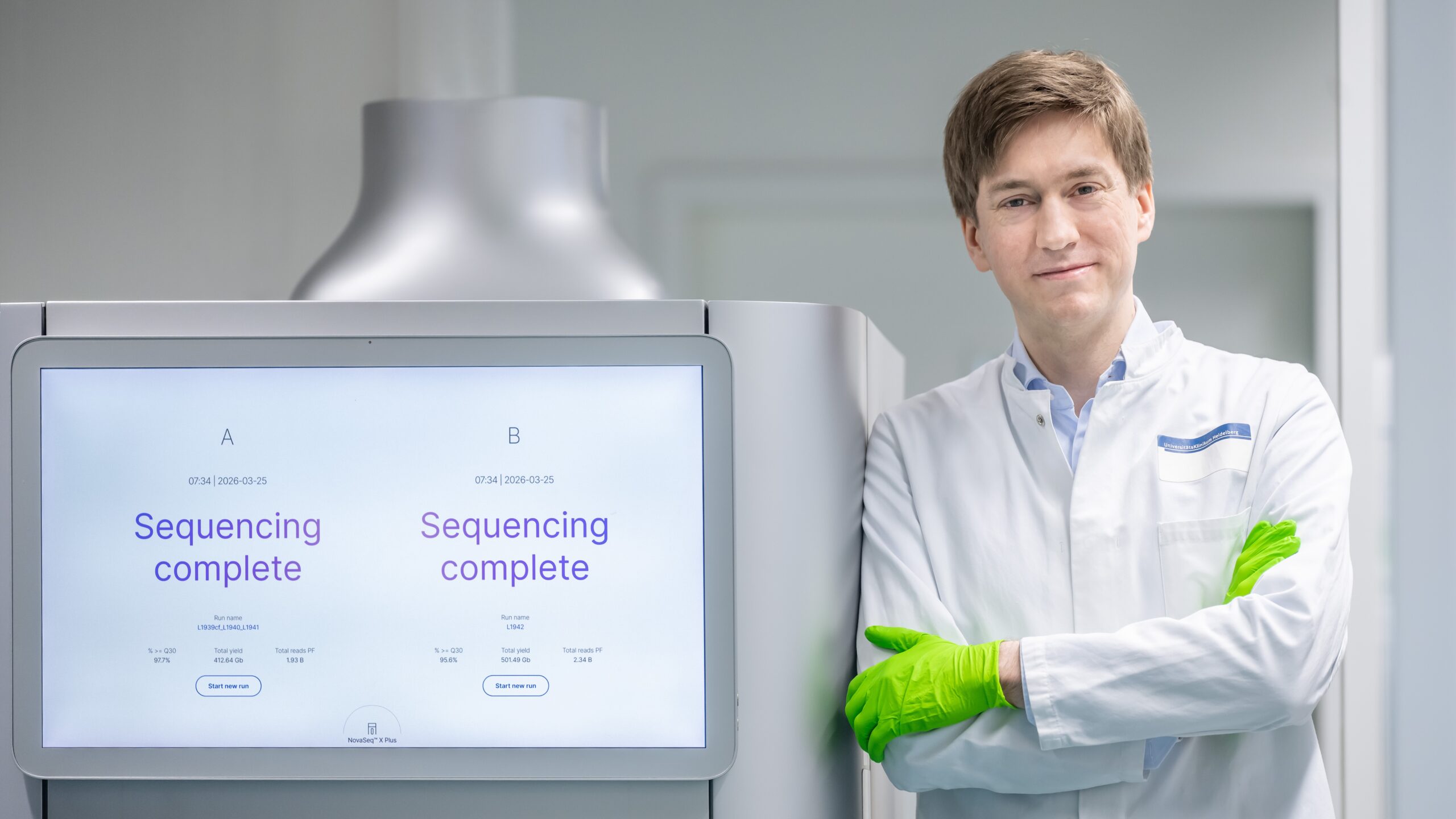
Dr. Dr. Venkataramani’s studies are located in the field of cancer neuroscience, which he cofounded. With his team, the neurologist and neuroscientist is primarily involved in the groundbreaking discovery of how healthy nerve cells in the brain make contact with the tumor cells of glioblastomas, thereby fueling the spread of these incurable brain tumors. His latest investigations show that what is called trogocytosis plays an important role here. The tumor cells “nibble” at the nerve cells using their membrane protrusions and consume parts of the neural structures that actually serve to transport information. How the glioblastomas succeed in remodeling the synaptic environment in the brain for their own purposes is the topic of the ERC project Varun Venkataramani is leading on “Brain Tumor Progression via Trogocytosis of the Synaptic Microenvironment” (BITE), which is to be carried out in close cooperation with scientists at the German Cancer Research Center. Within the project, he will examine the molecular mechanisms of trogocytosis. The aim is to map the dynamics of this cellular process across tumor evolution. It should then be possible to determine the optimum point in time for therapeutic interventions. Their purpose would be to impair tumor progression while preserving neuronal connectivity. Varun Venkataramani heads a research group based in the Department of Neurology at Heidelberg University Hospital. With his team, he is part of the European Center for Neuro-Oncology at the Medical Faculty Heidelberg of Heidelberg University.
With the ERC Starting Grant, the European Research Council supports outstanding early-career researchers from all disciplines who have already proved themselves through excellent work and want to implement cutting-edge research projects with ERC funding. The grant amount is generally up to 1.5 million euros. Additional finance can be approved if this is required to carry out the research studies.