Two ERC Synergy Grants for Scientists at Universität Heidelberg
European Research Council awards prestigious funding for complex research projects
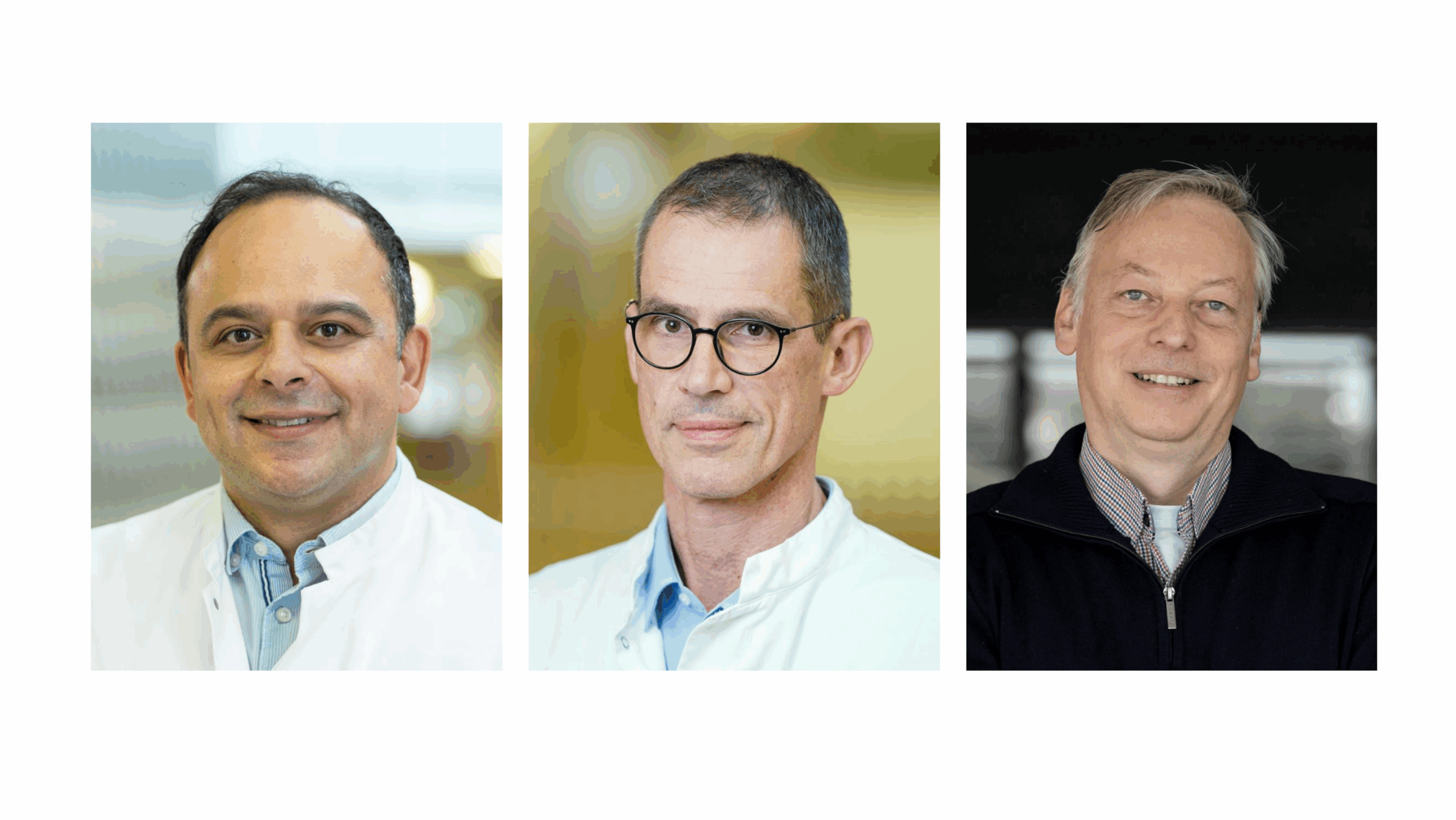
Scientists at Heidelberg University are to receive two prestigious ERC Synergy Grants awarded by the European Research Council (ERC) for groundbreaking research projects that will be carried out jointly by several teams. Prof. Dr Dr Amir Abdollahi is coordinating a tri-national collaboration with colleagues in the United States and Cyprus, which will focus on molecular reprogramming of the tumor immune microenvironment in conjunction with new opportunities offered by ion beams. Also participating from the Medical Faculty Heidelberg is Prof. Dr Dirk Jäger. The second ERC Synergy project, involving collaboration with research teams in the United Kingdom and Munich, seeks to develop novel opto-mechanical nanomachines based on DNA. Heading the Heidelberg University team is Prof. Dr Peer Fischer from the Institute for Molecular Systems Engineering and Advanced Materials. The European Research Council is funding the two projects over a period of six years to the tune of 23 million euros. Approximately 7.9 million euros have been allocated to the research in Heidelberg.
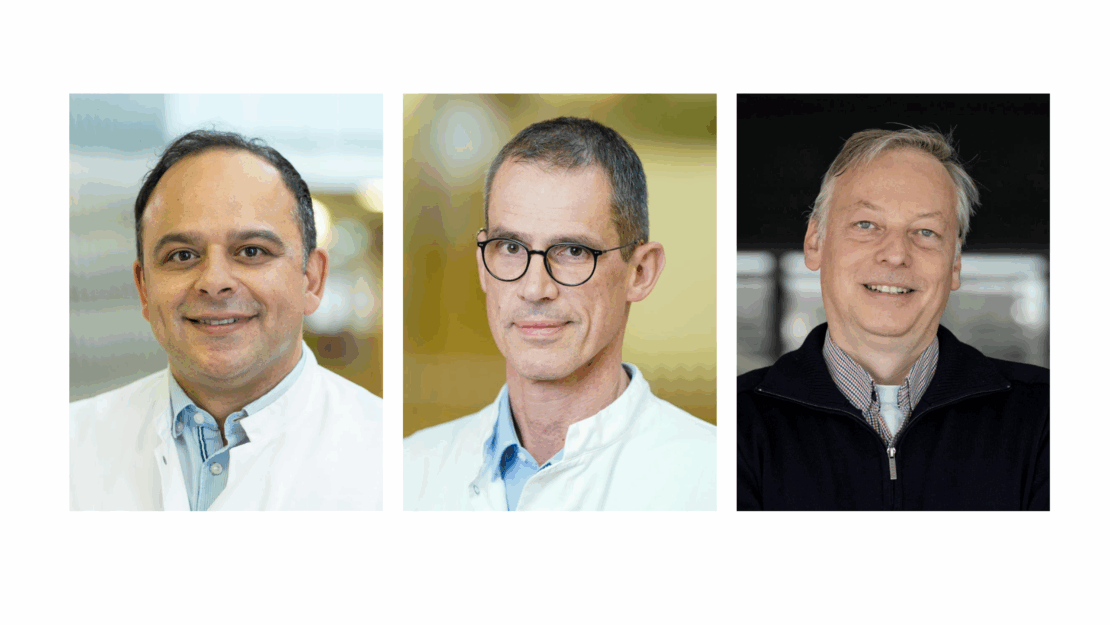
The ERC project coordinated by Prof. Abdollahi focuses on overcoming tumor resistance mechanisms to immunotherapies. While innovative immune cell therapies have revolutionized the treatment of blood cancers, this breakthrough has yet to be achieved in the field of so-called solid tumors. This is due to the complexity of their biology and diverse tumor evasion mechanisms, as Prof. Jäger explains. “Our goal is to employ innovative approaches in the field of molecular engineering and a unique spectrum of ion beams to overcome these resistance mechanisms to enable curative immune cell therapies,” emphasizes Prof. Abdollahi. The two Heidelberg scientists are members of the Managing Directorate of the National Center for Tumor Diseases in Heidelberg. Amir Abdollahi has a Professorship for Translational Radiation Oncology at the Medical Faculty Heidelberg of Heidelberg University and is head of the identically named Clinical Cooperation Unit at the German Cancer Research Center (DKFZ). Dirk Jäger is Medical Director of the Department of Medical Oncology at Heidelberg University Hospital and heads the Clinical Cooperation Unit Applied Tumor Immunity at the DKFZ. Teams from the University of Pennsylvania in Philadelphia (USA) and the Cyprus Cancer Research Institute in Nikosia are also involved in the project “Personalized Molecular Reprogramming of the Tumor Immune Microenvironment and Engineered Adoptive Cell Transfer in Synergy with Ion-Beam Radiotherapy for Next-Generation Curative Cancer Treatments” (PRECISION ImmunoRad). Funding amounting to 14 million euros is available for the research, with approximately 5.5 million allocated to Heidelberg.
Prof. Fischer and his team are part of a project that will develop light-controlled opto-mechanical systems at the nanoscale. The experts in the ERC-funded consortium are relying on the use of DNA nanotechnology – DNA molecules with which complex structures can be constructed with molecular precision in a bottom-up approach. These novel systems with new interactions between the nanocomponents are, in particular, designed to be built with “atom efficiency” and to be fully “reconfigurable”, Prof. Fischer explains. The long-term goal is to utilize sustainable self-assembly to realize technological innovations, such as artificial muscles, or to create highly precise force sensors that are small enough to be embedded in living tissue. At Heidelberg University’s Institute for Molecular Systems Engineering and Advanced Materials (IMSEAM), Peer Fischer heads the Micro, Nano and Molecular Systems Lab; he is also a director at the IMSEAM. The ERC-funded project “DNA for Reconfigurable Nano-Opto-Mechanical Systems” (DNA4RENOMS) will be coordinated at the University of Cambridge (UK), and also involve scientists from LMU Munich. The ERC has approved nine million euros for the studies, with approximately 2.4 million euros allocated for the research in Heidelberg.
ERC Synergy Grants fund collaborative projects that, due to their complexity, are carried out by several scientists and their groups, in order to achieve breakthroughs that would not be possible in individual projects.