November 14, 2025

Universität Heidelberg: New DFG Research Unit in Oncology
Universität Heidelberg: New DFG Research Unit in Oncology

GenoMiCC consortium deals with functional genomics and microbiomics in colorectal cancer and is coordinated at the Medical Faculty Mannheim
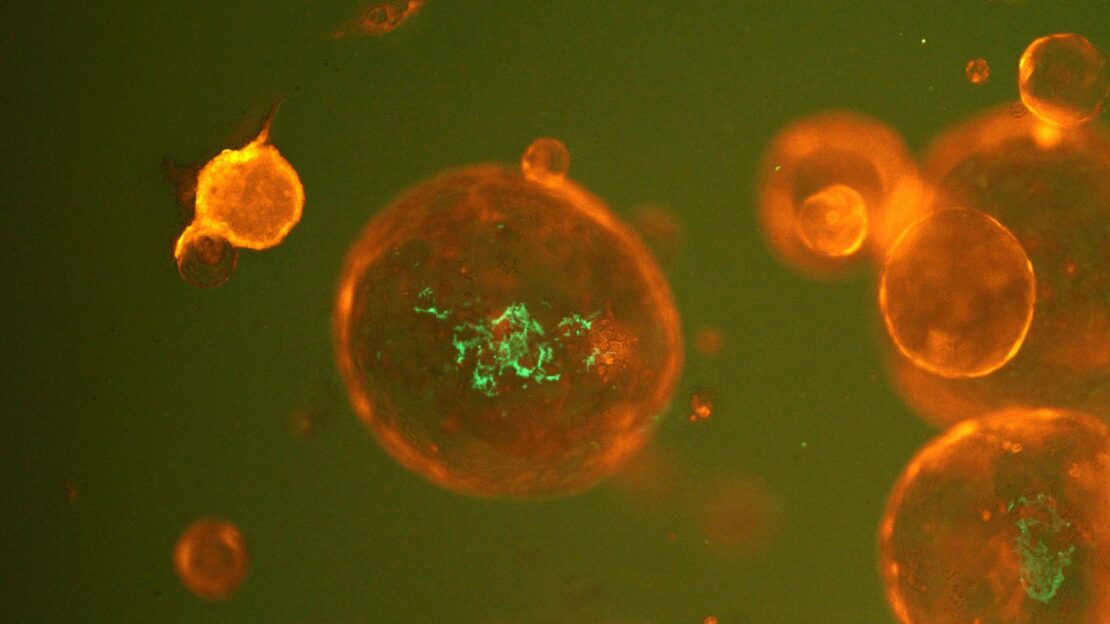
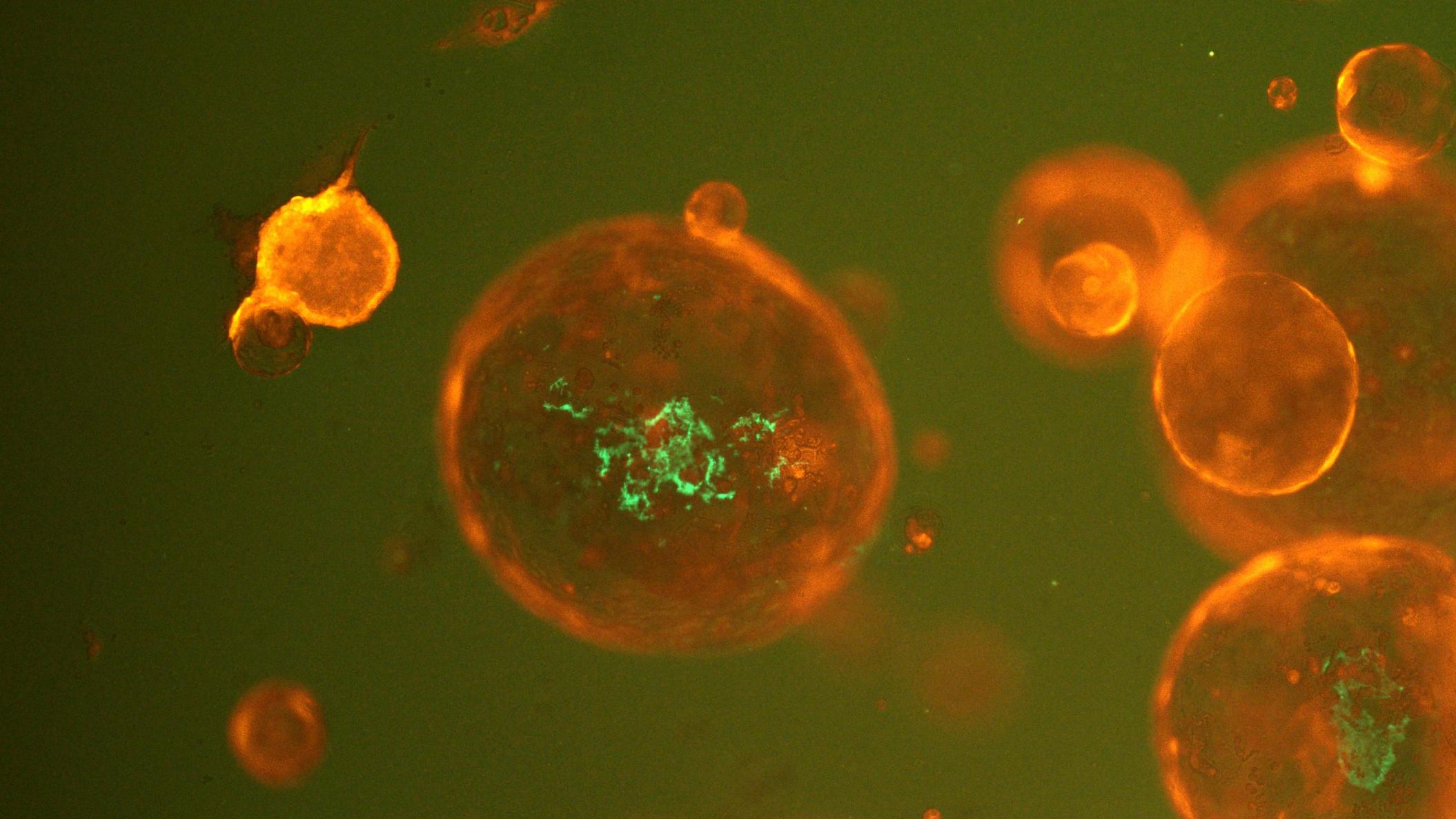
Cancer-associated bacteria (green) are injected into tumor organoids (orange) to obtain detailed insights into their interplay. | © Lena Schorr / Jens Puschhof

In the latest approval round of the German Research Foundation (DFG), Heidelberg University has been successful with a grant application for a new Research Unit in oncology. The GenoMiCC consortium pursues the goal of identifying new approaches to a personalized therapy for colorectal cancer using functional genomics and microbiomics. It is coordinated under the leadership of Prof. Dr Matthias Ebert at the Medical Faculty Mannheim; participating are researchers from six other institutions, including two from Switzerland. The DFG, together with the Swiss National Science Foundation (SNSF), is providing funding of about 6.1 million euros for the four-year studies.

Prof. Dr Matthias Ebert | © FGV-Medienzentrum / Medizinische Fakultät Mannheim

Colorectal carcinomas – malignant tumor diseases of the large intestine – are the second most frequent cause of cancer-related deaths worldwide and constitute about ten percent of all cancerous diseases. Current treatment strategies also build on genome-based precision medicine, where the treatment is adapted to specific molecular changes in the tumor, which has been thought to bring about an improvement in treatment outcome. According to Prof. Ebert, however, studies show that fewer than 20 percent of patients so far benefit from these personalized treatments. The Research Unit “Functional Genomics and Microbiomics in Precision Medicine of Colorectal Cancer” (GenoMiCC) wants to adopt a new approach in this respect.

The scientists are focusing on the cancer ecosystem as a whole, specifically also the intestinal microbiome – that is, the abundance of bacteria inhabiting the human colon. “In the GenoMiCC consortium we will investigate the functions and interactions of both the genes and the microbiome as colorectal cancer develops, and check the extent to which they are significant for successful treatment,” emphasizes coordinator Matthias Ebert, Director of the II. Medical Department of University Hospital Mannheim and a researcher at Heidelberg University’s Medical Faculty Mannheim. “We thereby hope to identify new target structures for personalized therapy that can be used for precision medicine.”

A special feature of the GenoMiCC consortium is that scientists from different fields, particularly from microbiome and cancer research, are leading the Research Unit projects in tandems. Those collaborating include experts from the German Cancer Research Center and the European Laboratory for Molecular Biology in Heidelberg, and also from the two Medical Faculties of Heidelberg University. Additional researchers come from the University Hospital of Düsseldorf, Leiden University (Netherlands), ETH Zurich and the University of Basel (both Switzerland). 

The research studies started on 1 November 2025 and are funded in the context of the D-A-CH cooperation of institutions in Germany (D), Austria (A), and Switzerland (CH).
Our latest News

discover more
Christiane Herzog Foundation honors cystic fibrosis facilities at Heidelberg University Hospital

Christiane Herzog Foundation honors cystic fibrosis facilities at Heidelberg University Hospital

The Christiane Herzog Foundation has honored the Cystic Fibrosis Center at the Center for Pediatric and Adolescent Medicine and the Cystic Fibrosis Outpatient Clinic at the Thorax Clinic as the “Christiane Herzog Center.” With this award, the foundation recognizes the exceptional commitment and high level of expertise in the care of patients with cystic fibrosis […]

Heidelberg neurologist and neuroscientist becomes new member of the EMBO Young Investigator Program

Heidelberg neurologist and neuroscientist becomes new member of the EMBO Young Investigator Program

Dr. Varun Venkataramani, Heidelberg Medical Faculty of Heidelberg University and German Cancer Research Center, discovered that nerve cells in the brain come into contact with tumor cells, thereby significantly promoting the growth of highly aggressive glioblastomas. In doing so, he laid the groundwork for the new field of research known as “cancer neuroscience.” The European […]

VIRE: a global data platform to better understand viruses

VIRE: a global data platform to better understand viruses

Researchers release a comprehensive viral genome database covering diverse ecosystems to advance understanding of viral evolution and ecosystem functions Summary Researchers have developed VIRE, a database that integrates approximately 1.7 million viral genomes derived from more than 100,000 metagenomes worldwide. Metagenomic data is obtained by comprehensively sequencing all DNA present in an environment. This approach enables […]

GET IN TOUCH

Stay Updated with bioRN’s Newsletter

Sign up for our newsletter to discover more!
* required

BioRN (BioRN Network e.V. and BioRN Cluster Management GmbH) will use the information you provide on this form to be in touch with you and to provide updates and marketing. Please let us know all the ways you would like to hear from us:

You can update your subscription preferences or unsubscribe at any time. Just follow the unsubscribe or update link in the footer of automated emails you receive from us, or by contacting us at info@biorn.org. We will treat your information with respect. For more information about our privacy practices please visit our website: www.biorn.org. By clicking below, you agree that we may process your information in accordance with these terms.

We use Mailchimp as our marketing platform. By clicking below to subscribe, you acknowledge that your information will be transferred to Mailchimp for processing. Learn more about Mailchimp's privacy practices.

Intuit Mailchimp