


Research
Used diapers account for a very large portion of our waste, and to date, no economically viable recycling process has been established. In the Encycling project, the NMI team led by Dr. Anne Zeck and Dr. Simon Straß developed an enzymatic process that was successfully applied to diapers from various manufacturers. Further research was needed […]
read more
From microscopy to AI: Andreas von Deimling shaped modern brain tumor diagnostics in Heidelberg
After almost 20 years, Professor Dr. Andreas von Deimling has handed over leadership of Neuropathology at Heidelberg University Hospital to Professor Dr. Dr. Felix Sahm. When Andreas von Deimling was appointed W3 Professor of Neuropathology in 2007, Heidelberg Faculty of Medicine at Heidelberg University, together with the German Cancer Research Center (DKFZ), pursued a strategic […]
read more
Sanofi breaks ground on new state-of-the-art insulin manufacturing facility in Germany
Sanofi breaks ground on new state-of-the-art insulin manufacturing facility in Germany Paris and Frankfurt, October 19, 2026. Sanofi today broke ground on a new state-of-the-art insulin manufacturing facility at its BioCampus in Frankfurt, Germany. The new facility will bring a new generation of insulin production to one of Sanofi’s largest integrated research and manufacturing sites, […]
read more
Four Million Euros in EU Funding to Improve Prostate Cancer Care
A European research consortium led by the German Cancer Research Center (DKFZ) aims to fundamentally improve the diagnosis and treatment of prostate cancer using AI agents, big data, and patient-centered clinical decision support. The central goal is to detect aggressive tumors early and accurately, reduce unnecessary interventions, and tailor treatment decisions more closely to the […]
read more
CST Announces Availability of GMP-Grade CAR Linker Antibodies for CAR-T Cell Enrichment and Detection in Clinical Manufacturing and QC
Danvers, MA, USA, October 7, 2026–Cell Signaling Technology (CST), a life science discovery technology company and leading provider of antibodies, kits, and services, today announced the availability for purchase of GMP-grade recombinant monoclonal antibody conjugates targeting the G4S linker of scFv-based chimeric antigen receptors (CARs) for CAR-T cell enrichment and detection in cell therapy manufacturing […]
read more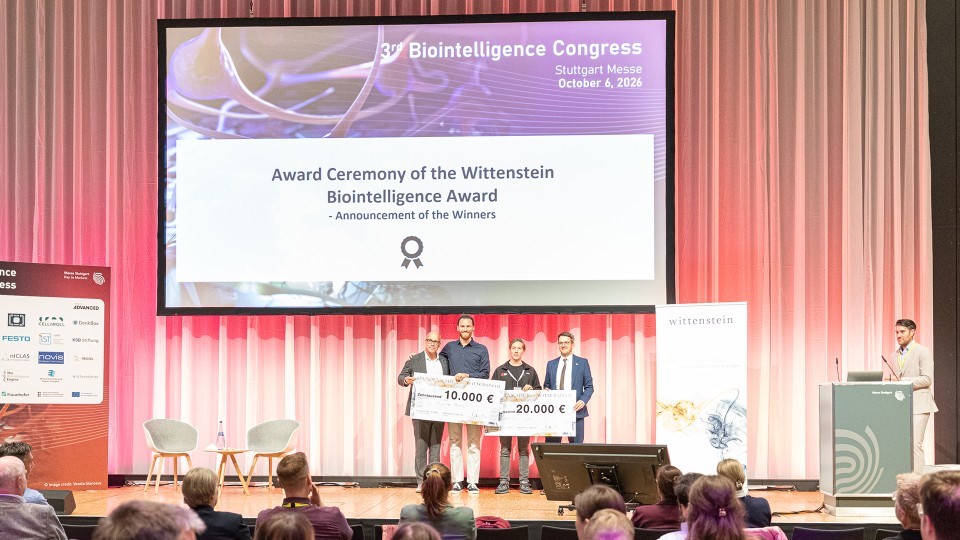
Wittenstein Biointelligence Prize: AwardedBacteria Produce Bioplastic; Living Nerve Cells Process Information
The Wittenstein Biointelligence Prize was awarded on Tuesday evening at the third Biointelligence Congress. Biotechnologist Moritz Bross won in the “Individual” category, while Cortical Labs was honored in the “Company” category. With this prize, the Wittenstein Foundation recognizes innovative, practical, and sustainable solutions that combine biology with information and production technology. Full Text in German […]
read more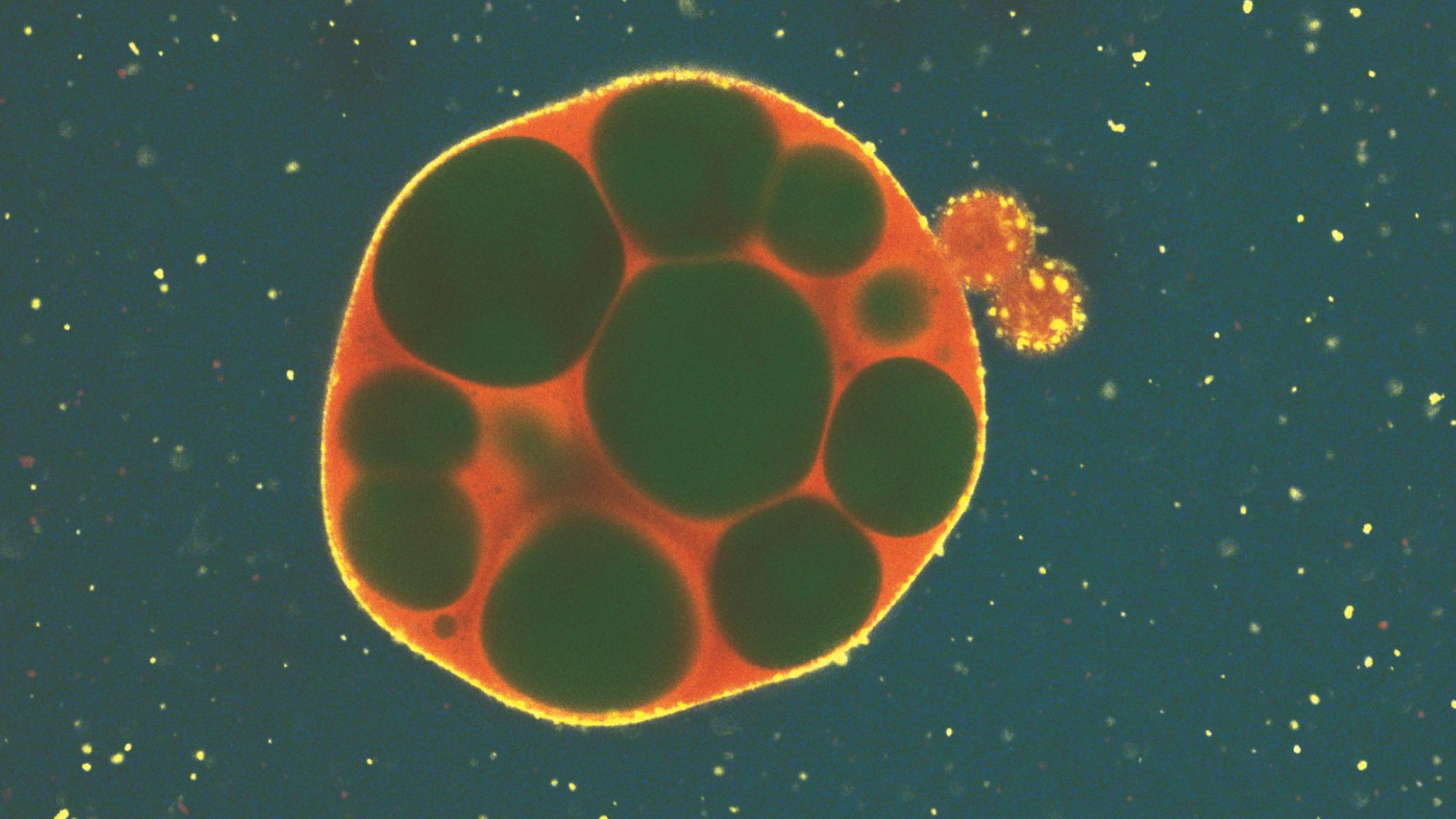
Synthetic Cells: Function Through Mutation
Just a few genetic changes transform simple RNA droplets into cell-like structures that can move and take up cargo A small number of random genetic mutations cause simple RNA droplets to transform into cell-like structures. In this process, they form cavities, can move and are able to take up cargo. This has been demonstrated through […]
read more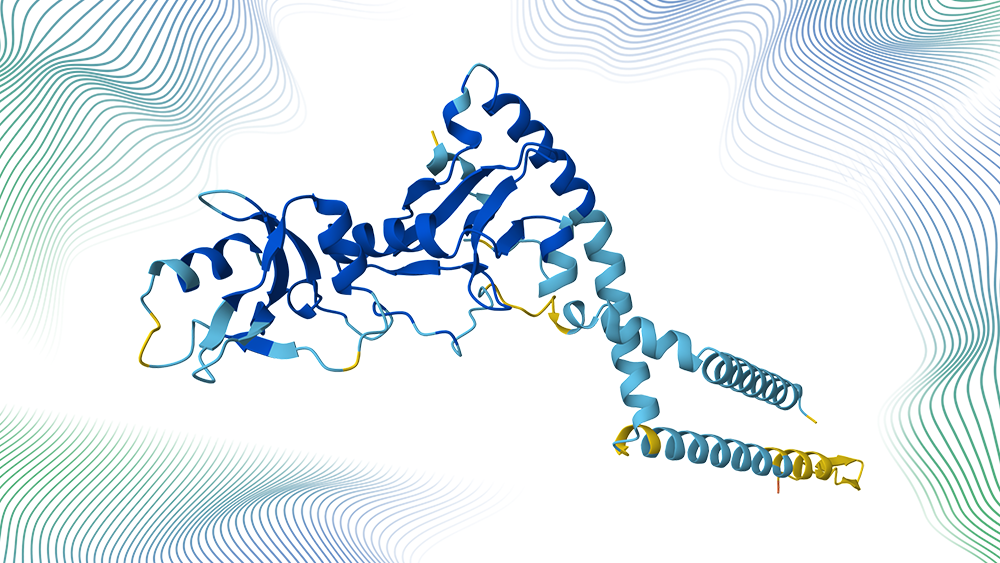
AlphaFold Database adds viral protein complexes to support pandemic preparedness
by Sera Guli The latest release includes protein structure predictions for thousands of viruses, which could improve the response to future outbreaks AI-predicted protein complex structures for over 2,800 viruses are now openly available in the AlphaFold Database. To better understand and protect against emerging pathogens, the dataset prioritises proteomes from viral families known to […]
read more
European Commission grants €57 million to critical open data resources
Horizon Europe funding will support GENCODE, UniProt, and Europe PMC The European Commission has announced €57 million in funding to support GENCODE, UniProt, and Europe PMC. These life sciences data resources are delivered and managed by EMBL’s European Bioinformatics Institute (EMBL-EBI) alongside international partners. The financial support will be given in the shape of three […]
read more