November 28, 2024

CRC 1249 – Funding for Collaborative Research Centre in Chemistry
CRC 1249 – Funding for Collaborative Research Centre in Chemistry

The German Research Foundation providing funding of around 10,9 million euros

With a Collaborative Research Centre in chemistry, Heidelberg University has been successful in the latest approval round of the German Research Foundation (DFG). The CRC 1249 “N-Heteropolycycles as Functional Materials”, where research is being carried out on novel organic compounds, is entering its third funding period. The DFG is providing funding of around 10,9 million euros for the research consortium over a period of four years. Prof. Dr Petra Tegeder from the Institute for Physical Chemistry at Ruperto Carola will serve as spokesperson.

Petra Tegeder
Petra Tegeder | © private

The focus of CRC 1249 is the development of novel organic functional materials with specifically tunable electronic and optical properties and their application as photoactive components and organic semiconductors. This is done on the basis of a large and flexibly variable class of organic hydrocarbon compounds with ring structures containing nitrogen atoms. The research plan comprises the development of synthetic-chemical methods, structural and spectroscopic characterization as well as the theoretical modeling of molecules, aggregates and solid films. Of particular interest is the way in which molecular properties are related to the optoelectronic properties of materials and devices.

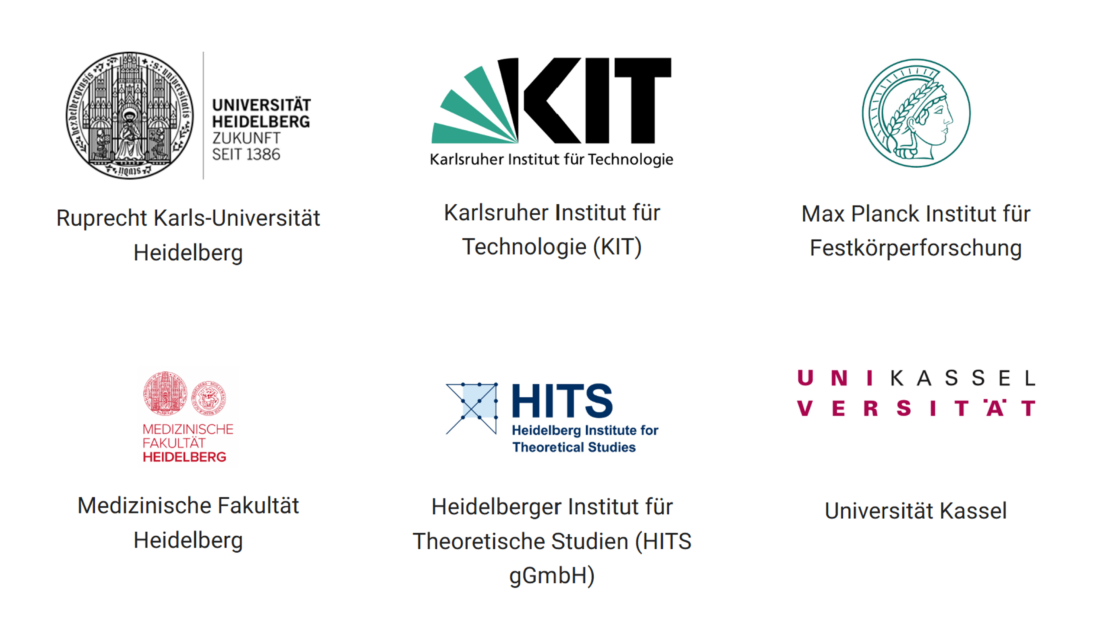
The Collaborative Research Centre is supported by researchers from the three Institutes of Chemistry, the Interdisciplinary Center for Scientific Computing and the Institute for Molecular Systems Engineering and Advanced Materials at Heidelberg University. Research groups from the Karlsruhe Institute of Technology and the Max Planck Institute for Solid State Research in Stuttgart are also participating. The CRC 1249 will reach the maximum funding period of twelve years.

Further information

Participating Institutions
Our latest News

discover more
How is TR-FRET Used in Drug Discovery?

How is TR-FRET Used in Drug Discovery?

This post is Part 2 of a two-part blog series. Read part 1: What is a TR‑FRET assay and how is it used in drug discovery? In a previous blog post, we covered the fundamental principles of Time-Resolved Fluorescence (TR) Förster Resonance Energy Transfer (TR-FRET), including how long-lived lanthanide donors like europium enable high-sensitivity, “mix-and-read” assays. Because TR-FRET provides a ratiometric, proximity-based […]

Triple ERC Success at the German Cancer Research Center

Triple ERC Success at the German Cancer Research Center

Three researchers at the German Cancer Research Center (DKFZ) have each been awarded a Starting Grant from the European Research Council (ERC) this year. Daniel Kirschenbaum, Lena Kutscher, and Michael Scherer impressed the ERC with their innovative research approaches to fundamental questions in cancer medicine. With the funding, they plan to investigate why certain brain […]

Cancer Cachexia: How a Tumor Protein Drives Wasting in the Body

Cancer Cachexia: How a Tumor Protein Drives Wasting in the Body

Researchers at Helmholtz Munich, the Heidelberg Faculty of Medicine at Heidelberg University, the German Center for Diabetes Research (DZD) and the Technical University of Munich (TUM) have identified a previously unknown mechanism that can drive cancer cachexia – a wasting process in the body that primarily affects muscle and fat tissue. A central role is […]

GET IN TOUCH

Stay Updated with bioRN’s Newsletter

Sign up for our newsletter to discover more!
* required

BioRN (BioRN Network e.V. and BioRN Cluster Management GmbH) will use the information you provide on this form to be in touch with you and to provide updates and marketing. Please let us know all the ways you would like to hear from us:

You can update your subscription preferences or unsubscribe at any time. Just follow the unsubscribe or update link in the footer of automated emails you receive from us, or by contacting us at info@biorn.org. We will treat your information with respect. For more information about our privacy practices please visit our website: www.biorn.org. By clicking below, you agree that we may process your information in accordance with these terms.

We use Mailchimp as our marketing platform. By clicking below to subscribe, you acknowledge that your information will be transferred to Mailchimp for processing. Learn more about Mailchimp's privacy practices.

Intuit Mailchimp