December 04, 2025

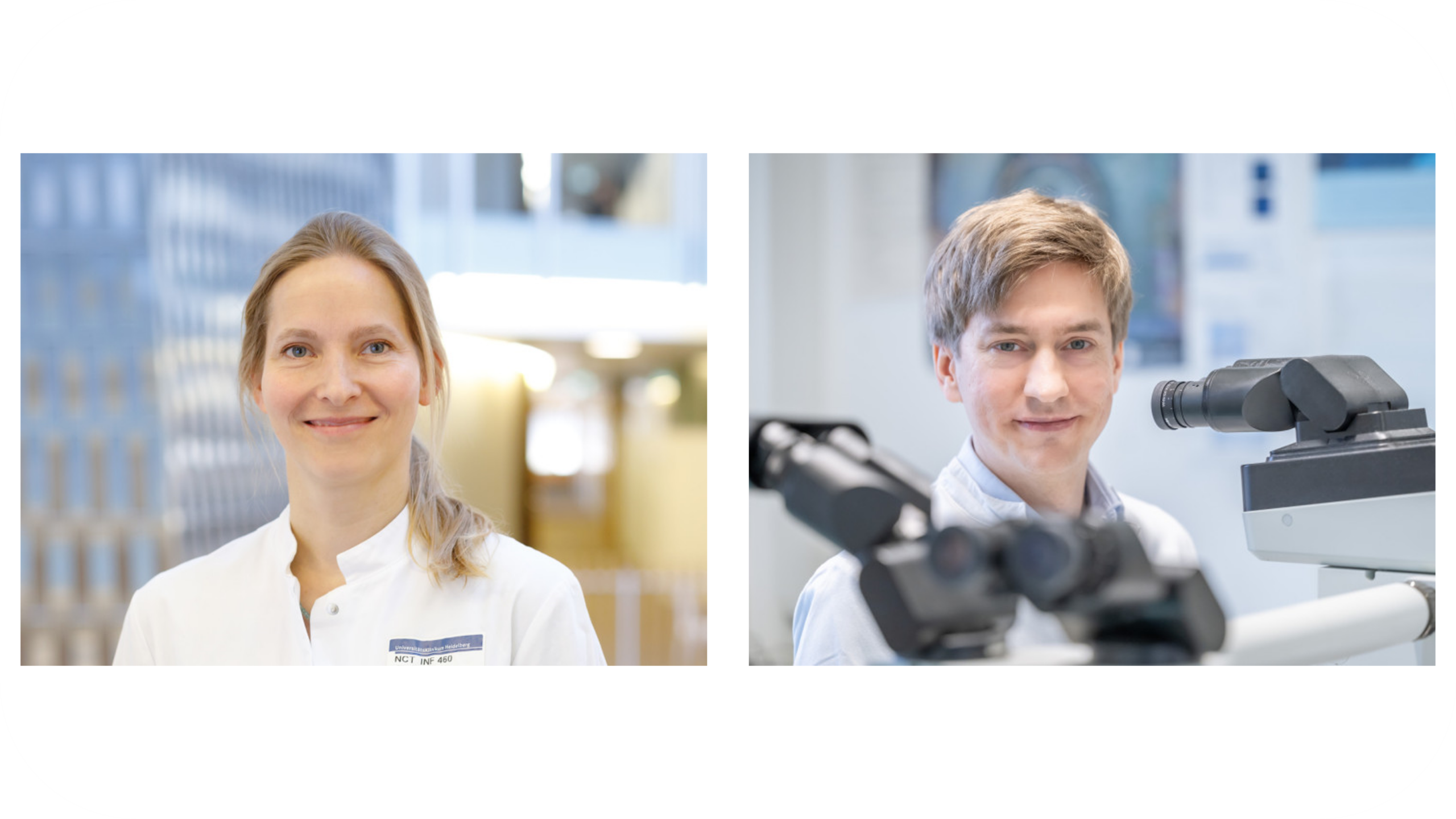
Lautenschläger Prize for Young Scientists 2025 awarded to Lukas Bunse
Lautenschläger Prize for Young Scientists 2025 awarded to Lukas Bunse

As a clinician scientist at the German Cancer Research Center (DKFZ) and the Mannheim Medical Faculty of Heidelberg University, neurologist Lukas Bunse is investigating how the body’s own immune system can be supported in fighting brain tumors. For this work, he has been awarded the Lautenschläger Prize for Young Scientists, which is endowed with €25,000.

Malignant brain tumors from the group of gliomas and glioblastomas are extremely difficult to treat with available therapies. While still a medical student, Lukas Bunse was involved in the development of a vaccine against a specific form of brain tumor, known as IDH1-mutated glioma.

Glioblastomas, which mainly affect middle-aged people, have an even worse prognosis than IDH-mutated gliomas. Unlike gliomas, they do not present a uniform mutation as a target antigen on their surface that could be vaccinated against. Here, Bunse and his team are testing a cell therapy approach. First, he succeeded in identifying suitable target molecules for the immune system in glioblastoma cells. The researchers then equipped the patient’s own T cells with receptors for these tumor proteins outside the body.

The T cells equipped in this way are then transferred back to the patient and can specifically hunt down brain tumor cells. These approaches have already proven successful in mice. Initial clinical trials of this innovative cellular immunotherapy with transgenic T cells are now in preparation.

Lukas Bunse studied medicine at Heidelberg University and University College London. After completing his medical doctorate, he completed another doctorate in biology in 2020. He is a clinician scientist at the Mannheim Medical Faculty of Heidelberg University and has been a senior physician in neurology since 2024. He also conducts research as team leader in the Clinical Cooperation Unit Neuroimmunology and Brain Tumor Immunology at the DKFZ. After receiving the Ruprecht Karls Prize in 2018 and the Hella Bühler Prize in 2019, which is endowed with 100,000 euros, he was awarded the Novartis Prize for therapy-relevant immunological research by the German Society for Immunology in 2023. In 2025, he was awarded the Heinz Maier-Leibnitz Prize, which is considered Germany’s most important award for young scientists.

The founder of the prize and honorary senator of Heidelberg University, Manfred Lautenschläger, awards the Lautenschläger Prize for Young Scientists to outstanding researchers at Heidelberg University in the early stages of their careers.
Our latest News

discover more
Christiane Herzog Foundation honors cystic fibrosis facilities at Heidelberg University Hospital

Christiane Herzog Foundation honors cystic fibrosis facilities at Heidelberg University Hospital

The Christiane Herzog Foundation has honored the Cystic Fibrosis Center at the Center for Pediatric and Adolescent Medicine and the Cystic Fibrosis Outpatient Clinic at the Thorax Clinic as the “Christiane Herzog Center.” With this award, the foundation recognizes the exceptional commitment and high level of expertise in the care of patients with cystic fibrosis […]

Heidelberg neurologist and neuroscientist becomes new member of the EMBO Young Investigator Program

Heidelberg neurologist and neuroscientist becomes new member of the EMBO Young Investigator Program

Dr. Varun Venkataramani, Heidelberg Medical Faculty of Heidelberg University and German Cancer Research Center, discovered that nerve cells in the brain come into contact with tumor cells, thereby significantly promoting the growth of highly aggressive glioblastomas. In doing so, he laid the groundwork for the new field of research known as “cancer neuroscience.” The European […]

VIRE: a global data platform to better understand viruses

VIRE: a global data platform to better understand viruses

Researchers release a comprehensive viral genome database covering diverse ecosystems to advance understanding of viral evolution and ecosystem functions Summary Researchers have developed VIRE, a database that integrates approximately 1.7 million viral genomes derived from more than 100,000 metagenomes worldwide. Metagenomic data is obtained by comprehensively sequencing all DNA present in an environment. This approach enables […]

GET IN TOUCH

Stay Updated with bioRN’s Newsletter

Sign up for our newsletter to discover more!
* required

BioRN (BioRN Network e.V. and BioRN Cluster Management GmbH) will use the information you provide on this form to be in touch with you and to provide updates and marketing. Please let us know all the ways you would like to hear from us:

You can update your subscription preferences or unsubscribe at any time. Just follow the unsubscribe or update link in the footer of automated emails you receive from us, or by contacting us at info@biorn.org. We will treat your information with respect. For more information about our privacy practices please visit our website: www.biorn.org. By clicking below, you agree that we may process your information in accordance with these terms.

We use Mailchimp as our marketing platform. By clicking below to subscribe, you acknowledge that your information will be transferred to Mailchimp for processing. Learn more about Mailchimp's privacy practices.

Intuit Mailchimp